






CIOB Building Performance and Evaluation Guide
Contents |
[edit] Summary
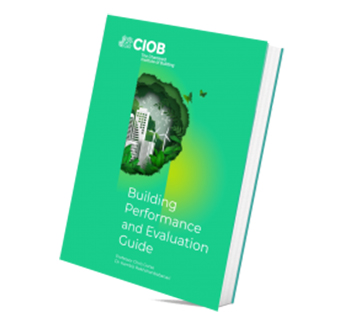
Building Performance and Evaluation offers a method to identify, limit and reduce uncertainties in building performance. This guide emphasises that taking a holistic approach can test building design and building performance pre-, during- and post-occupation. It outlines the various tests and methods used in that evaluation, which inform clients, end-users, and practitioners of possible interventions and supports data collection and analysis in order that energy use can be understood and assessed against the energy performance expected.
[edit] Contents
- Chapter 1: Introduction: An insight into Building Performance Evaluation
- Chapter 2: Management tools and methodologies to support BPE
- Chapter 3: Design
- Chapter 4: Construction
- Chapter 5: Commissioning
- Chapter 6: Pre-occupancy
- Chapter 7: Post-occupancy
- Chapter 8: Life Cycle Analysis: Extraction, assembly, use, deconstruction, and recycling
[edit] About the author
Chris Gorse (MICOB) is Professor of Construction Engineering and Management at the University of Loughborough and Chair of the CIOB Sustainability Panel and Policy Forum. Leading major research projects for government and industry, with a focus on the built environment, quality and energy efficiency.
Dr Kambiz Rakhshanbabanari is a Research Assistant at Leeds Sustainability Institute, with research experience in energy efficiency and sustainability in residential and commercial buildings, building energy and performance assessment, Life Cycle Analysis, supervised machine learning and building structure reuse.
The Chartered Institute of Building is at the heart of a management career in construction. It is the world’s largest and most influential body for construction management and leadership, with a Royal Charter to promote the science and practice of building and construction for the benefit of society. With over 48,000 members, the CIOB is the international voice of the building professional.
Access the guide at: https://www.ciobacademy.org/product/building-performance-and-evaluation-guide/
This article first appeared on the CIOB Academy website as "Building Performance and Evaluation Guide" in January 2023.
--CIOB
[edit] Related articles on Designing Buildings
- Building performance.
- Building performance evaluation in domestic buildings.
- Building performance evaluation in non-domestic buildings guide – an introduction to the tests and methods in non-domestic buildings.
- Building performance metrics.
- Building use studies (BUS).
- Handover to client.
- Initial aftercare.
- Lessons learned report.
- Post occupancy evaluation.
- Post occupancy evaluation process.
- Post project review.
- Performance in use.
- Smart meters and building performance evaluation.
- Soft landings.
- Soft Landings for owners.
Featured articles
Check out some of the best features and news from Designing Buildings as well as key stories from around the web.
Undervaluing our industrial past

Heritage value changes as taste for building styles changes.
Changing expectations around competence and compliance

New information sheet from CIAT.
Grenfell investigation files passed to CPS

Angela Rayner apologises on behalf of the British state.

Electrical contractors need to understand the practical implications.

The real barrier to getting more value from digital technology.

Your guide to The Construction Reset at UKCW Birmingham.

Accommodating the Victorian and Edwardian working woman. Book review.
Rethinking passive fire protection in design

PFP demands the same level of design rigour as structure or services.

38% of Gen Zs feel safe when a fire door is wedged open.
Stunning images from around the world

Shortlist for CIOB’s Art of Building photography competition.

Guidance for conversion of traditional pre-1919 stone buildings.
Industrial heritage in the Ruhr

A marked difference to the fate of industrial landscapes in the UK.
Comments
[edit] To make a comment about this article, or to suggest changes, click 'Add a comment' above. Separate your comments from any existing comments by inserting a horizontal line.