





Sound frequency
Sound (or audio) frequency is the speed of the sound’s vibration which determines the pitch of the sound. Sound is caused by vibrations that transmit through a medium such as air and reach the ear or some other form of detecting device.
It is measured as the number of wave cycles that occur in one second, with the standard unit of measurement being Hertz (Hz)
Sound intensity is measured in Decibels (dB). This is a logarithmic scale in which an increase of 10 dB gives an apparent doubling of loudness.
A frequency of 1 Hz refers to one wave cycle per second, while 20 Hz refers to 20 per second, where the cycles are 20 times shorter and closer together.
The audio spectrum is the frequency range that is audible to humans. This generally spans from 20 to 20,000 Hz, although environmental factors influence the precise range for each individual.
Frequencies at the high end of the spectrum are the first to be negatively affected by age and/or hearing damage as a result of prolonged exposure to loud volumes or noise.
As well as intensity and frequency, sound also transmits information. For example, music or speech, transmit the information which people may perceive differently from other sounds.
Approved document E, Resistance to the passage of sound defines ‘frequency’ as:
The number of pressure variations (or cycles) per second that gives a sound its distinctive tone. The unit of frequency is the Hertz (Hz (formerly called ‘cycles per second’).
A ‘frequency band’ is a continuous range of frequencies between stated upper and lower limits. An ‘octave band’ is a frequency band in which the upper limit of the band is twice the frequency of the lower limit. A ‘one-third octave band’ is a frequency band in which the upper limit of the band is 2 times the frequency of the lower limit.
The sound-absorbing characteristics of materials vary significantly with frequency. Low-frequency sounds, below 500 Hz, tend to be more difficult to absorb whereas high frequencies sounds, above 500 Hz, are easier to absorb. A material's sound absorbing properties can be expressed by the sound absorption coefficient, alpha, as a function of frequency, where alpha ranges from 0 (total reflection) to 1.00 (total absorption).
Similarly, the sound insulation of materials varies with frequency. Low-frequency sounds tend to be attenuated less by passing through sound insulating materials than high-frequency sounds. As a result, the sound attenuation properties of materials are generally measured at a range of frequencies representative of normal human hearing and this is then compared to a reference frequency profile such as that defined in BS EN ISO 717-1 Acoustics. Rating of sound insulation in buildings and of building elements. Airborne sound insulation.
[edit] Related articles on Designing Buildings
- Acoustic consultant.
- Airborne sound.
- Approved Document E.
- Building acoustics
- Building Bulletin 93: acoustic design of schools.
- Building regulations.
- Flanking sound.
- Frequency band.
- Impact sound.
- Noise nuisance.
- Reverberation.
- Robust details certification scheme.
- Room acoustics.
- Sound absorption.
- Sound insulation.
- Sound power level.
- Sound reduction index (SRI).
- Sound v noise.
- Structure-borne sound.
Featured articles
Check out some of the best features and news from Designing Buildings as well as key stories from around the web.

A quick introduction.
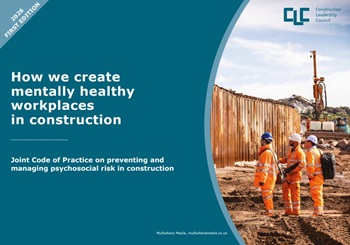
CLC publishes Mental Health Joint Code of Practice.
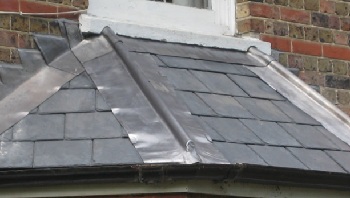
A quick introduction to its uses and risks.
Construction Management, 17 June

Government rolls out digital planning tool to all local authorities.

Your views needed - a strategy for the professions, trades and occupations.

Confronting competency, codes, capacity and costs.

The hidden risk in modern construction supply chains.
Construction Management, 10 June
24 months to 14: CITB launches accelerated apprenticeships.
Bridging the gap between clients and contractors

Concerns remain around contractor quality, capability, and delivery.
Construction Management, 10 June.
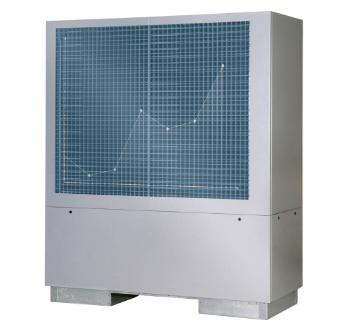
Heat pumps beat boilers in new home tests.
Building Safety Act implementation in Wales

CIAT to host industry panel on 26 June.