





Louis Kahn

|
| Salk Institute, La Jolla, California, by Louis Kahn, completed 1965. |
Contents |
[edit] Introduction
Louis Kahn (1901-74) is regarded as one of America’s greatest architects and one of the most influential of the 20th century. His architecture – powerful, bold, monumental and raw – also demonstrates a clarity of construction and truth to materials. His works form a distinct strand of modernism which continue the Corbusian ideal of geometric forms revealed through the action of light. Perhaps the creation which best demonstrates this approach is the National Assembly Building, Dacca, Bangladesh, completed in 1974.
Kahn did not so much use natural materials but used materials naturally, according to their intrinsic nature and what the material in question might 'want' to be.
Kahn’s complex private life led others to regard him as a mystic and introvert, one who followed his own passions. In the film ‘My Architect’ (see below) fellow architect Philip Johnson described him as “his own artist…. free, compared to me”.
[edit] Early life
Kahn’s family emigrated to Philadelphia, USA, from Estonia when he was a child. It was in that city that the bulk of his work would be completed. As a young man, he took an early interest in castles and other monuments, especially in medieval cities and Scottish castles. These influences would influence much of his work, expressed through monumentality, solidity and depth, in stark contrast to the lightness of works by others such as Phillip Johnson and Mies van der Rohe.
Kahn graduated in architecture from The University of Pennsylvania in 1928, and later embarked on an architectural tour of Europe. On returning home, he worked initially as a draftsman and in the 1930s and 1940s – having established his own practice in 1935 – he designed various private residences and workers’ housing.
In 1947, he became a professor of architecture at Yale University and shortly after received a commission for his first important work, the Yale University Art Center (1953) in New Haven, Connecticut. This finally shed all references to the International Style that could be seen in Kahn’s early work.

|
| Corridor, Salk Institute, La Jolla, California, by Louis Kahn, completed 1965. Image: Randi Giacomo, Pixabay |
[edit] Main productive period
In 1959, he was commissioned to design the Salk Institute for Scientific Research at La Jolla, California (1965). An exposed concrete cluster of low-rise buildings laid out in a linear arrangement to frame views of the Pacific, it is regarded as Kahn’s defining work.
The following Richards Medical Research Building (1965) at the University of Pennsylvania continued this approach and demonstrated Kahn’s spatial hierarchy: between servant and served spaces. The former comprising circulation spaces, lifts, pipes and vent ducts; the latter laboratories and offices. Unfortunately, the building is said to be disliked by its users.
Throughout much of this time, Kahn both practised and taught architecture – the majority of it spent at the University of Pennsylvania – right up to the time of his death. He died in 1974 from a heart attack in the men’s bathroom while in transit at New York’s Penn Station, his briefcase containing his latest design for the Franklin D. Roosevelt Four Freedoms Park Memorial, which was completed in 2012.
Kahn was married three times and had three children – a child from each marriage. In 2003, his son Nathaniel directed the Academy Award-nominated ‘My Architect: A Son’s Journey’ in which he seeks to better understand his father.
Louis Kahn’s major completed works include:
- Yale University Art Centre, New Haven, Connecticut (1953)
- Trenton Community Center, New Jersey (1954)
- Richards Medical Research Laboratory, Philadelphia (1965)
- The Salk Institute, La Jolla, California (1965).
- First Unitarian Church, Rochester, New York (1969)
- Indian Institute of Management Ahmedabad, India (1961)
- Phillips Exeter Academy Library, Exeter, New Hampshire (1972)
- Kimbell Art Museum, Fort Worth (1972)
- National Assembly Building, Dacca, Bangladesh (1974)
- Yale Center for British Art (1974)
- Roosevelt Island Memorial, New York (2012)
[edit] Related articles on Designing Buildings Wiki
- Architectural styles
- Art Deco.
- Bauhaus.
- Building of the week series.
- City beautiful.
- Concept architectural design.
- Contextualism.
- Demolishing Modernism: Britain's lost post-war gems.
- Fallingwater.
- Form follows function.
- High-tech architecture.
- International Style.
- Modernism
- Postmodern architecture.
- Rockefeller Center.
- Salk Institute.
- Solomon R. Guggenheim Museum.
- The architectural profession.
Featured articles and news
Building Control Independent Panel final report
A precis of a key report lead by Dame Hackitt with full recomendations and link to the government response.
Guide to ISO 19650 for Architecture Firms (2026)
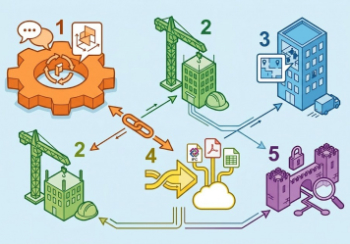
A user gives their low down.

A UK training and membership provider for mould remediation professionals.
Building Safety recap April, 2026
A short and longer run-through of the month, with links to further information and sources.
CIAT May 2026 briefing.

Independent NSI and BAFE study exploring how organisations are changing the way they buy fire safety services.
From medieval scribes to modern word art.

ECA welcomes crackdown on late payment and push for clean energy, whilst CIOB seek fixed cladding removal timeframes.
Cyber Security in the Built Environment
Protecting projects, data, and digital assets: A CIOB Academy TIS.
Managing competence in the built environment
ITFG publishes new industry guide on how to meet the ICC principles.
The UK's campaign to reduce noise pollution: Mythbusting, articles and topic guides.
Setting Expectations on Competence Management
Industry Competence Committee.
New Scottish and Welsh governments
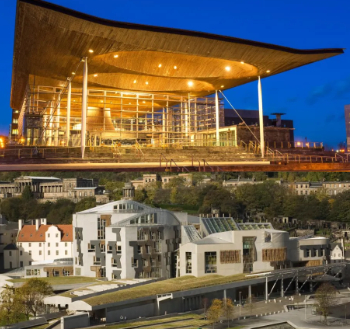
CIOB stresses importance of construction after new parliament elections.
The sad story of Derby Hippodrome
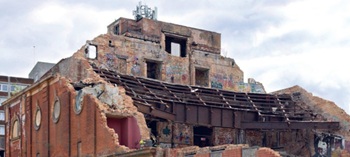
An historic building left to decay.

ECA, JIB and JTL back Fabian Society call to invest in skills for a stronger built environment workforce.