





Future Trends of the Concrete Market
Contents |
[edit] Introduction
From $617.26 billion in 2020, the concrete market is expected to grow to $972.04 billion by 2026. Growth momentum is expected to pick up during the forecast period, with a 7.86% CAGR.
The concrete market includes the revenue generated by the sale of ready-mix concrete and precast products and elements. Ready-mix concrete is made up of cement, sand, water, aggregates, and sometimes binding adhesives. Government spending on infrastructure development, renovation, and maintenance, such as roads and bridges, is increasing the size of the concrete market. Furthermore, ready-mix concrete and precast goods and pieces save time in terms of manufacturing, shipment, and installation. These items are also less expensive to produce because there is less waste generated during the manufacturing process.
[edit] Trends that are going to shape the Concrete Market
Historically, the success of concrete producers was largely dependent on assets. The market was owned by whoever owned the assets. As per different construction industry market research reports, with technology, we are fundamentally shifting from asset dominance to service expansion and differentiation. Technology has the potential to reduce the "friction" of traditional industrial processes.
[edit] Digital Transformation
Digital Transformation - Companies have invested in new technologies in order to support remote work, make job sites safer, account for lost time during shutdowns, and improve processes. In effect, the pandemic accelerated many digital initiatives that were already on the agendas of construction and concrete businesses.
- Use of drones - Drones can be used to quickly and efficiently capture high-resolution site photos to identify safety issues, estimate material quantities on site, and create orthomosaic maps that make even the largest job site visible.
- VR - Before construction professionals begin work on new additions, virtual reality can show clients what they will look like.
- 3D printing - As per various construction industry market research reports, 3D printing is making custom pieces more affordable and may enable a cutting-edge method of laying concrete in vertical piles according to a programmed design. This method is already in use in the commercial sector and is expected to expand rapidly.
[edit] Sustainability
Sustainability - In 2022, the sustainability trend will gain traction as more governments implement low-carbon construction policies and as governments, industries, and individuals demand more climate-friendly solutions in all aspects of life. As a result, sustainable building materials can serve as a key differentiator for both construction companies and manufacturers. Concrete is a specific focus of sustainability initiatives. This is due to the fact that traditional concrete emits more CO2 than the aviation industry. Cement, the main ingredient that gives concrete its strength, has a significant environmental impact.
[edit] Safety
Safety has always been a priority on construction sites, but since the COVID outbreak began, it has become a primary focus as sites banded together to implement cleanliness protocols and social distancing. As per various construction industry market research reports, the construction cleanliness protocols go beyond masks and hand sanitizer to prohibit the sharing of tools, gloves, and other construction-related PPE such as protective glasses, hats, and boots. On a job site, however, where cooperation and teamwork are required to get the job done, social distancing can be difficult to achieve.
[edit] Related articles on Designing Buildings
- Concrete.
- Concrete joints.
- Concrete masonry unit CMU.
- Concrete repair mortars.
- Concrete-steel composite structures.
- Concrete superplasticizer.
- Concrete to cover.
- Concrete vs. steel.
- Concreting plant.
- Decarbonising concrete in the UK.
- Lime concrete.
- Portland cement.
- Precast concrete.
- Prestressed concrete.
- Screed.
- Self-compacting concrete.
- Slip form.
- Smart concrete.
Featured articles
Check out some of the best features and news from Designing Buildings as well as key stories from around the web.

CIAT publishes briefing on planning reforms.
Leaders in Learning for Practice Network

Call for conservation leaders in learning to register interest in new network.
The importance of early engagement

Construction lessons from the Trillium HealthWorks Experience Centre.
Mayors are to be given planning call in powers

Mayors across England will be able to make the most important planning decisions.

The Master Builder: William Butterfield and his times. Book review.

Why construction can't afford to ignore the skills gap.
Building Safety Regulator, 19 August

Gill Kernick appointed Independent Chair of Residents’ Panel.
Connecting knowledge, technology and conservation
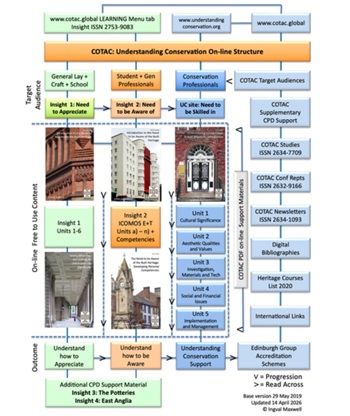
Building competence for the future of built heritage.
Building Regulations and Building Safety Act
CIOB publishes free advice for non-domestic clients.

Building Safety Newsletter from MHCLG.
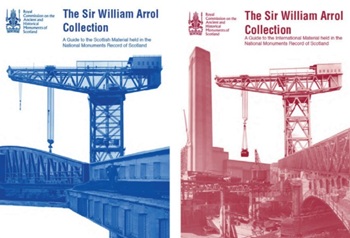
An extraordinary record of steel engineering worldwide.
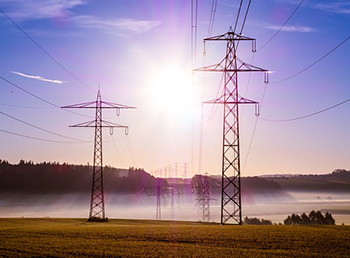
Households living near new pylons to save on bills.