





External doors

Doors are openable barriers at the entrance to buildings, rooms or other spaces such as cupboards that allow people, vehicles or goods to enter and leave. They most commonly swing on hinges and include furniture or ironmongery that allows them to open, close, stay closed and sometimes to lock.
External doors typically have a more demanding role than internal doors as they are exposed to outside conditions and must protect the interior from the elements as well as from intrusion. The aesthetic style of an external door can also be a more important consideration than for internal doors as it creates the entrance and/or exit of a building and so can leave an impression on users and passers-by.
There are many different types of external door design, often depending on the specific purpose and use requirement. For example, garages will typically use a rolling shutter door made of steel and fitted with a remote-control system which automatically raises and closes it; public and commercial buildings often use revolving doors comprising several leaves that radiate from a central shaft to form compartments, rotating about a vertical axis. For more information, see Types of door.
In terms of materials, timber is widely-used for external doors, but more recently, composite PVC doors have been adopted as an alternative to timber in some dwellings. Other common materials include glass, steel aluminium and so on.
Timber doors can be inexpensive and provide a natural aesthetic, but they are also prone to twisting, warping, and rot, and require treating and regular maintenance to protect them from the weather.
Sliding patio doors and modern home doors can be made from aluminium, which benefits from being lightweight and strong and requires relatively little maintenance. Steel doors can also have the advantages of durability, and easy maintenance. They also can present the appearance of heightened security, although this is not necessarily so as a door is no stronger than its frame.
As external doors have an important role to play in securing a building, they will often be fitted with locks. A common lock used on external doors is the mortice deadlock which is positioned on the inside face of the door and can be key-operated from both inside and out. Nightlatches, also known as secondary locks, can either be standard (locks automatically unless the latch is held back), or deadlocked (locks automatically and requires a key inside and outside). For more information, see Types of lock.
Other security features in front doors might include a door chain, a viewing hole, a London bar, an entry alarm, audio and video communication systems and so on. Non-security related features that are often included on external doors include a letter box, number/s (fixed with screws or other fasteners), door-knocker, door bell, etc.
Approved Document Q - Security – Dwellings, requires that reasonable provision is made to prevent unauthorised access, and that easily accessible doors are sufficiently robust and fitted with appropriate hardware. For more information see: Approved document Q.
Door Energy Rating schemes are based on a traffic-light style A-G ratings system for energy efficiency similar to the labelling system used for fridges, washing machines, cookers and so on. An A rating indicates a good level of energy efficiency, whilst G is the lowest rating. Low rated doors will not normally satisfy building regulations requirements. For more information see: Door Energy Rating.
[edit] Related articles on Designing Buildings Wiki
Featured articles and news
A safe energy transition – ECA launches a new Charter
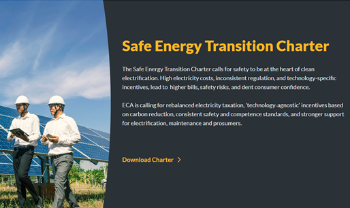
Practical policy actions to speed up low carbon adoption while maintaining installation safety and competency.
Frank Duffy: Researcher and Practitioner

Reflections on achievements and relevance to the wider research and practice communities.
The 2026 Compliance Landscape: Fire doors

Why 'Business as Usual' is a Liability.
Cutting construction carbon footprint by caring for soil

Is construction neglecting one of the planet’s most powerful carbon stores and one of our greatest natural climate allies.
ARCHITECTURE: How's it progressing?
Archiblogger posing questions of a historical and contextual nature.
The roofscape of Hampstead Garden Suburb
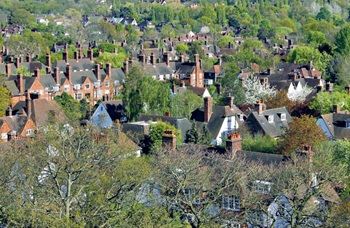
Residents, architects and roofers need to understand detailing.
Homes, landlords. tenants and the new housing standards
What will it all mean?
The Architectural Technology podcast: Where it's AT

Catch-up on the latest episodes.
Edmundson Apprentice of the Year award 2026
Entries now open for this Electrical Contractors' Association award.

Traditional blue-grey slate from one of the oldest and largest UK slate quarries down in Cornwall.
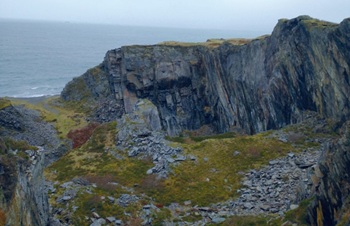
There are plenty of sources with the potential to be redeveloped.
Change of use legislation breaths new life into buildings

A run down on Class MA of the General Permitted Development Order.
Solar generation in the historic environment
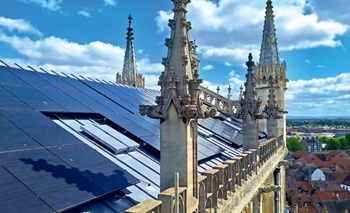
Success requires understanding each site in detail.
Level 6 Design, Construction and Management BSc

CIOB launches first-ever degree programme to develop the next generation of construction leaders.

Open for business as of April, with its 2026 prospectus and new pipeline of housing schemes.
The operational value of workforce health

Keeping projects moving. Incorporating unplanned absence and the importance of health, in operations.