




Consultation on joint Conservation Professional Practice Principles
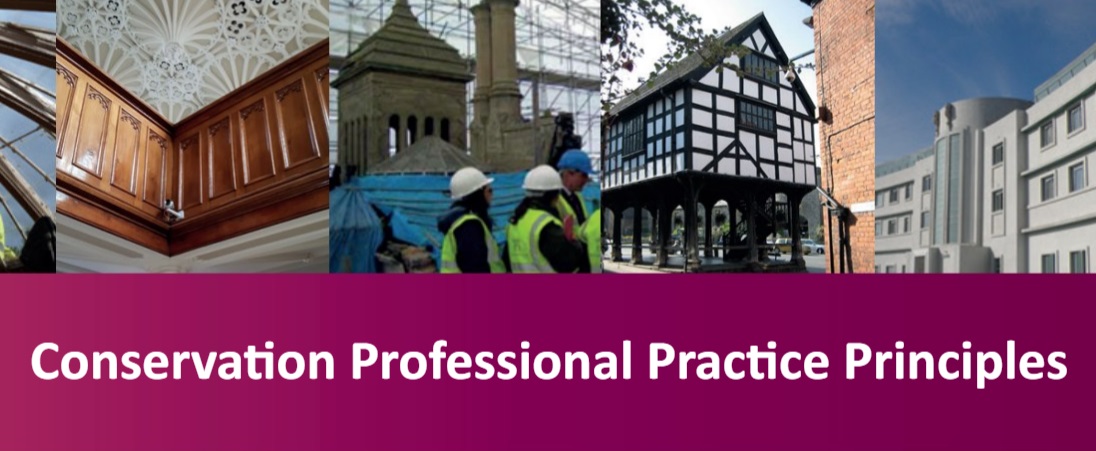
A consultation on updating and enhancing the IHBC-HTVF-Civic Voice joint ‘Conservation Professional Practice Principles’ has been launched, as we look at renewing this cross-sector statement on practice principles for specialists working in built and historic environment conservation roles.
| ACCESS THE CPPP CONSULTATION SURVEY HERE |
IHBC trustees and CPPP lead author Dave Chetwyn said: ‘Working with historic places and buildings involves a diverse and complex range of specialist skills, across different professional disciplines. It is essential to employ professional teams from the necessary disciplines, with historic and built environment expertise. As the ‘Principles’ statement recognises international, national and devolved UK legislation, policy and statements, and how they operate in the real world, it puts practice standards at the heart of how we deliver successful conservation outcomes. Now, some five years later, we are ready to update and enhance the document, we look forward to hearing thoughts from all users and stakeholders.’
IHBC Director Seán O’Reilly said: ‘With our #IHBC25 anniversary we’re perfectly placed to review this core practice standard for Conservation Professionals. We want it to have as much impact on practice standards as possible, and across all specialist interests and disciplines, so please do let us know what you think
The Conservation Professional Practice Principles was first published in 2017 by IHBC, Civic Voice & HTVF. It is an overview of built and historic environment practice for conservation professionals and describes the skills and specialisms necessary to properly manage, conserve and develop historic places and buildings. The 25th anniversary year of IHBC is an ideal opportunity to revise and update the Principles and we are seeking feedback on the existing document and its use.
This guide provides an overview of built and historic environment practice for conservation professionals across the United Kingdom. It has been developed to raise awareness of the skills and specialisms necessary to properly manage, conserve and develop historic places and buildings. It recognises international, national and devolved UK legislation, policy and statements, and how they operate in practice.
The scope of professional practice for conserving historic places and buildings is wide. The following list of activities is intended as an illustration of some of the common areas of practice. Not all of these activities will be within the primary skill sets of all practitioners. Accreditation in a primary area of practice should guide clients and employers on the lead skills of the practitioner required (such as architecture, planning, surveying, archaeology, engineering and other disciplines).
A fundamental part of practice for the conservation professional is to identify the various values of heritage places and buildings, especially in the context of change, as this forms the basis for offering advice and making judgments.
Conservation practice involves managing and maintaining places and buildings, and planning for their future. Heritage has cultural values associated with the past, but is also part of the infrastructure of modern society and a fundamental resource that underpins its sustainable future. Therefore, heritage is an economic resource in the present, with social, economic and environmental values. The challenge for heritage professionals is to conserve cultural values whilst allowing places and buildings to adapt where appropriate or necessary, so that they remain fit for purpose, accommodating society’s changing needs and demands. (CPPP: S.3)
Practice Principles contents include:
1 What Does a Conservation Professional Do?
2 Understanding Values of Heritage
- 1 Value to Owners
- 2 Economic Values
- 3 Community Values
- 4 Environmental Values
- 5 Heritage Value, including Special Interest and Significance
- 1 Reconciling Values
- 2 Things to Consider
- 3 Making Balanced Judgements
See the Conservation Professional Practice Principles HERE
See more background to the 2017 launch of the Principles HERE and HERE
This article originally appeared on the IHBC website on 7 November 2023.
--Institute of Historic Building Conservation
Related articles on Designing Buildings
- Conservation practice survey 2016.
- Conservation Professional Practice Principles.
- Conservation.
- Consultation on Conservation Professional Practice Principles.
- Heritage practice in England for balanced growth.
- Heritage.
- IHBC articles.
- IHBC updates competence descriptors
- IHBC.
- Living Buildings. Architectural Conservation: philosophy, principles and practice.
Featured articles
Check out some of the best features and news from Designing Buildings as well as key stories from around the web.
Code of Practice for Electrical Energy Storage Systems.

ECA calls on members to comment on draft 4th edition.

Bringing together expertise and creating cultural benefits.

CIOB celebrates positive Ofsted report.

The Building Safety Regulator announces a call for evidence.

Government approach could undermine delivery and regeneration.
World's first mass timber data centre.

The overlooked environmental aspect of data centre development.
Introduction to radon awareness

New technical information sheet published by CIOB.

Updated supplier guide can help electrical contractors engage with NHP.

CIAT confirm the winners of the 2026 architectural technology awards.

Government launches a one stop shop for flood preparedness.

Sir Edwin Lutyens: Britain's greatest architect? Book review.

CIOB publishes free template to help assess and manage risks.