




Consultation on Conservation Professional Practice Principles

In July 2022, a consultation was launched on updating and enhancing the IHBC-HTVF-Civic Voice joint ‘Conservation Professional Practice Principles’, looking at renewing the cross-sector statement on practice principles for specialists working in built and historic environment conservation roles.
| ACCESS THE CONSULTATION SURVEY HERE |
IHBC trustees and CPPP lead author Dave Chetwyn said: ‘Working with historic places and buildings involves a diverse and complex range of specialist skills, across different professional disciplines. It is essential to employ professional teams from the necessary disciplines, with historic and built environment expertise. As the ‘Principles’ statement recognises international, national and devolved UK legislation, policy and statements, and how they operate in the real world, it puts practice standards at the heart of how we deliver successful conservation outcomes. Now, some five years later, we are ready to update and enhance the document, we look forward to hearing thoughts from all users and stakeholders.’
IHBC Director Seán O’Reilly said: ‘With our #IHBC25 anniversary we’re perfectly placed to review this core practice standard for Conservation Professionals. We want it to have as much impact on practice standards as possible, and across all specialist interests and disciplines, so please do let us know what you think
The Conservation Professional Practice Principles was first published in 2017 by IHBC, Civic Voice & HTVF. It is an overview of built and historic environment practice for conservation professionals and describes the skills and specialisms necessary to properly manage, conserve and develop historic places and buildings.
The 25th anniversary year of IHBC is an ideal opportunity to revise and update the Principles and we are seeking feedback on the existing document and its use.
This guide provides an overview of built and historic environment practice for conservation professionals across the United Kingdom. It has been developed to raise awareness of the skills and specialisms necessary to properly manage, conserve and develop historic places and buildings. It recognises international, national and devolved UK legislation, policy and statements, and how they operate in practice.
Practice Principles contents include:
1 What Does a Conservation Professional Do?
2 Understanding Values of Heritage
- 1 Value to Owners
- 2 Economic Values
- 3 Community Values
- 4 Environmental Values
- 5 Heritage Value, including Special Interest and Significance
- 1 Reconciling Values
- 2 Things to Consider
- 3 Making Balanced Judgements
See the Conservation Professional Practice Principles HERE
This article was first published on the IHBC website on 26 July 2022.
--Institute of Historic Building Conservation
Related articles on Designing Buildings
IHBC NewsBlog
IHBC sponsors Gardens Trust event 23-4 Sept 2026
.jpeg)
'Learning from the Past, Shaping the Future’ takes place in Milton Keynes
Renovations to Frank Lloyd Wright's Fallingwater complete
.jpg)
World Heritage Preserved project opens house for tours again
Shakespeare Birthplace Trust places Hall's Croft on HAR Register
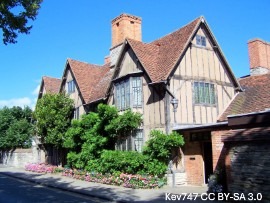
Stratford-upon-Avon home of Shakespeare's daughter is 'At Risk'
Lady Grange’s House repaired on St Kilda
.jpg)
National Trust for Scotland repairs stone cleit with link to famous island resident
Griff Rhys Jones on BBC Radio 4 Today programme
,_Green_Lane,_Derby.jpg)
The Victorian Society’s President unveiled its latest Top Ten Endangered Buildings 2026.
Need a MATE? Book your place now.
IHBC offers free webinars on applying for IHBC accreditation (Full & Associate).
UK Stained Glass Repository finds windows new homes
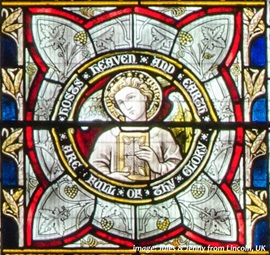
How are stained glass windows are rescued, stored and repurposed?
APPGEBE report sets high aims for quality
'Government must not sacrifice quality in drive to build 1.5m homes'
New measures protect Historic Shipwrecks from heritage crime

Underwater cultural heritage benefits from new HE guidance
How could the City of London skyline look in 6 years' time?

Visualisation shows approved planning applications as completed buildings
National Trust for Scotland calls for VAT cuts

Heritage neglect is encouraged by current policies
IHBC's 'Context' Issue 186 features Industrial Heritage
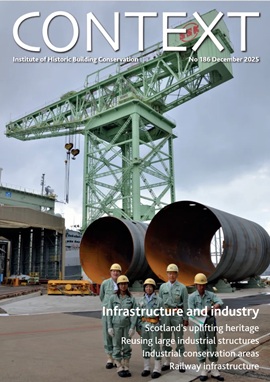
IHBC's members' journal reports on the challenges of conserving infrastructure
Book now for IHBC Annual School 2026
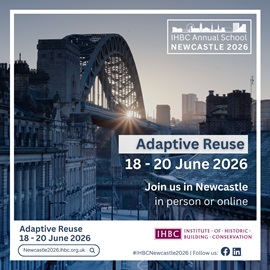
IHBC Annual School is taking place 18-20 June 2026 in Newcastle
RICHeS Research Infrastructure offers ‘Full Access Fund Call’
RICHeS offers a ‘Help’ webinar on 11 March
Latest IHBC Issue of Context features Roofing
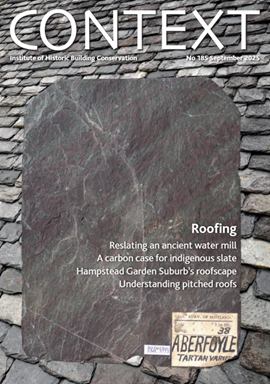
Articles range from slate to pitched roofs, and carbon impact to solar generation to roofscapes
Three reasons not to demolish Edinburgh’s Argyle House

Should 'Edinburgh's ugliest building' be saved?
IHBC’s 2025 Parliamentary Briefing...from Crafts in Crisis to Rubbish Retrofit
IHBC launches research-led ‘5 Commitments to Help Heritage Skills in Conservation’
How RDSAP 10.2 impacts EPC assessments in traditional buildings

Energy performance certificates (EPCs) tell us how energy efficient our buildings are, but the way these certificates are generated has changed.