





Development

Development, in terms of land, property or real estate, is a complex process of coordinating various activities to transform ideas and plans into physical reality. As a business process, it involves the financing, construction, renovation or refurbishment of buildings and land in order to make a profit.
The key phase in property development is deciding the nature of the development to be undertaken and whether or not to proceed with it. These decisions are based on an evaluation of the market, and financial appraisal of the proposed development, including the likely constraints, risks and profit.
The development process can be summarised as:
- Initiation and evaluation.
- Land and property acquisition.
- Design and permissions.
- Construction.
- Management or disposal.
Development is a much wider process than construction, which is principally the building of something such as a house, tunnel, bridge, etc. However, developers often manage the construction process as part of the overall development.
Development evaluation requires assessment of a great number of criteria; funding can be difficult to secure, purchases and sales can take considerable time, and developments can require a great deal of management.
Planning permission is the legal process of determining whether proposed developments should be permitted. Responsibility for planning lies with local planning authorities (usually the planning department of the district or borough council). Other than permitted developments, (which are considered to have insignificant impact), all developments require planning permission. This can be one of the most significant risks for developments.
The term 'speculative development' describes a process in which unused land is purchased or a building project is undertaken with no formal commitment from any end users. In other words, the end user of the development is unknown, but the developer is nonetheless confident not only that they will be able to find a one, but that the type of development they are undertaking will be suitable.
A 'committed development' is one that has received full or outline planning permission, or is allocated in an adopted development plan.
The National Planning Policy Framework (NPPF) refers to the term developable and suggests that: ‘To be considered developable, sites should be in a suitable location for housing development with a reasonable prospect that they will be available and could be viably developed at the point envisaged.’
The National Planning Policy Framework was revised in response to the Levelling-up and Regeneration Bill: reforms to national planning policy consultation on 19 December 2023 and sets out the government’s planning policies for England and how these are expected to be applied. This revised Framework replaces the previous National Planning Policy Frameworkpublished in March 2012, 2018, 2019, and 2021 and September 2023, for further details follow this link National Planning Policy Framework updated 2023.
For more information see: Developer.
Designing Buildings has a range of articles relating to development, including:
- Buyer-funded development.
- Cost-benefit analysis in construction.
- Developer.
- Development appraisal.
- Development footprint.
- Development manager.
- Endogenous development.
- Equity and loan capital for property development.
- Hope value.
- Investment.
- Jeffrey D. Sachs: Why we need to invest for sustainable development.
- Local development orders.
- Major development.
- Meanwhile use.
- Neighbourhood development order.
- Permitted development.
- Property.
- Property development and music.
- Property development finance.
- Real estate investment trust.
- Reconciling conservation and sustainable development.
- Regenerative development.
- Speculative construction.
- Stakeholders in development projects.
- Sustainable development.
- Types of development.
Featured articles
Check out some of the best features and news from Designing Buildings as well as key stories from around the web.
Changing expectations around competence and compliance

New information sheet from CIAT.
Grenfell investigation files passed to CPS

Angela Rayner apologises on behalf of the British state.

Electrical contractors need to understand the practical implications.

The real barrier to getting more value from digital technology.

Your guide to The Construction Reset at UKCW Birmingham.

Accommodating the Victorian and Edwardian working woman. Book review.
Rethinking passive fire protection in design

PFP demands the same level of design rigour as structure or services.

38% of Gen Zs feel safe when a fire door is wedged open.
Stunning images from around the world

Shortlist for CIOB’s Art of Building photography competition.

Guidance for conversion of traditional pre-1919 stone buildings.
Industrial heritage in the Ruhr
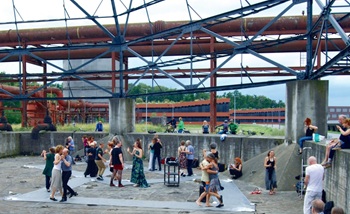
A marked difference to the fate of industrial landscapes in the UK.

Communities will be able to build their own clean energy.