






Carbon, productivity and retrofitting digital into existing infrastructure
In his latest blog (4 March 2020), ICE President Paul Sheffield identifies these three key and enduring themes as essential elements in improving efficiency in our industry.

Contents |
[edit] Introduction
Carbon, productivity and retro-fitting digital in existing infrastructure. Three simple things to say but much harder to come up with enduring plans to implement and improve.
Over the last few weeks we have had a number of working sessions with key industry leaders in these fields to explore ideas around productivity and digital.
Nick Smallwood, CEO of the Infrastructure Projects Authority has oversight of £100bn of extra government funding for infrastructure over the next 5 years - and our industry is really going to be under the spotlight to be able to deliver efficiency and prove that productivity levels are improving.
[edit] Modern methods of construction
There is ample evidence from other heavy industries that using modern methods of construction should be able to drive out 40% savings where it can be used. We can only really benefit from MMC when we agree to standardise many more of our products and components - without necessarily compromising visual appearances.
Improving efficiency can be achieved in so many ways - none of which are rocket science - but all of which can help. Design once and build many times, complete our design before we build. Build it digitally before we build it in reality. Build components off site and assemble on site. Measure real time structural performance to better inform designs for the next iteration. Make sure all design/construction teams are challenged with designing to a cost envelope. Much of this will inevitably have to be client led, but delivered by their supply chain through intelligent procurement that rewards innovation and productivity rather than low entry cost that - in the short term - is likely to reward those who invest least in intelligent construction methods.
[edit] Digital twins
Digital twins made an appearance in my Presidential address in November. In that speech I observed that over 90% of all buildings and infrastructure that we use today is over 20 years old. Solely focussing on embedding efficiency of construction and whole life operational costs in new buildings isn’t going to shift the dial for decades. Retrofitting efficient systems in old buildings and structures has to be the most impactful area for us to focus on.
In the oil and gas sector, owning a digital twin of your assets is standard practice and in fact can be held on the balance sheet as an asset. Even the accounting profession recognises the value of investing in digital twins. What can they do for us? We already know that fully data enriched digital models of buildings can enable operations and maintenance teams to work far more efficiently. Moving parts can be monitored and planned maintenance simulated before it is executed.
Digital twins of commercial estates enable asset owners to better predict energy demands and manage their buildings more efficiently - whether by buying cheaper power or managing demand better. Integrating these digital twins with other data sources such as weather forecasting and traffic congestion can enable us to adjust how we use our buildings in the future.
Net Carbon Zero is a cross cutting theme that is starting to change the way people think about the need for digital twins - and perhaps more importantly integrated digital twins. 10 years ago, our rail, highways, electricity networks and internet availability would all have been thought of as completely distinct and independent of each other.
Today they are all connected. Network rail has 60,000 structures and 64,000 signalling assets. It uses data. Highways across the land are increasingly using data and need energy connections to cater for the ever-increasing volumes of electric vehicles.
Urban road networks are controlled remotely by data captured live from the roadside. This is all being driven by the net zero carbon imperative. Asset owners are increasingly creating their digital twins but what is really important is that one digital twin can talk to another digital twin because they use a common set of rules. Whilst we do need a 'national digital twin' - we absolutely don’t want a 'nation of digital twins'.
The Centre for Digital Built Britain has funding from Government to work on establishing this common format over the next 4 years - we really could do with avoiding every asset owner doing their own thing.
[edit] A net carbon zero future
Now onto the issue of carbon. I have had many people say to me over the last few months “What is the ICE doing to influence the debate around climate change and CO2?” The really simple answer is: “A huge amount”.
One of our flagship policy pieces this year will be the State of the Nation report that will be published in June. Work is under way now and the report will be an aide to Government, policy makers and businesses around the work they can and should be doing to improve carbon literacy across the land, and to help map out a route to a net carbon zero future for their companies/enterprises.
This article was originally published on the ICE Community Blog on 4 March, 2020. It was written by Paul Sheffield, ICE President.
--The Institution of Civil Engineers
[edit] Related article on Designing Buildings Wiki
Featured articles and news
Costs and insolvencies mount for SMEs, despite growth
Construction sector under insolvency and wage bill pressure in part linked to National Insurance, says report.
The place for vitrified clay pipes in modern infrastructure
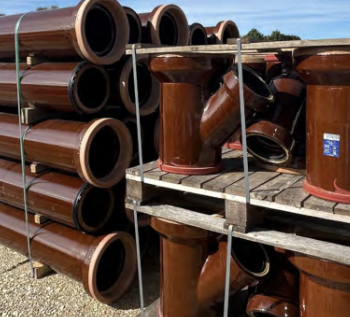
Why vitrified clay pipes are reclaiming their role in built projects.

Research by construction PR consultancy LMC published.
Roles and responsibilities of domestic clients

ACA Safety in Construction guide for domestic clients.
Fire door compliance in UK commercial buildings

Architect and manufacturer gives their low down.
Plumbing and heating for sustainability in new properties

Technical Engineer runs through changes in regulations, innovations in materials, and product systems.
Awareness of the Carbon Border Adjustment Mechanism
What CBAM is and what to do about it.
The new towns and strategic environmental assessments
12 locations of the New Towns Taskforce reduced to 7 within the new towns draft programme and open consultation.
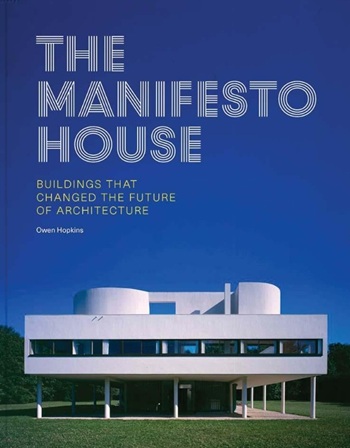
Buildings that changed the future of architecture. Book review.
The Sustainability Pathfinder© Handbook
Built environment agency launches free Pathfinder© tool to help businesses progress sustainability strategies.
Government outcome to the late payment consultation, ECA reacts.
IHBC 2025 Gus Astley Student Award winners

Work on the role of hewing in UK historic conservation a win for Jack Parker of Oxford Brookes University.
Future Homes Building Standards and plug-in solar
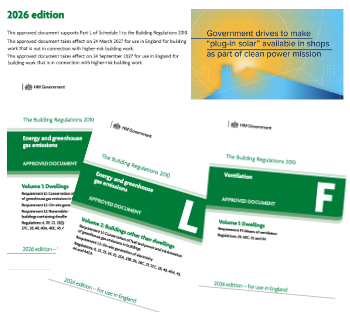
Parts F and L amendments, the availability of solar panels and industry responses.
How later living housing can help solve the housing crisis

Unlocking homes, unlocking lives.
Preparing safety case reports for HRBs under the BSA
A new practical guide to preparing structural inputs for safety cases and safety case reports published by IStructE.
Male construction workers and prostate cancer

CIOB and Prostate Cancer UK encourage awareness of prostate cancer risks, and what to do about it.