





Buildings of the People's Republic of China Great Leap Forward celebrations

Minzu Hotel
Contents |
[edit] Introduction
On 1 October 1959, the People’s Republic of China celebrated the 10th anniversary of its foundation. As part of this tribute, the country took its 'Great Leap Forward' - a cultural initiative that highlighted architecture and urban planning.
This Great Leap Forward included the construction of the 10 Great Buildings along with the expansion of Tiananmen Square in Beijing. The goal of the project was to establish Beijing as a modern city with its own architectural aesthetic - one without western or imperial influences.
[edit] The process
Most of the buildings were constructed in the 10 months leading up to the 10th anniversary. The work was undertaken through a collaborative effort by the Beijing Institute of Architectural Design, the Beijing Planning Bureau and the Ministry of Construction.
Stylistically, the buildings blended Socialist Realism and International Modernism. Of the 10 Great Buildings, four featured traditional Chinese decorative motifs while six incorporated principles of the modernist style associated with Chinese brutalism.
[edit] The traditional buildings
These buildings include large and heavy roofs sometimes stacked in the shape of a pagoda. They also feature brackets known as dougong.
- The Cultural Palace of Nationalities is a medium rise building with traditional Chinese design elements. It has won numerous awards and is considered an outstanding example of modern Chinese-style design.
- The Beijing railway station is the work of architects Yang Tingbao and Chen Deng'ao. When it first opened, it was the largest of its kind in the country. Located within the old walled city, it replaced the old station built in 1901. Traditional design elements include gilded eaves.
- The National Agriculture Exhibition Hall was designed and overseen by Premier Zhou Enlai. At the time of its construction, it was the only exhibition centre in China designed in the country's traditional garden style.
- The Diaoyutai State Guesthouse also incorporates elements of the ancient garden in its design. It was once reserved for special state visits, but it is open to the public now.

The Cultural Palace of Nationalities

The Beijing railway station.

The Diaoyutai State Guesthouse.
[edit] The modernist buildings
These buildings emphasise functionality and incorporate very little decoration:
- The Workers’ Stadium (renovated in 2004) is a multi-purpose stadium that can now hold more than 66,000 spectators. It hosted the Summer Olympics in 2008 and is now used for football matches.
- The Minzu Hotel is still in operation and has 507 guest rooms. It is commonly used to host foreign dignitaries or as a backdrop to press conferences.
- The Overseas Chinese Hotel was demolished in the 1990s. There is a new hotel in its place.
- The Great Hall of the People is home China’s top legislative body and hosts other ceremonial activities. It is located on the edge of Tiananmen Square. It is distinguished by the 10 freestanding columns across the facade, which are said to be inspired by an Egyptian sun temple.
- The National Museum of China was originally known as the China Revolutionary History Museum. It is also located on the edge of Tiananmen Square, and like the Great Hall, it incorporates 10 freestanding columns in its facade.
- The Chinese People's Revolutionary Military Museum is the only extensive military museum in the country. The seven storey building includes social realist sculptures of workers near the entryway which is topped by a steeple. Inside the museum, marble staircases and high ceilings are similar to those in the Great Hall of the People.
[edit] Related articles on Designing Buildings
Featured articles and news
Building Control Independent Panel final report
A precis of a key report lead by Dame Hackitt with full recomendations and link to the government response.
Guide to ISO 19650 for Architecture Firms (2026)
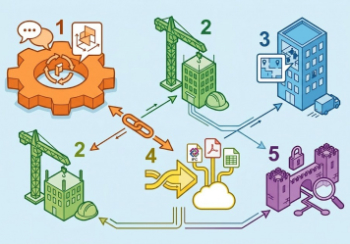
A user gives their low down.

A UK training and membership provider for mould remediation professionals.
Building Safety recap April, 2026
A short and longer run-through of the month, with links to further information and sources.
CIAT May 2026 briefing.

Independent NSI and BAFE study exploring how organisations are changing the way they buy fire safety services.
From medieval scribes to modern word art.

ECA welcomes crackdown on late payment and push for clean energy, whilst CIOB seek fixed cladding removal timeframes.
Cyber Security in the Built Environment
Protecting projects, data, and digital assets: A CIOB Academy TIS.
Managing competence in the built environment
ITFG publishes new industry guide on how to meet the ICC principles.
The UK's campaign to reduce noise pollution: Mythbusting, articles and topic guides.
Setting Expectations on Competence Management
Industry Competence Committee.
New Scottish and Welsh governments
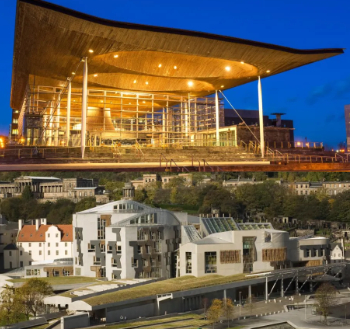
CIOB stresses importance of construction after new parliament elections.
The sad story of Derby Hippodrome
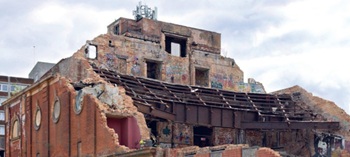
An historic building left to decay.

ECA, JIB and JTL back Fabian Society call to invest in skills for a stronger built environment workforce.