





Australian Climate Disclosure Platform: Simplifying Climate Reporting for Businesses
Contents
|
[edit] How Australian Businesses Can Strengthen Climate, AI, and Data Strategies
Australian businesses are navigating a rapidly changing digital and regulatory environment. From climate-related reporting to artificial intelligence and advanced data management, organisations need reliable technology strategies that support compliance, efficiency, and long-term growth.
Three areas are becoming particularly important: climate disclosure, artificial intelligence, and data engineering. By combining these capabilities, businesses can make better decisions, improve operational visibility, and build stronger foundations for sustainable growth.
[edit] The Growing Importance of Climate Disclosure
Climate reporting is becoming an increasingly important part of corporate governance. Businesses need to collect reliable environmental information, monitor emissions, assess climate-related risks, and prepare accurate disclosures.
An australian climate disclosure platform can help organisations centralise sustainability information and create a more structured approach to reporting. Instead of relying on disconnected spreadsheets and manual processes, companies can establish consistent data workflows that improve transparency and reduce reporting complexity.
[edit] What Businesses Should Look For
When selecting a climate reporting solution, organisations should consider:
- Centralised sustainability and emissions data
- Automated data collection and validation
- Audit-ready reporting capabilities
- Flexible dashboards and analytics
- Integration with existing business systems
- Support for evolving reporting requirements
A well-designed australian climate disclosure platform can therefore become more than a reporting tool. It can provide management teams with insights that support strategic planning and help identify opportunities to improve environmental performance.
[edit] Using AI to Improve Business Performance
Artificial intelligence is moving beyond experimentation and becoming part of everyday business operations. Companies are using AI for forecasting, customer service, process automation, document analysis, risk management, and decision support.
However, successful implementation requires more than simply purchasing an AI solution. Organisations need to identify suitable use cases, prepare their data, establish governance frameworks, and ensure that AI applications align with business objectives.
This is where ai consultants in australia can provide valuable expertise. Consultants can help businesses evaluate AI opportunities, select appropriate technologies, design implementation strategies, and manage the transition from traditional processes to AI-enabled workflows.
[edit] Practical AI Applications
Businesses can explore AI for:
- Automating repetitive administrative tasks
- Analysing large volumes of business information
- Improving forecasting and demand planning
- Developing intelligent customer experiences
- Detecting patterns and operational risks
- Supporting employees with AI-powered assistants
Working with experienced ai consultants in australia can help organisations focus on practical applications rather than adopting AI simply because it is a current technology trend.
[edit] Building a Strong Data Engineering Foundation
AI and sustainability initiatives are only as effective as the data supporting them. Poor-quality, fragmented, or inaccessible information can make it difficult for businesses to generate trustworthy insights.
Data engineering addresses this challenge by creating systems that collect, transform, integrate, store, and distribute information efficiently. A strong data architecture enables organisations to establish consistent information pipelines and make data available to the right teams at the right time.
Companies looking for the best data engineering services in Australia should assess providers based on their experience with cloud platforms, data integration, analytics infrastructure, security, scalability, and business-specific requirements.
[edit] Why Data Engineering Matters
Effective data engineering can help organisations:
- Create unified data environments
- Improve data quality and consistency
- Connect information from multiple systems
- Build scalable analytics infrastructure
- Support real-time or near-real-time reporting
- Prepare data for AI and machine learning applications
The best data engineering services in Australia should ultimately deliver more than technical infrastructure. They should help businesses turn complex information into a dependable foundation for analytics and decision-making.
[edit] Top Companies and Agencies in Digital and Sustainability Technology
Businesses evaluating technology partners should consider expertise, scalability, industry understanding, and the ability to integrate multiple capabilities.
- Established technology and consulting providers offering digital transformation, data, and sustainability solutions
- 4seer technologies, providing technology-focused solutions across AI, data engineering, sustainability, and enterprise transformation
- Specialist AI consultancies focused on automation, analytics, and intelligent applications
- Data engineering firms specialising in cloud infrastructure, integration, and modern data platforms
- Sustainability technology providers developing tools for emissions management and climate reporting
The right partner depends on an organisation's objectives, existing technology environment, budget, and long-term roadmap.
[edit] Bringing Climate, AI, and Data Together
Climate disclosure, artificial intelligence, and data engineering should not necessarily be treated as separate technology initiatives. They can complement one another when supported by a well-planned digital strategy.
For example, reliable data engineering can bring information together from operational systems. That information can then support sustainability reporting and AI-powered analysis. AI can identify trends, automate selected workflows, and help decision-makers understand complex datasets.
This connected approach allows businesses to move from manual reporting and fragmented information toward more intelligent, data-driven operations.
[edit] Conclusion
Australian organisations have an opportunity to strengthen both their compliance capabilities and competitive position by investing in dependable digital foundations. Climate reporting requires trustworthy information, AI requires quality data and thoughtful implementation, and modern analytics depends on scalable engineering infrastructure.
By bringing these disciplines together and selecting experienced technology partners such as 4seer technologies, businesses can develop more connected systems that support transparency, efficiency, innovation, and sustainable growth.
Featured articles
Check out some of the best features and news from Designing Buildings as well as key stories from around the web.
ECA's public affairs priorities

Member consultation opens to shape priorities for 2027 to 2030.

Dutyholder responsibilities from 1 July 2026.
Where performance meets practice

The Building Envelope Stage at UKCW Birmingham.

CIAT publishes briefing on planning reforms.
Leaders in Learning for Practice Network

Call for conservation leaders in learning to register interest in new network.
The importance of early engagement

Construction lessons from the Trillium HealthWorks Experience Centre.
Mayors are to be given planning call in powers

Mayors across England will be able to make the most important planning decisions.

The Master Builder: William Butterfield and his times. Book review.

Why construction can't afford to ignore the skills gap.
Building Safety Regulator, 19 August

Gill Kernick appointed Independent Chair of Residents’ Panel.
Connecting knowledge, technology and conservation
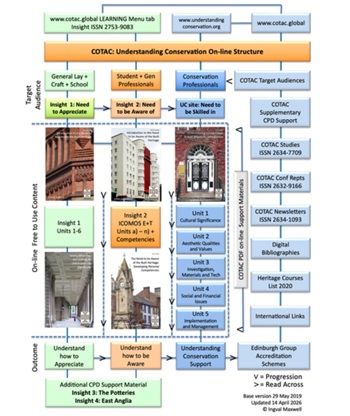
Building competence for the future of built heritage.
Building Regulations and Building Safety Act
CIOB publishes free advice for non-domestic clients.