






Use of lighting to improve health and wellbeing

Lighting affects our health. It affects our mood and circadian rhythms. Poor lighting is linked to glare, headaches, eyestrain, skin conditions and various types of sight loss. So what can building owners and occupants do about it?
1 - Ensure lighting is well maintained. Failed lighting creates dark areas which may be unsafe. Faulty lighting that flashes on and off can cause headaches or epileptic seizures.
2 - Reduce exposure to glare. Arrange visual display units so that reflected glare from luminaires and other brightly-lit areas is limited or avoided. Use matt rather than gloss finishes. Use bright finishes of high reflectance for ceilings and walls to enhance the overall luminance of the space.
3 - Use daylight where possible. Raise blinds when not needed. Create areas with plenty of sunlight and good ventilation so they do not overheat.
4 - Get outside. Exposure to bright daylight and sunlight can help keep the body clock entrained and avoid the symptoms of SAD (Seasonal Affective Disorder).
5 - Be aware of UV exposure. If used for long periods, fluorescent lamps close to the skin, such as desk lamps, should have a protective glass cover, or use LED’s instead.
6 - Reduce shift work, especially night work. Rapid rotation of shifts (a change every few days) is better than weekly rotation as this interferes with circadian rhythms. Use clockwise rotation of shifts (morning, afternoon and night) to ensure adequate rest. Avoid early starts to morning shifts.
7 - Dispose of lamps correctly. Follow Public Health England recommendations for dealing with broken fluorescent lamps to reduce exposure to mercury. Recycle lamps at the end of life by following local lamp recycling instructions.
This article was created by --BRE_Buzz. It was originally published on BRE Buzz in October 2015 and was written by Ali Nicholl, Innovation Network Manager at BRE.
You can see the original article here.
[edit] Related articles on Designing Buildings Wiki
- 7 ways better lighting can improve your health.
- Adequate lighting.
- BRE articles on Designing Buildings Wiki.
- BRE Expert Collection 6 Daylight and shading.
- Building Research Establishment.
- Circadian rhythms.
- Daylight benefits in healthcare buildings
- Daylight lighting systems.
- General lighting v task lighting.
- Health and wellbeing impacts of natural and artificial lighting.
- Human-centric lighting.
- Lighting.
- Lighting and energy efficiency.
- Lighting and health FB 74.
- Lighting and health infographic.
- Lighting designer.
- Lighting for circadian rhythms.
- Site layout planning for daylight and sunlight.
- The impact of lighting in retail design.
- The essential guide to retail lighting.
- Types of lighting.
Featured articles and news

We're expanding our collaborative mission by launching DB Intelligence, an exclusive market research advisory panel. Built environment professionals can now get paid to share their expertise on industry trends, products and services.
Panel members receive direct financial incentives for participating in research projects like short surveys, 1-2-1 interviews and focus groups. Register today to shape the future of the construction sector.
Building Control Independent Panel final report
A precis of a key report led by Dame Hackitt with full recommendations and link to the government response.
Guide to ISO 19650 for Architecture Firms (2026)
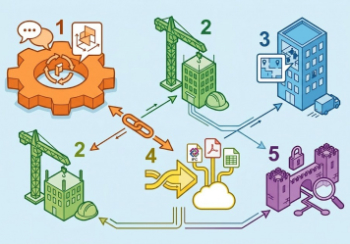
A user gives their low down.

A UK training and membership provider for mould remediation professionals.
Building Safety recap April, 2026
A short and longer run-through of the month, with links to further information and sources.
CIAT May 2026 briefing.

Independent NSI and BAFE study exploring how organisations are changing the way they buy fire safety services.
From medieval scribes to modern word art.

ECA welcomes crackdown on late payment and push for clean energy, whilst CIOB seek fixed cladding removal timeframes.
Cyber Security in the Built Environment
Protecting projects, data, and digital assets: A CIOB Academy TIS.
Managing competence in the built environment
ITFG publishes new industry guide on how to meet the ICC principles.
The UK's campaign to reduce noise pollution: Mythbusting, articles and topic guides.