





The essential guide to retail lighting
BRE (Building Research Establishment) is an independent, research-based consultancy, testing and training organisation, operating in the built environment and associated industries.
On 3 September 2013, BRE published, The essential guide to retail lighting: Achieving effective and energy-efficient lighting (FB 56), written by Cosmin Ticleanu, Paul Littlefair and Gareth Howlett. It was funded by the BRE Trust.
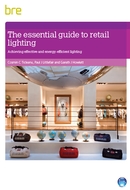
Despite the fact that lighting products are becoming more energy efficient, overall, the amount of energy used for retail lighting has increased. This is, in part, because of longer opening hours and higher light levels, but it is compounded by inappropriate control strategies and improper choice of light sources, and it results in reduced profitability and has environmental impacts.
The retail sector consumes more lighting energy than any other commercial sector; accounting for 35% of the energy consumption for lighting in the entire service sector, and 43% of the electricity used in the retail sector.
Energy consumption can be improved by the use of modern lighting techniques and equipment, and more efficient light sources, whilst providing an enhanced level of illumination and improved visual appeal.
This 68 page guide reviews current practice in retail lighting and offers advice about energy savings. It provides practical guidance for retailers, architects and designers about refurbishing existing lighting systems and developing new lighting solutions.
Its contents are:
- Glossary.
- Introduction.
- Design principles.
- Review of current solutions in retail lighting.
- State of the art technologies in lighting.
- Guidelines for improved lighting design.
- Conclusions.
- References.
- Appendix: Checklist for refurbishment.
[edit] Find out more
[edit] Related articles on Designing Buildings Wiki
- 7 ways better lighting can improve your health.
- BRE articles on Designing Buildings Wiki.
- BRE Expert Collection 6 Daylight and shading.
- Building Research Establishment.
- Cheshire Oaks: Marks and Spencer
- Daylight benefits in healthcare buildings
- Daylight lighting systems.
- General lighting v task lighting.
- Health and wellbeing impacts of natural and artificial lighting.
- Lamp.
- Lighting.
- Lighting and energy efficiency.
- Lighting and health infographic.
- Lighting designer.
- Reducing the embodied impacts of shopfitting equipment.
- Site layout planning for daylight and sunlight
- The impact of lighting in retail design
- Use of lighting to improve health and wellbeing
Featured articles
Check out some of the best features and news from Designing Buildings as well as key stories from around the web.

Government approach could undermine delivery and regeneration.
World's first mass timber data centre.

The overlooked environmental aspect of data centre development.
Introduction to radon awareness

New technical information sheet published by CIOB.

Updated supplier guide can help electrical contractors engage with NHP.

CIAT confirm the winners of the 2026 architectural technology awards.

Government launches a one stop shop for flood preparedness.

Sir Edwin Lutyens: Britain's greatest architect? Book review.

CIOB publishes free template to help assess and manage risks.
ECA's reflections on Party Conference season

Burnham wants to be confident of winning before asking for a fresh mandate.
New Chief Construction and Scientific Adviser

Sergio Cavalaro, Professor of Infrastructure Systems at Loughborough University.
Building safety levy for England

CIAT publish estimator tool for members.

Water sector faces a growing crisis that could slow the delivery of vital infrastructure.