






The Procurement Bill passes second reading
[edit] Simpler procurement rules on the horizon for SMEs
The Procurement Bill, first announced in this year’s Queen’s Speech, has passed Second Reading in the House of Lords on Wednesday, meaning it is a step closer to becoming law.
The Bill will focus on making more government contracts open to small businesses, replacing 350 EU laws with a simple and flexible system. It is expected to pass into law by 2023.
Chancellor of the Duchy of Lancaster, Steve Barclay said: “We are introducing reforms through our Procurement Bill that will do-away with bureaucratic rules that are both complicated and time-consuming for firms to navigate.
“Our departure from the European Union means we are free to streamline these rules on who wins taxpayer contracts.
“This will give small businesses a better chance of landing public sector contracts and allow the Government wider access to the first-class skills, innovation and ideas that many agile, creative smaller firms offer. In turn this will allow us to improve the services we provide to the public.”
Brand new digital infrastructure will make it easier and cheaper for organisations of all sizes to bid for public contracts, with a single digital platform that will hold all of a supplier’s credentials.
The reforms are expected to slash costs and make it easier for businesses bidding for contracts, particularly smaller companies with less experience of procurement processes. This could result in more SMEs benefiting from contracts for everything from catering for public buildings to digital services and infrastructure projects.
For further information visit visit the government website or read '350 EU rules to be ditched, creating simpler, more flexible and transparent procurement'
This article appeared on the ECA news website dated May 31 and entitled 'Simpler procurement rules on the horizon for SMEs"
--ECA
[edit] Related articles on Designing Buildings
- Admeasurement
- Automated vendor selection.
- Bidding tactics.
- Competitive procedure with negotiation.
- Connected procurement.
- Construction contract.
- Corporate objectives for procurement.
- Design and build procurement route
- Design and manage procurement route.
- Design build finance and operate.
- Design, build, finance, maintain DBFM.
- Design Build Finance Operate Maintain DBFOM.
- Design build finance transfer (DBFT).
- Design, build, manage contractor.
- Design build operate maintain DBOM.
- Design Build Operate Transfer DBOT.
- Design construct manage finance DCMF.
- Difference between procurement and purchasing.
- Dynamic purchasing system under the Single Procurement Document (Scotland).
- Engineering procurement and construction contract.
- ESPD and the decline of the PQQ.
- European Single Procurement Document ESPD.
- Exclusion grounds under the Single Procurement Document (Scotland).
- Innovative partnership procedure.
- Lump sum contract
- Managing the procurement process.
- Negotiated Procedure without Prior Publication NPwPP.
- OJEU procurement procedures
- Procurement policy.
- Procurement policy note PPN.
- Procurement route options pros and cons.
- Procurement strategy.
- Public procurement
- Renovate, operate, transfer (ROT).
- Single-stage tender
- Subcontract procurement.
- Tender processes for construction contracts
- Two-stage tender
- Typical tender process for construction projects
- Vendor Managed Inventory VMI.
- Procurement route
Featured articles
Check out some of the best features and news from Designing Buildings as well as key stories from around the web.

The Master Builder: William Butterfield and his times. Book review.

Why construction can't afford to ignore the skills gap.
Building Safety Regulator, 19 August

Gill Kernick appointed Independent Chair of Residents’ Panel.
Connecting knowledge, technology and conservation
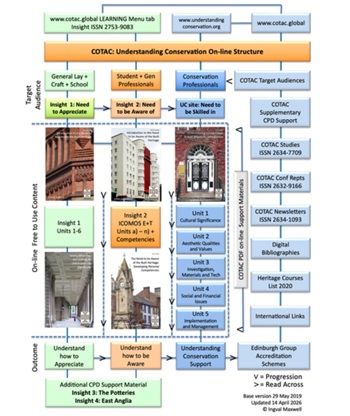
Building competence for the future of built heritage.
Building Regulations and Building Safety Act

CIOB publishes free advice for non-domestic clients.
Building Safety Newsletter from MHCLG.

An extraordinary record of steel engineering worldwide.

Households living near new pylons to save on bills.

ECA warns growth must not outpace grid capacity or skills.
The role of the client and decision making

CIOB response to built environment professions call for evidence.
Construction's sustainability reporting revolution

Tracking upfront embodied carbon with digital tools.
ECA welcomes procurement reforms

Public spending must back British jobs and skills.