





Thames tideway tunnel
Contents |
[edit] Introduction
The £4.2bn (at 2011 prices) Thames tideway tunnel project comprises a 24km long 7.2m diameter sewer 60m (average) below ground. The project plans were approved by the government on 12 September 2014. The tunnel will run from Acton in the west to Abbey Mills in the east. It will have a holding storage capacity of 1.6 million cubic metres.
Its purpose is to protect the River Thames from the frequent overflow of Victorian sewers designed for a much smaller population. Recently, flash flooding has caused sewers to back up and flood residences in west London.
Its route generally follows the Thames, at a fall of 1 in 790, it intercepts 34 overflow facilities and will require a number of significant connecting tunnels to other existing sewers. The project also includes new, expanded or replacement pumping stations, increased capacity storm water holding tanks and expanded sewage treatment works at Beckton which will capture the new tunnel contents via the newly constructed Lee Tunnel.

[edit] Procurement
Thames Water (via a special purpose vehicle, Thames Tideway Tunnel Ltd) tendered the main tunnel work to the international market in three sections. UK consortia have been selected for all three projects:
- West section £300m - £500m, Nuttall and Morgan Sindall.
- Central section £600m - £900m, Laing O'Rourke and Ferrovial Agroman.
- East section £500m - £800m, Costain and Vinci and Bachy.
[edit] Construction
Construction is due to start in 2016 and complete by 2023. There are 23 construction sites. Some are on land already owned by Thames Water and others are on new sites still to be acquired, particularly those on the Thames foreshore.
The river will be used as much as possible to remove excavated material and deliver tunnel segments and construction material. At the combined sewer overflow (CSO) interception sites, construction of vertical cylindrical shafts some 60m deep will be built with internal diameters ranging from 7m to 20m to enable connecting culverts to be constructed that link existing sewers to the new tunnel. The main drive sites will require even larger 30m diameter x 60m deep shafts to allow the tunnel boring machinery to be lowered into position.
[edit] Sites (west to east)
- Acton Storm Tanks - main tunnel starting point and combined sewer overflow (CSO) interception.
- Hammersmith - pumping station, CSO interception and connection tunnel drive site (CTDS).
- Barn Elms – CSO interception and CTDS
- Putney Embankment Foreshore – CSO interception and CTDS
- Carnwath Road Riverside – Main tunnel drive reception and connection tunnel from Dormay Street reception site.
- Dormay Street – CSO interception and CTDS.
- King George's Park – CSO interception and connecting tunnel reception site.
- Falconbrook – pumping station CSO interception and CTDS
- Cremorne Wharf Depot – CSO interception and CTDS
- Chelsea Embankment Foreshore – CSO interception and CTDS
- Kirtling St – main tunnel double drive site
- Heathwell Pumping Station – CSO interception and CTDS
- Albert Embankment foreshore – CSO interception andCTDS
- Victoria Embankment foreshore – CSO interception and CTDS
- Blackfriars Bridge Foreshore – CSO interception
- Shad Thames Pumping Station – system modification
- Chambers Wharf – main tunnel drive and reception site
- Earl Pumping Station – CSO interception
- Deptford Church St – CSO interception
- Greenwich Pumping Station – CSO interception and CTDS
- King Edward Memorial Park – CSO interception
- Bekesbourne St – system modification
- Abbey Mills Pumping Station – Main tunnel reception site.
[edit] Funding
Thames Water are to fund £1.4 billion by spreading the cost across its consumers. This could add £80 to average annual bills by 2020 across its 15m customers. Thames Tideway Tunnel Ltd will raise £2.8 Billion (2011 pricing) for the capital works based on future revenue income contracted with Thames Water.
In July 2015, it was announced that Bazalgette Tunnel Limited would finance, deliver and own the sewer. This is a consortium consisting of Allianz, Amber Infrastructure Group, Dalmore Capital Limited and DIF.
[edit] Progress
In 2017 it was reported that ahead of tunnelling in 2018, the main focus of work had been at the three main drive sites. These are for launching the 7.8 m diameter tunnel boring machines (TBMs) and will serve as material transport hubs and head offices for each of Tideway's three main NEC3 works contracts – west, central and east. For more information see: Thames Tideway update.
In February 2020 it was reported that tunnellers had passed the halfway mark on the £3.8bn project.
In September 2020 it was reported that the main tunnel drive for the first major section of the tunnel had been completed.
[edit] Related articles on Designing Buildings
- Are sustainable urban drainage systems the response to our changing climate?
- Civil Engineering during the Industrial Revolution in Britain.
- Masterplanning.
- Public sewer.
- Pumping station.
- Safety lessons the space industry can teach engineers.
- Sewer construction.
- Sewerage.
- The redevelopment of Leicester's sewerage system by Joseph Gordon.
- Thames Gateway.
- Thames Tideway update.
- Tunnel.
- Understanding and managing workplace stress is critically important to civil engineers.
Featured articles and news
Costs and insolvencies mount for SMEs, despite growth

Construction sector under insolvency and wage bill pressure in part linked to National Insurance, says report.
The place for vitrified clay pipes in modern infrastructure
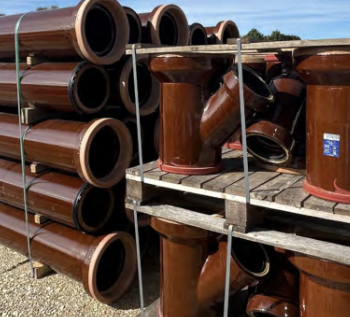
Why vitrified clay pipes are reclaiming their role in built projects.

Research by construction PR consultancy LMC published.
Roles and responsibilities of domestic clients

ACA Safety in Construction guide for domestic clients.
Fire door compliance in UK commercial buildings

Architect and manufacturer gives their low down.
Plumbing and heating for sustainability in new properties
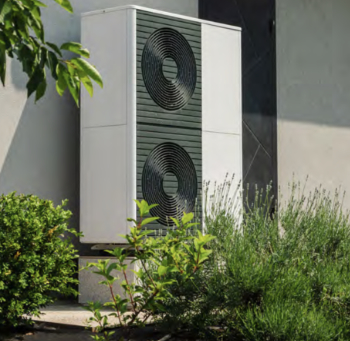
Technical Engineer runs through changes in regulations, innovations in materials, and product systems.
Awareness of the Carbon Border Adjustment Mechanism
What CBAM is and what to do about it.
The new towns and strategic environmental assessments
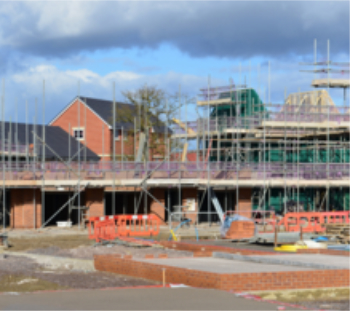
12 locations of the New Towns Taskforce reduced to 7 within the new towns draft programme and open consultation.

Buildings that changed the future of architecture. Book review.
The Sustainability Pathfinder© Handbook
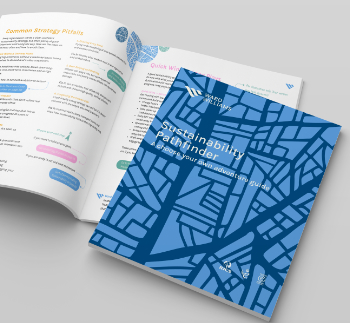
Built environment agency launches free Pathfinder© tool to help businesses progress sustainability strategies.

Government outcome to the late payment consultation, ECA reacts.
IHBC 2025 Gus Astley Student Award winners

Work on the role of hewing in UK historic conservation a win for Jack Parker of Oxford Brookes University.
Future Homes Building Standards and plug-in solar
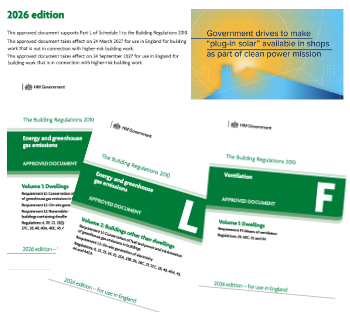
Parts F and L amendments, the availability of solar panels and industry responses.
How later living housing can help solve the housing crisis
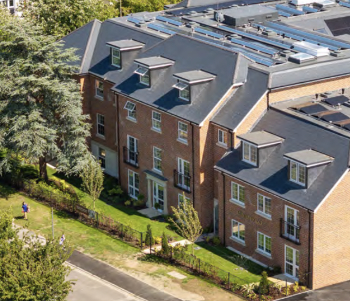
Unlocking homes, unlocking lives.
Preparing safety case reports for HRBs under the BSA

A new practical guide to preparing structural inputs for safety cases and safety case reports published by IStructE.
Male construction workers and prostate cancer

CIOB and Prostate Cancer UK encourage awareness of prostate cancer risks, and what to do about it.