






Software as a Service for cladding remediation
Contents |
[edit] Introduction
Cladding remediation is pressing housebuilders and developers to begin an introspective examination of not only their buildings but their construction processes, explains Mike White, CTO at Zutec.
So far, 49 housebuilders in England have pledged to action the critical remediation of dangerous cladding. Contracts have now been sent out to ensure commitment.
It means that work has already begun across the country to remedy the situation that puts tens of thousands of lives at risk. Time is of the essence. The combined cost is expected to be around the £8 billion mark – which may prove to be the biggest hurdle in resolving the cladding crisis.
Clearly, a more efficient approach embracing digital processes can construction technology can help to mitigate unnecessary costs and time.
[edit] An insular industry
The construction industry is notorious for sticking to tried and trusted methods. So much so, that the sector is second only to agriculture as the least digitised sector in the world. Excel sheets, pdfs and paper copies still form the backbone of many construction sites and maintained buildings. Important documentation can reside in dusty boxes and fade with time. Documents are lost, damaged and prone to error, meaning intrusive tests may be required on cladding inspections due to a lack of credible building information. Clearly, a better process is required.
These documents and records are constantly referred to during all phases of the building lifecycle – and the cladding remediation process requires a better method.
Photographic evidence may also be required to prove compliance and that the correct materials have been used to release the all-important EWS1 forms. This is unchartered territory for many involved in the process. Housebuilders and developers new build pipelines must be maintained to ensure balance sheets remain in the black. How will cladding remediation fit in around their packed itineraries? And how will resources be stretched as more work gets underway?
Duty holders, contractors and inspectors will need to embrace digitisation to bring efficiency to the process, especially for photo-based evidence.
[edit] Digitised data to drive forward cladding remediation
Guaranteeing properties are fire-safe in the most efficient way – this is at the heart of cladding remediation.
An archaic system for data collection and storage is not the most efficient path to obtain and maintain the safety of legacy buildings. Data must be quickly available, legible, clear and instantly sharable between contractors and assessors. Records, plans, blueprints – they need to be readily available whenever the need arises to refer to them.
To ensure cladding remediation can be completed quickly, a centralised solution to assess, track and record all work, which can be shared to all relevant stakeholders, is something all housebuilders and developers should consider before work commences.
Without this, a contravention of regulations, alongside missing deadlines and increased costs are all distinct possibilities.
[edit] Clarity and compliance
The remediation of cladding requires inspection, extensive rework, assessment and approval to release the all-important EWS1 form as each stage demands robust records and painstaking attention to detail.
A quality management SaaS solution should therefore be quick to implement, configurable to individual business needs and intuitive and user friendly in the field. The right platform should optimise on-site hours and guarantee that the right materials are being used in the right place – so when the time comes to submit to assessors – the chance of sign off is quicker and costly re-assessment is dramatically reduced.
It should also encompass photographic evidence which can be compiled, stored and geo-tagged.
In short, with so much data to be collated, shared, evidenced and assessed – a single platform to successfully achieve this for each in scope building would not only speed up processes and control costs which had previously been manual tasks – but would be a driver to a higher rate of success.
With the EWS1 Form being valid for five years before reassessment, storing them in a central, cloud-based location also has obvious benefits.
[edit] All bases covered for building safety
Using one out the box platform for all these activities ensures compliance by following systematic, digital processes to make fire safety and building risk management simple and painless.
Some cladding remediation solutions ensure clients not only provide evidence of cladding work remediated but that the data is authentic and auditable, which can be used for other quality management and assurance purposes further down the lifecycle of the building. Embracing construction tech to take the next step will ensure remediation work is not only done – but done correctly.
[edit] Related article on Designing Buildings
- Big data.
- BIM.
- BS ISO 16739:2013 Industry Foundation Classes (IFC) for data sharing in the construction and facility management industries.
- Building data exchange.
- Building safety act.
- Common data environment.
- Cladding for buildings.
- Data and behaviours in construction.
- Data in the construction industry.
- Fire safety bill.
- Golden thread.
- Grenfell Tower fire.
- Hackitt Review.
- Making the most of big data.
- Structured data.
--Zutec 15:52, 27 Sep 2022 (BST)
Featured articles
Check out some of the best features and news from Designing Buildings as well as key stories from around the web.
Undervaluing our industrial past

Heritage value changes as taste for building styles changes.
Changing expectations around competence and compliance

New information sheet from CIAT.
Grenfell investigation files passed to CPS

Angela Rayner apologises on behalf of the British state.

Electrical contractors need to understand the practical implications.

The real barrier to getting more value from digital technology.

Your guide to The Construction Reset at UKCW Birmingham.

Accommodating the Victorian and Edwardian working woman. Book review.
Rethinking passive fire protection in design

PFP demands the same level of design rigour as structure or services.
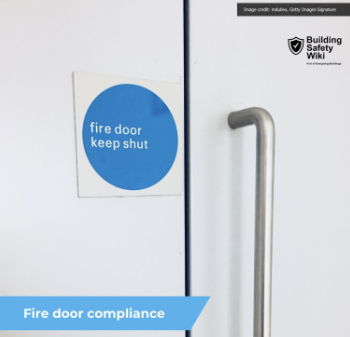
38% of Gen Zs feel safe when a fire door is wedged open.
Stunning images from around the world

Shortlist for CIOB’s Art of Building photography competition.

Guidance for conversion of traditional pre-1919 stone buildings.
Industrial heritage in the Ruhr
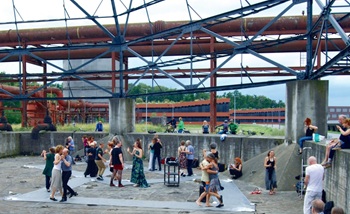
A marked difference to the fate of industrial landscapes in the UK.
Comments
[edit] To make a comment about this article, click 'Add a comment' above. Separate your comments from any existing comments by inserting a horizontal line.