





Pre-qualification questionnaire PQQ for construction contracts

A pre-qualification questionnaire (PQQ, sometimes referred to as a supplier assessment questionnaire) sets out a series of questions for potential tenderers to answer regarding their level of experience, capacity and financial standing. The answers to these questions enable the client to produce a short list of suppliers that are likely to be most appropriate for their project. Short-listed suppliers may then be invited to tender for the contract.
Using a pre-qualification questionnaire has the effect of reducing the number of potential tenders to those that are genuinely appropriate for the project, saving a great deal of wasted time for potential tenderers who would not have any realistic chance of winning the contract. It also saves time for the client processing and assessing inappropriate tenders.
Pre-qualification questionnaires should be focused and simple to complete, (perhaps with limits to the number of words that can be submitted in response to each question) otherwise they may just replicate the tender process itself. They should also make it very clear what the tender process is for, so potential tenderers can properly assess whether they have the appropriate experience, capacity and financial standing.
Where possible a scoring and weighting system should be prepared for rating submitted information and potential tenderers should be informed of the details of the system that will be used.
The information requested should be straight-forward, relevant and proportionate to the size of the contract. It might request:
- Company details (including legal status).
- Details of insurance cover.
- Financial information (such as recent accounts).
- Relevant experience.
- Information about technical and professional ability.
- Information about capability and capacity.
- Health and safety policy.
- Quality assurance policy.
- Environmental management policy.
- Equal opportunities policy.
- Relevant references.
- A BIM assessment to determine BIM capability, gaps in skills and training needs.
Systems such as Construction Line go some way to standardising and simplifying the tender process by allowing tenderers to provide pre-qualification information just once that can then be presented to multiple potential clients.
The government used to require public clients to use PAS 91, a standardised wording for pre-qualification questionnaires, however following the issue of (PPN) 03/24 it was clarified that PAS 91 is no longer actively supported (or updated) and that the Common Assessment Standard (CAS) is the preferred method for pre-qualification in public projects.
On July 1, 2024 Version 4 of the Common Assessment Standard (CAS) was published, including a new Building Safety section, ensuring it can be used to demonstrate companies have the organisational capability to fulfil their roles under the Building Safety Act. Below is a lists of the contents of Version 4 of the Common Assessment Standard issued in 2024 (with the previous headings from the 2023 version in brackets both the new and old versions cover 10 key areas;
- Section 1: Identity
- Section 2: Financial
- Section 3: Corporate and Professional Standing
- Section 4: Health and Safety
- Section 5: Environmental
- Section 6: Quality
- Section 7: Building Safety (previously Equality)
- Section 8: Fairness, Inclusion and Respect - FIR (previously Corporate Social Responsibility- CSR)
- Section 9: Information Security (previously Information Security and GDPR)
- Section 10: Information Management (IM)
In March 2021, a pre-qualification system went live. Developed by Build UK with support from the Civil Engineering Contractors Association, and endorsed by the Construction Leadership Council (CLC), the system has been adopted by contractors and clients including Balfour Beatty, Costain, HS2, Mace, Multiplex and Skanska. It is also supported by a number of leading trade associations, such as electrotechnical sector body ECA.
In December 2013, Enterprise Minister Matthew Hancock set out a range of measures intended to make it easier for small businesses to grow in Small Business: GREAT Ambition. Measures were announced to tackle late payment and to remove the barriers to public contracts by abolishing pre-qualification questionnaires (PQQs) for low-value contracts and mandating the use of core PQQs for high-value contracts.
For more information see article the common assessment standard.
[edit] Related articles on Designing Buildings
- Appointing consultants.
- Common assessment standard.
- Constructionline.
- Construction contract.
- ESPD and the decline of the PQQ.
- Expression of interest.
- Invitation to tender.
- Mid tender interview.
- PAS 91.
- Pre qualification questionnaires and PAS 91.
- Pre-qualification standard 2021.
- Pre tender interview.
- Procurement route.
- Selection criteria.
- Supplier assessment questionnaire.
- Tender documentation.
- Tender evaluation.
- Tender processes.
- The benefits of e-procurement in construction.
[edit] External references
- OGC Pre-Qualification Questionnaire for selecting suppliers.
- OGC PQQ.
- Construction Line.
- OGC Supplier Selection and Pre-Qualification: Guidance, tools and tips.
- OGC Pre-Qualification Questionnaire.
- Pre-qualification - PAS 91: the use of this standardised wording for PQQ's has been mandated within Government.
- PACE Guidance on the Appointment of Constractors and Consultants P480 Pre Selection Procedures.
Featured articles
Check out some of the best features and news from Designing Buildings as well as key stories from around the web.
Undervaluing our industrial past

Heritage value changes as taste for building styles changes.
Changing expectations around competence and compliance

New information sheet from CIAT.
Grenfell investigation files passed to CPS

Angela Rayner apologises on behalf of the British state.

Electrical contractors need to understand the practical implications.

The real barrier to getting more value from digital technology.

Your guide to The Construction Reset at UKCW Birmingham.

Accommodating the Victorian and Edwardian working woman. Book review.
Rethinking passive fire protection in design

PFP demands the same level of design rigour as structure or services.
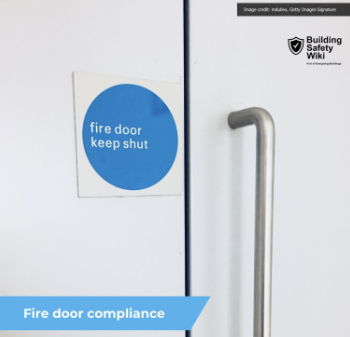
38% of Gen Zs feel safe when a fire door is wedged open.
Stunning images from around the world

Shortlist for CIOB’s Art of Building photography competition.
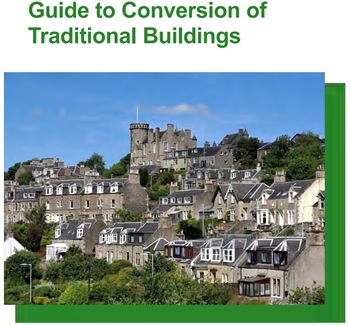
Guidance for conversion of traditional pre-1919 stone buildings.
Industrial heritage in the Ruhr

A marked difference to the fate of industrial landscapes in the UK.
Comments
[edit] To make a comment about this article, click 'Add a comment' above. Separate your comments from any existing comments by inserting a horizontal line.