






Net Zero Review underlines role for engineering services
“Net zero is the growth opportunity of the 21st century”, according to MISSION ZERO, the Independent Net Zero Review published last week by former Energy Minister Chris Skidmore.
Commissioned during the political confusion of autumn 2022, Mission Zero assesses how the UK can deliver its Net Zero (NZ) targets and achieve national energy security in a more affordable, efficient, and pro-business way. Drawing on over 1800 written submissions the outcome is a sprawling analysis that, nevertheless, strongly advocates a continued push towards UK Net Zero Carbon by 2050.
[edit] Summary
In all, the Review makes well over 100 recommendations for government, the UK’s main economic sectors, local regions and authorities, and households. However, it kicks off with ‘ten priority missions’ for up to 2035, which include boosting grid electrification, onshore and offshore wind, solar, nuclear and energy efficiency, as well as unlocking the planning system.
But it also calls for more urgent action to organize and plan for transition, noting “…targets remain just words on a page without a clear, consistent, and stable transition plan”. The Review’s ‘25 actions for 2025’ – which in policy terms is only around the corner - recommend urgent planning to deliver:
- A stable planning and investment environment for business - reinforcing views widely expressed by UK businesses, engineering services umbrella body Actuate told the Review that: “Businesses need to know about, and be able to rely on, any rules and financial implications affecting NZ investment”.
- Building heat/energy performance – clarify a gas boiler phase out timeline, bring in the Future Homes Standard promptly and legislate for EPC B as the minimum for all non-domestic premises.
- Accelerate renewables – plan for far more solar and onshore wind (in advance of ramping up UK solar capacity from the current 16GW to 70GW).
- Hydrogen – plan for a major increase in UK ‘green’ hydrogen production and use studies to promptly resolve whether (or not) H2 has a role in building heating. Assess the financial viability of suggested H2 options.
- Nuclear – a coordinated plan to boost large and small modular reactor capacity
- Transport – coordinate regulations and funding to keep supporting EV/ZEV uptake and further recue ICE emissions.
- R&D – by this autumn, roadmap how to deliver technologies critical pursuing the NZ pathway (which will need to include a range of engineering services products).
[edit] Key role for engineering services
Further grid decarbonization features strongly and the engineering services sector will, of course, be key to its delivery. However, the Review also points to “EV charging, heat pumps, smart energy and building management and battery storage” as major opportunities. Yet it draws on information from Actuate UK to highlight the skills challenges: “To meet demand for NZ engineering services skills, the UK needs to recruit around 11,500 electrical apprentices (currently 7,000), and almost double the number of…building services engineering apprentices. From 2023 to 2030 this creates an additional 64,000 new net zero engineering services apprentices, bringing the total to 156,000”.
The Review also recognizes that NZ relies on a functional product and services supply chain, across all sectors. Reflecting on comments supplied by Actuate UK and the Construction Leadership Council it notes that any “…cash-flow issues due to payment delays and unfair contractual arrangements (will) impact on the ability of the SMEs to train and innovate.”
With a conclusion that wasn’t guaranteed in autumn 2022, the Skidmore Review has come down firmly on the side of rapid action towards a Net Zero UK, and we now look to the government’s response.
Mission Zero runs to over 330 pages and is at: https://assets.publishing.service.gov.uk/government/uploads/system/uploads/attachment_data/file/1128689/mission-zero-independent-review.pdf
https://leadingthecharge.eca.co.uk/
This article originally appeared on the ECA news and bogsite as "Net Zero Review underlines role for engineering services" on January 16 2023.
--ECA
[edit] Related articles on Designing Buildings
- Aligning net zero with the levelling-up agenda.
- Fabric first will safeguard heat decarbonisation.
- Government net zero review 2022.
- Net zero carbon 2050.
- Net zero strategy: build back greener.
- Net zero strategy.
- Smoothing the path to net zero.
- What's missing from The Government's 10-point plan?
- Zero carbon non-domestic buildings.
- Zero carbon homes.
Featured articles
Check out some of the best features and news from Designing Buildings as well as key stories from around the web.

The real barrier to getting more value from digital technology.

Your guide to The Construction Reset at UKCW Birmingham.

Accommodating the Victorian and Edwardian working woman. Book review.
Rethinking passive fire protection in design

PFP demands the same level of design rigour as structure or services.

38% of Gen Zs feel safe when a fire door is wedged open.
Stunning images from around the world

Shortlist for CIOB’s Art of Building photography competition.

Guidance for conversion of traditional pre-1919 stone buildings.
Industrial heritage in the Ruhr

A marked difference to the fate of industrial landscapes in the UK.
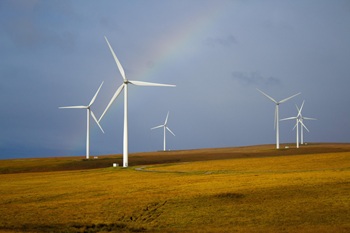
Communities will be able to build their own clean energy.
Why diversity and inclusion matters for SMEs

CIOB’s D&I Charter shows how practical changes can support long-term growth.
Cut electricity bills to power growth

Coalition sends joint letter to the Chancellor.

Gasholders: a history in pictures. Book review.
Comments
[edit] To make a comment about this article, or to suggest changes, click 'Add a comment' above. Separate your comments from any existing comments by inserting a horizontal line.