






Future weather files

Contents |
[edit] Introduction
Future Weather Files have been recommended for use by construction companies across the UK and are being implemented into the newest industry standards. But how have they been used and what impact have they really had?
[edit] Exceptional weather conditions
According to the MET Office, April 2020 was the sunniest April on record since 1929 with warm and dry weather above average.
Many Britons were not expecting such a sudden change in weather (and many complained that the start of sunny weather seemed to coincide almost exactly with the start of the Covid-19 lockdown!). That was however quite predictable. For years now we have all been witnessing a surge in extreme weather events all over the globe, from heat waves to forest fires and extended droughts, which many scientists see as a consequence of climate change.
[edit] Is it hot in here?
Weather, and especially temperature, is a key element to consider when planning a building. Until a few years ago, the weather models used as industry standard in the UK were incomplete and did not take into account rapid changes in temperature or other extreme weather events. It should come as no surprise, then, that according to the UK Government Environmental Audit Committee, “at current temperatures, one in five of the UK’s homes overheats”.
Overheating in a building presents a variety of risks to the health and well-being of its occupants, particularly the most vulnerable groups - the elderly, children and those with underlying health conditions. Additionally, links have been established between poor indoor air quality and lower workplace productivity. (This is not an excuse for those working from home, unfortunately.)
[edit] A breath of fresh air
In 2016, the Chartered Institution of Building Services Engineers, (CIBSE) published the revised Future Weather Files developed by Dr. Matt Eames, Senior Lecturer in Physics at the University of Exeter. Dr. Eames specialises in applying models to solve interdisciplinary challenges surrounding sustainability and impact of climate change on buildings. He worked on a new data selection method that ensured consistency across all locations and an updated baseline to account for recent changes in the climate. He also reworked the definition of extreme weather events, and introduced three new metrics to take into account the effect of thermal comfort in buildings.
Based on this work, he then created probabilistic Future Weather Files, which allow building engineers to stress test buildings and see how their design performs under potential climate change, and to do so very early on in the planning process. These have been marketed and recommended by CIBSE for use by construction companies across the UK.
They are now also being implemented into industry standards, including the draft London Plan, the CIBSE TM59 Design methodology for the assessment of overheating risk in homes and the Building Bulletin 101, which provides guidance for thermal comfort in schools. CIBSE reports, “the treatment of overheating at design stage is fundamental in increasing the resilience of buildings in hot events, now and in the future”. Appropriate weather data is therefore a vital component of building design.
[edit] Measuring real-world impact
The excellent joint work of CIBSE and Dr. Matt Eames has been selected by the University of Exeter to form an Impact Case Study for the institution’s submission to the UK’s Research Excellence Framework. The REF – lovingly dubbed as 'The Olympics of UK Universities' – is a national assessment commissioned by the UK government roughly every six years to assess the excellence of the UK’s higher education institutions. The assessment is based on the quality of the research, the environment that supports it and its impact beyond academia.
Users of CIBSE Future Weather Files are being asked to participate in an anonymous, short online survey. To access the survey, please click this link.
--Institution of Civil Engineers
This article was originally published by on 18 May 2020 as Wanted! Have you seen these Future Weather Files? It appeared on the ICE Civil Engineer Blog and was written by Marina Altoe, Impact and Partnership Development Officer, Data & Technology, University of Exeter.
[edit] Related articles on Designing Buildings Wiki
Featured articles and news
Costs and insolvencies mount for SMEs, despite growth

Construction sector under insolvency and wage bill pressure in part linked to National Insurance, says report.
The place for vitrified clay pipes in modern infrastructure
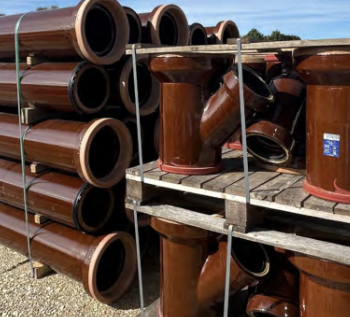
Why vitrified clay pipes are reclaiming their role in built projects.

Research by construction PR consultancy LMC published.
Roles and responsibilities of domestic clients

ACA Safety in Construction guide for domestic clients.
Fire door compliance in UK commercial buildings

Architect and manufacturer gives their low down.
Plumbing and heating for sustainability in new properties
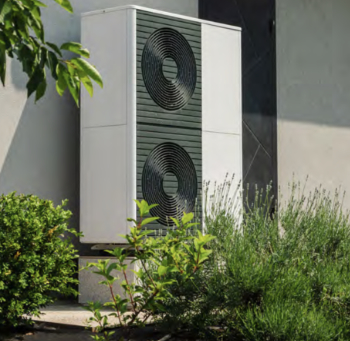
Technical Engineer runs through changes in regulations, innovations in materials, and product systems.
Awareness of the Carbon Border Adjustment Mechanism
What CBAM is and what to do about it.
The new towns and strategic environmental assessments
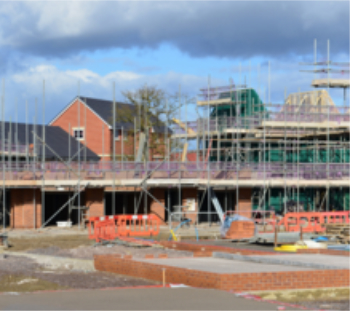
12 locations of the New Towns Taskforce reduced to 7 within the new towns draft programme and open consultation.
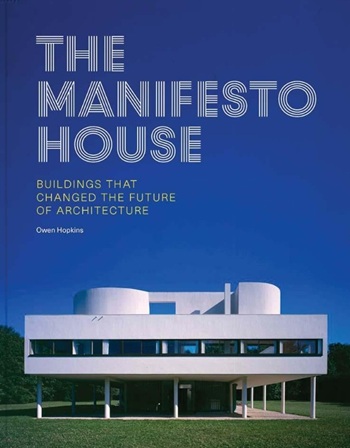
Buildings that changed the future of architecture. Book review.
The Sustainability Pathfinder© Handbook
Built environment agency launches free Pathfinder© tool to help businesses progress sustainability strategies.
Government outcome to the late payment consultation, ECA reacts.
IHBC 2025 Gus Astley Student Award winners

Work on the role of hewing in UK historic conservation a win for Jack Parker of Oxford Brookes University.
Future Homes Building Standards and plug-in solar
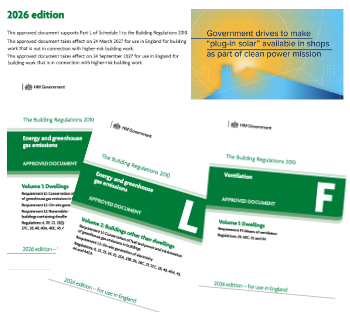
Parts F and L amendments, the availability of solar panels and industry responses.
How later living housing can help solve the housing crisis
Unlocking homes, unlocking lives.
Preparing safety case reports for HRBs under the BSA
A new practical guide to preparing structural inputs for safety cases and safety case reports published by IStructE.
Male construction workers and prostate cancer

CIOB and Prostate Cancer UK encourage awareness of prostate cancer risks, and what to do about it.