






Environmental Impact Assessments and why every project needs one

Contents |
[edit] Increasing pressure for EIAs
As both climate change and sustainable living systems continue to take centre stage across the build industry, the impact of both humans and businesses on the environment is becoming increasingly scrutinised. The build industry, in particular, has long been prone to criticism for its significant contribution to both global carbon emissions and industry wastage, so it is unsurprising to see the growing pressure from communities, activists and governments alike prompt the instigation of Environmental Impact Assessments (EIAs) as a critical component of any project’s planning stage.
Whilst these regulations only legally apply to specific larger developments, such as power plants or chemical works, they are quickly becoming a staple throughout the industry as a whole, and understandably so. To help shine a light on why, John has provided his insight into the process of conducting EIAs, whilst also commenting on the numerous testing services available to contracts, the role they play in conservation, and more.
[edit] What is an EIA?
As the name suggests, an Environmental Impact Assessment is primarily used to determine whether any environmental issues may arise from the proposed project or development, including, but not limited to, groundwater quality, contamination and damage to the native ecosystem. Developments which fall within ‘Schedule 1’ of the EIA Regulations 2017 will always require an EIA as a prerequisite, whereas those in ‘Schedule 2’ may require an EIA depending on the likelihood of negative effects on the environment occurring. The scope of these assessments, however, is incredibly broad, so chances are you will have to fill out an EIA of some description to carry out the majority of projects.

[edit] The five processes involved in completing an EIA
As outlined by the UK Government’s regulations, there are five stages to any Environmental Impact Assessment. Firstly, a general inspection is made of the proposed development to ascertain its environmental impact and whether a full assessment will be required. Should this be the case, the second process – scoping – then outlines the extent of the issues which need consideration, both on behalf of the developer and the local planning authority.
In instances when an EIA is deemed necessary, the next steps are the preparation and submission of an environmental statement. This statement lays out in more detail any probable environmental impacts that could arise, as well as a further insight into the proposed use of the development, potential emissions and how the project is expected to comply with planning policy. The submitted environmental statement must be made available for public viewing.
Finally, it comes down to the decision-making process. In the majority of situations, upon careful consideration of the project’s benefits and environmental drawbacks, local authorities will determine whether or not to proceed with the proposed development. In larger and more public projects, however, it has occasionally been the case for the Secretary of State to have a say in the outcome of the decision.
[edit] The role EIAs play in environmental conservation
The objective of an environmental impact assessment is by no means to halt the actions of these developers and their proposed projects, but rather to bring about changes to minimise negative environmental impacts before development can begin. By identifying and addressing these potential externalities at an early stage, EIAs contribute to sustainable development by identifying new and innovative ways to achieve environmental objectives that are not simply remedying the issue once it has already occurred.
EIAs can also make valuable contributions to future developments by helping to guide decision-making towards greater sustainability in the long tun. Whether that is exploring the possibility of implementing environmentally-conscious features or infrastructure alongside various developments, how to design future projects to better avoid these negative impacts, or something else entirely, environmental impact assessments are, and will continue to play, a major role in project requirements going forward.
[edit] What testing services are there?
Prior to the submission of an environmental impact assessment, it is not uncommon for developers to undertake a range of testing procedures to establish the state of the environment prior to development and identify solutions to support its remediation, alongside minimising the project’s ecological impact. In many cases, this may include sample testing, to collect and examine high quality samples of soil; contamination testing, to sample the
site for the presence of hazardous substances, such as asbestos; PCB and heavy metals; or Waste Acceptance Criteria (WAC) testing, to determine the composition of organic material and how its disposal will minimise any environmental impacts, as a few examples.

This article appears in the AT Journal issue 145 as "What is an Environmental Impact Assessment (EIA) and why should every project need one?" and was written by hn Rodgman, Managing Director, Borehole Solutions.
--CIAT
[edit] Related articles on Designing Buildings
- Air quality.
- Alternative site assessment ASA.
- Biodiversity.
- Construction environmental management plan.
- Ecological impact assessment.
- Ecological survey.
- Environmental engineering.
- Environmental impact.
- Environmental impact assessment.
- Environmental management procedures manual.
- Environmental modelling.
- Environmental net gain.
- Environmental permit.
- Environmental plan.
- Environmental policy.
- Environmental statement.
- Green plot ratio.
- Hydrogeological Impact Appraisal HIA.
- Impact assessment.
- In-combination effects.
- Long-term investment scenarios LTIS.
- Permission for mining or working of minerals.
- Planning permission.
- Protected species.
- Raising awareness of dewatering regulation.
- Scoping study.
- Screening decision.
- Water impoundment licence.
Featured articles
Check out some of the best features and news from Designing Buildings as well as key stories from around the web.
Bridging the gap between clients and contractors
Concerns remain around contractor quality, capability, and delivery.
Construction Management, 10 June.
Heat pumps beat boilers in new home tests.
Building Safety Act implementation in Wales

CIAT to host industry panel on 26 June.
New and updated CLC building safety guidance.
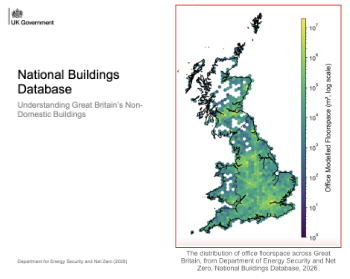
New UK National Buildings Database.
Building Safety Wiki Interviews

Chief executive of the British Woodworking Federation.
Planning condition discharge in England and Wales
A brief explanation from a building compliance expert, with further links.
Overheating guidance and tools for building designers

Guidance for dealing with element of building fabric control that have increasing importance.
Shading for housing, a design guide

From the Good Homes Alliance and British Blind and Shutter Association.
UK Standard Skills Classification (SSC)
A shared framework for describing skills needs.
Social media ban consultation comes to close

CIOB urges UK Government to consider social media’s role in careers guidance in ban debate.