





Ecodesign compliant products
The term Ecodesign relates back to the Directive 2009/125/EC of the European Parliament and of the Council of 21 October 2009 establishing a framework for the setting of Ecodesign requirements for energy-related products. This directive covered a wide variety of energy related products:
- Domestic and service industry lighting products:
- Directional and non-directional lamps (including ultraviolet radiation)
- Fluorescent lamps (without integrated ballast)
- High-intensity discharge lamps
- Ballasts and luminaires able to operate such lamps
- Electrical devices:
- Computers and servers
- Game consoles
- Simple/complex set-top boxes
- Standby for networked equipment
- Televisions
- Household appliances:
- Cookers
- Dishwashers
- Freezers
- Refrigerators
- Tumble dryers
- Washing machines
- Vacuum cleaners
- Heating and cooling devices:
- Other products:
- Circulators
- Electric motors
- Electric power consumption standby and off mode
- External power supplies
- Imagining equipment
- Power transformers
- Professional refrigeration
- Water pumps
The Ecodesign Directive has two types of requirements that the above products need to meet to differring levels.
Specific requirements which are exact values that are measured and a certain limit is given, such as maximum energy consumption, or minimum quantities of recycled material to be used in production.
Generic requirements are more general and do not set limit values, but may require a certain degree of energy-efficiency' or recyclability, information on use and maintenance to minimise its environmental impacts and a lifecycle analysis of the product to identify alternative design options and solutions for improvement
In recent years particular items have been highlighted in the press as legislation pushes towards greater efficiency of systems and products, in particular lighting products such as the phasing out of incandescent lamps from 2009, or the requirement for all new wood burning stoves to be ecodesign compliant, such as was required in the UK in 2022.
[edit] Related articles on Designing Buildings
- Challenging the current approach to end of life of buildings using a life cycle assessment (LCA) approach.
- Circular economy.
- Cradle-to-grave.
- Design economics.
- Design for Deconstruction.
- Design life.
- ECA welcomes the Value Toolkit for the construction industry.
- End of life potential.
- How much carbon are your buildings responsible for?
- Integrated Material Profile and Costing Tool.
- Life cycle assessment.
- Life cycle inventory.
- Life-cycle plan.
- The Value Toolkit.
- Utilising life cycle costing and life cycle assessment.
- Whole life costs.
- Whole life solution
- Why we need to grasp the whole life cycle.
- Wood, embodied carbon and operational carbon.
Featured articles
Check out some of the best features and news from Designing Buildings as well as key stories from around the web.
Bridging the gap between clients and contractors

Concerns remain around contractor quality, capability, and delivery.
Construction Management, 10 June.
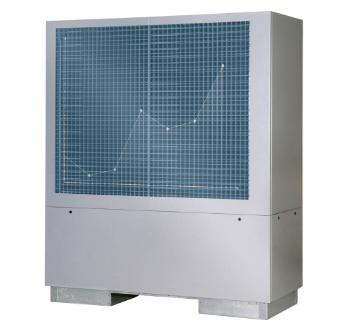
Heat pumps beat boilers in new home tests.
Building Safety Act implementation in Wales

CIAT to host industry panel on 26 June.
New and updated CLC building safety guidance.
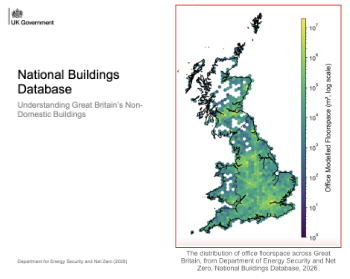
New UK National Buildings Database.
Building Safety Wiki Interviews

Chief executive of the British Woodworking Federation.
Planning condition discharge in England and Wales

A brief explanation from a building compliance expert, with further links.
Overheating guidance and tools for building designers

Guidance for dealing with element of building fabric control that have increasing importance.
Shading for housing, a design guide

From the Good Homes Alliance and British Blind and Shutter Association.
UK Standard Skills Classification (SSC)

A shared framework for describing skills needs.
Social media ban consultation comes to close

CIOB urges UK Government to consider social media’s role in careers guidance in ban debate.