





Dry seals for metal composite material systems
Dry seal systems are one of the original MCM installation systems, along with wet seals, with more component parts they have been used for around 40 years in the US and still widely used today. Also known as a “single line barrier wall” or “fully-sealed wall”, wet seal systems are installed with a joint located between adjacent panels that is fully sealed with exposed sealant. Tested in the US to AAMA 501 & 501.1 standards, in the UK fire class tests will likely be according to Euroclass A1 or A2, A or B as the lower rating.
The Centre for Window and Cladding Technology (CWCT) defines a rainscreen cladding system as '...a wall comprising an outer skin of panels and an airtight insulated backing wall separated by a ventilated cavity. Some water may penetrate into the cavity but the rainscreen is intended to provide protection from direct rain'.
The Metal Constuction Association, Technical Bulletin MCM Panel System Definitions, dated March 2018 describes the design and functions of MCM Wet Seal Systems as thus:
"A Dry Seal system is defined as a panel system where the joints between panels provide weather resistance without relying on the application of exposed or concealed sealants within the joints. In one typical method of achieving a Dry Seal system, the perimeter of the MCM panel is affixed with gasketed interlocking perimeter extrusions or formed metal profiles. These extrusions nest together in a gasketed pocket as shown in Figure 2. It should be noted that not all extrusions creating a Dry Seal system utilize gaskets, yet they perform very adequately as an exterior cladding."
"Water infiltration is primarily controlled by the interlocking extrusions. Any water or condensation that may find its way into the panel cavity is controlled and directed to the exterior through weep holes keeping the interior cavity dry. The Dry Seal system should perform the same with or without an air/water barrier. To properly test a Dry Seal system, the mockup is constructed without any barrier in place and the backside of the panels are exposed directly to the interior chamber pressures. Testing in this fashion shows the effectiveness of the system, designed to perform even if the air/water barrier is compromised."
[edit] Related articles on Designing Buildings
- Building fabric.
- Cladding.
- Composites.
- Copper.
- Crinkly tin.
- Curtain wall systems.
- Drained and back ventilated rainscreen systems.
- Glazing.
- Metal.
- Metal composite material panel systems MCM and MCP.
- Metal profile cladding.
- Metal roofing.
- Modernising composite materials regulations.
- Pressure equalized rainscreen systems.
- Rainscreen.
- Sandwich panel.
- Shingle roofing.
- Wall types.
- Weatherboarding.
- Wet Seals for metal composite material systems.
- Zinc
Featured articles
Check out some of the best features and news from Designing Buildings as well as key stories from around the web.
New and updated CLC building safety guidance.
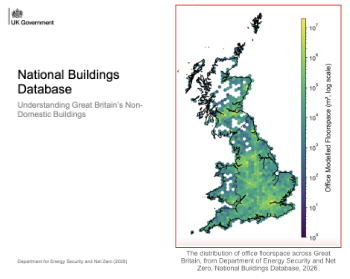
New UK National Buildings Database.
Building Safety Wiki Interviews

Chief executive of the British Woodworking Federation.
Planning condition discharge in England and Wales

A brief explanation from a building compliance expert, with further links.
Overheating guidance and tools for building designers

Guidance for dealing with element of building fabric control that have increasing importance.
Shading for housing, a design guide

From the Good Homes Alliance and British Blind and Shutter Association.
UK Standard Skills Classification (SSC)

A shared framework for describing skills needs.
Social media ban consultation comes to close

CIOB urges UK Government to consider social media’s role in careers guidance in ban debate.
The latest of eight Skills England apprenticeship units

The addition of battery manufacturing welcomed by ECA with a warning about the risks of fast-tracked apprenticeship units.
Building Control Independent Panel final report
A precis of a key report led by Dame Hackitt with full recommendations and link to the government response.
Building Safety recap April, 2026
A short and longer run-through of the month, with links to further information and sources.