





Constructing and renovating UEFA training facilities
Contents |
[edit] Introduction
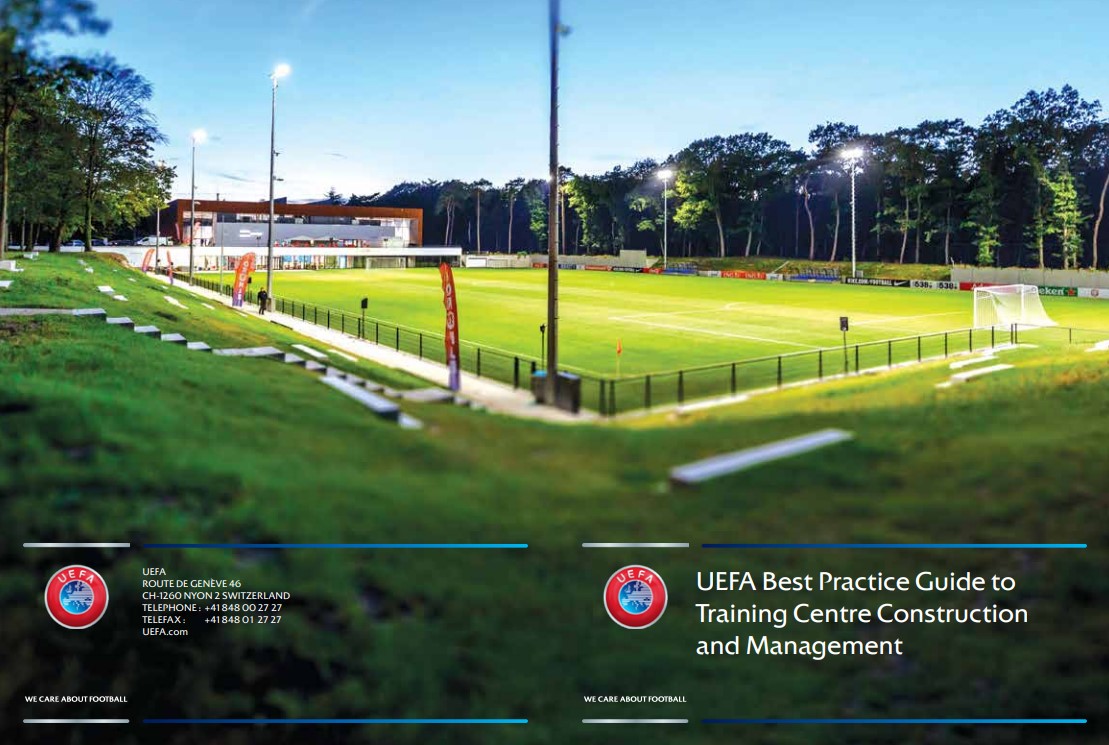
In February 2021, UEFA published a guide to help clubs and national associations plan for constructing and renovating training centres. The document, ‘UEFA Best Practice Guide to Training Centre Construction and Management’, provides an overview of factors to consider when looking to invest in new facilities or improve existing sites. The guidelines also provide generic advice about facility and service requirements for training centres.
Designed for organisations of all sizes and expertise, guidance is offered for training centre design, construction and management from a sporting and operational perspective. Key areas include:
- Infrastructure.
- Process and function.
- Training facilities.
- Sustainability.
- Accessibility.
[edit] Five training centre suggestions
[edit] Each project is unique
There is no one-size-fits-all model but specific best practice examples and business models can be used as reference points to build a bespoke facility regardless of how it will be used (and who will be using it).
[edit] Build a team to succeed
Just as on the pitch, the composition of a team brought together to deliver a project is crucial. A wide variety of knowledge and skillsets are needed to ensure all stakeholders are considered, whether that is providing the right facilities for coaches and players, or addressing the requirements of marketing, media and community opportunities.
[edit] Training, testing, rehab and recovery
The importance of recovery and rehabilitation have long been accepted as essential by coaches and sports scientists for athletes to perform at their best during increasingly intense schedules. Modern training centres now reflect the advances made in this area in the array of facilities installed at the elite level. Performance testing labs are increasingly common in order to identify key physical traits and help detect and avoid burnout or injury.
[edit] Technology and future proofing
From monitoring player performance to tracking the length of grass, there is now barely a detail that is left to chance. Popular uses of technology include live GPS, automated cameras, giant screens, digital signage and control centres as well as interactive training aids to improve technical skills.
[edit] Support through sustainability
Increasingly, sustainable and environmentally friendly designs and construction schemes are enjoying political, public and financial support. Sustainability is a key issue in the development of infrastructure, and clubs and associations that take account of such matters are regarded as being representative of their local communities. A strong sustainability strategy can help achieve commercial goals, as well as reinforcing positive values.
The following are all key areas in this regard:
- Design.
- Construction method.
- Lighting and energy use.
- Transport.
- Landscaping and biodiversity.
- Re-use and recycling (including reduction of water consumption).
- Generation of waste.
[edit] Related articles on Designing Buildings Wiki
- Accessibility in the built environment.
- Best gym architecture in the world.
- Best practice.
- Fitness studio design.
- Forest Green Rovers football stadium.
- Interview with Kevin Borg, founder of KJB Building Consultants.
- London 2012 Olympic Stadium.
- Scunthorpe Sports Academy.
- Stadium.
- Sustainability.
- Sustainable materials.
- The Family Stand, Dover Athletic Football Club.
- Types of building.
[edit] External resources
Featured articles
Check out some of the best features and news from Designing Buildings as well as key stories from around the web.

Sir Edwin Lutyens: Britain's greatest architect? Book review.

CIOB publishes free template to help assess and manage risks.
ECA's reflections on Party Conference season

Burnham wants to be confident of winning before asking for a fresh mandate.
New Chief Construction and Scientific Adviser

Sergio Cavalaro, Professor of Infrastructure Systems at Loughborough University.
Building safety levy for England

CIAT publish estimator tool for members.

Water sector faces a growing crisis that could slow the delivery of vital infrastructure.
Undervaluing our industrial past

Heritage value changes as taste for building styles changes.
Changing expectations around competence and compliance

New information sheet from CIAT.
Grenfell investigation files passed to CPS

Angela Rayner apologises on behalf of the British state.

Electrical contractors need to understand the practical implications.

The real barrier to getting more value from digital technology.

Your guide to The Construction Reset at UKCW Birmingham.