





Constant air volume CAV
Ventilation is necessary in buildings to remove ‘stale’ air and replace it with ‘fresh’ air. This helps to:
- Moderate internal temperatures.
- Replenish oxygen.
- Reduce the accumulation of moisture, odours, bacteria, dust, carbon dioxide, smoke and other contaminants that can build up during occupied periods.
- Create air movement, which improves the comfort of occupants.
Very broadly, ventilation in buildings can be classified as ‘natural’ or ‘mechanical’. Mechanical ventilation systems can also include heating, cooling, humidity control and air filtration. These functions are often described collectively as HVAC (Heating Ventilation and Air Conditioning).
Within these systems, ventilation and temperature can be regulated either by:
- Variable air volume (VAV), in which the temperature of the supply air remains constant, but the volume varies (also known as variable volume, constant temperature VV-CT).
- Constant air volume (CAV) in which the volume of air supply remains constant, but the temperature varies (also known as constant volume, variable temperature CV-VT, or constant volume CV).
- Variable volume, variable temperature (VV-VT sometimes referred to as variable volume and temperature - VVT).
Constant air volume (CAV) systems are becoming less common in new buildings as VAV systems tend to provide closer control of air temperature and require lower fan speeds, as a result of which they can use less energy and generate less noise. However, CAV systems are still used in small and medium-sized premises with straight-forward HVAC requirements, as they can be relatively simple to install, can have a lower capital cost and tend to be reliable.
They are particularly common in simple systems where fan coil units are supplied with a constant volume of ‘fresh’ air.
Simple, single-duct CAV systems which supply air at a single temperature and constant volume might be suitable for a large space with simple, uniform thermal demand, such as a gymnasium.
This system can be enhanced by reheating the supply air in CAV terminal units to provide additional local control. This might be appropriate where there are some minor local variations to thermal demand. In this case, air is supplied to the system at the lowest temperature required and then its temperature is increased as necessary locally.
Alternatively, 'mixed-air' or 'dual-duct' systems can provide both heated and cooled air, the proportions of which are regulated locally in mixing boxes. This might be appropriate where there are significant differences in thermal demand. Air is supplied at the lowest and highest temperatures required and then mixed locally as necessary.
Ventilation in buildings is regulated by Part F of the building regulations.
[edit] Related articles on Designing Buildings
Featured articles and news

A UK training and membership provider for mould remediation professionals.
Building Safety recap April, 2026
A short and longer run-through of the month, with links to further information and sources.
CIAT May 2026 briefing.

Independent NSI and BAFE study exploring how organisations are changing the way they buy fire safety services.
From medieval scribes to modern word art.

ECA welcomes crackdown on late payment and push for clean energy, whilst CIOB seek fixed cladding removal timeframes.
Cyber Security in the Built Environment
Protecting projects, data, and digital assets: A CIOB Academy TIS.
Managing competence in the built environment
ITFG publishes new industry guide on how to meet the ICC principles.
The UK's campaign to reduce noise pollution: Mythbusting, articles and topic guides.
Setting Expectations on Competence Management
Industry Competence Committee.
New Scottish and Welsh governments
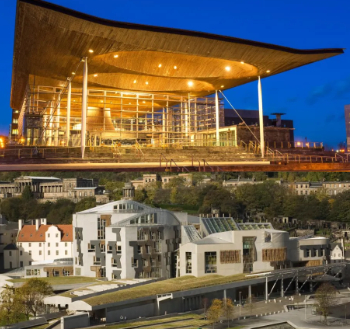
CIOB stresses importance of construction after new parliament elections.
The sad story of Derby Hippodrome
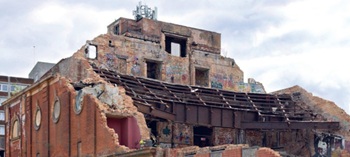
An historic building left to decay.

ECA, JIB and JTL back Fabian Society call to invest in skills for a stronger built environment workforce.

Women's Contributions to the Built Environment.
Calls for the delayed Circular Economy Strategy

Over 50 leading businesses, trade associations and professional bodies, including CIAT, and UKGBC sign open letter.
The future workforce: culture change and skill

Under the spotlight at UK Construction Week London.
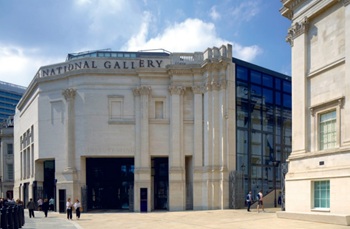
A landmark moment for postmodern heritage.