






Code of practice for grid connected solar photovoltaic systems
The Code of Practice for Grid Connected Solar Photovoltaic Systems was published in 2014 by the Institution of Engineering and Technology (IET). It was written by IET Standards with expert technical input from the BRE National Solar Centre.
The IET is one of the world’s largest engineering institutions with nearly 160,000 members in 127 countries, covering; energy, transport, manufacturing, information and communications, and the built environment. The BRE National Solar Centre (NSC) was established in 2012 to provide independent evidence-based information about solar energy systems and related topics.
The Code of Practice (CoP) gives designers and installers of solar photovoltaic (PV) system the knowledge they need to ensure that their systems comply with UK and international standards and good practice. It is suitable for all scales of installation, from small domestic systems to large scale PV farms. As well as industry practitioners, the CoP will be of interest to customers, owners, investors, insurers and financiers of solar PV systems.
The CoP updates UK industry practice to ensure installation of grid-connected solar photovoltaic (PV) systems in the UK is safe, effective and fit-for-purpose. In the latest edition, system earthing, fault alarms, fusing, connectors and fire detection have been reviewed in detail, with key changes made to support good practice in the UK and to align with international standards.
- All parts of a grid-connected solar PV system up to and including the connection to the AC mains.
- Low voltage and high voltage connections and components.
- Building-mounted, building-integrated and ground-mounted systems.
- Grid-connected systems with battery storage.
Jonny Williams, Director of the BRE National Solar Centre said, “The Code of Practice raises the bar for quality in the UK solar PV industry… Its publication follows extensive industry consultation and peer review – receiving more than 400 comments – resulting in guidance that is both technically robust and readily useable by everyone involved. With the solar industry making an important and growing contribution to cost-effective low-carbon electricity provision in the UK, it is crucial that all systems are designed, installed and maintained to a high quality standard – the new CoP will be a valuable tool in achieving that goal.”
Martin Cotterell, BRE National Solar Centre Associate, and expert technical author for the CoP said, “The Code of Practice represents an evolution of existing technical standards. The scope is much broader, with a lot more technical details and a number of advances based on lessons learnt by the industry over the last five years of rapid solar PV development.”
[edit] Related articles on Designing Buildings Wiki
- Battery energy storage systems with grid-connected solar photovoltaics BR 514.
- BRE National Solar Centre.
- BRE photovoltaic certification scheme.
- DC isolators for photovoltaic systems (FB 68).
- Feed in tariff.
- Fuel cell.
- Future of electricity in domestic buildings.
- Green Deal.
- Installation of photovoltaic panels on existing flat roofs - some lessons learned IP 8 14.
- Large scale solar thermal energy.
- Microgeneration.
- Micro-grid.
- Photovoltaics.
- PV inverter.
- Solar thermal systems.
- VAT hike puts brakes on home solar and batteries.
- Zero carbon homes.
- Zero carbon non-domestic buildings.
Featured articles
Check out some of the best features and news from Designing Buildings as well as key stories from around the web.
Construction Management, 10 June

24 months to 14: CITB launches accelerated apprenticeships.
Bridging the gap between clients and contractors

Concerns remain around contractor quality, capability, and delivery.
Construction Management, 10 June.
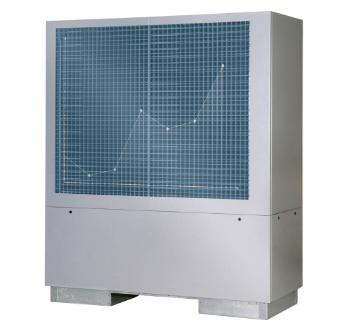
Heat pumps beat boilers in new home tests.
Building Safety Act implementation in Wales

CIAT to host industry panel on 26 June.
New and updated CLC building safety guidance.
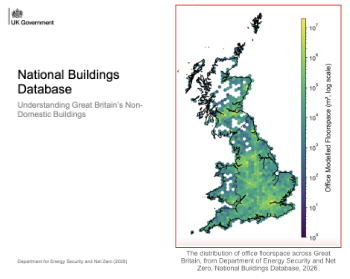
New UK National Buildings Database.
Building Safety Wiki Interviews

Chief executive of the British Woodworking Federation.
Planning condition discharge in England and Wales

A brief explanation from a building compliance expert, with further links.
Overheating guidance and tools for building designers

Guidance for dealing with element of building fabric control that have increasing importance.
Shading for housing, a design guide

From the Good Homes Alliance and British Blind and Shutter Association.
UK Standard Skills Classification (SSC)

A shared framework for describing skills needs.