





Availability payments

|
| Stationary Edinburgh tram, Princes Street. Photo © kim traynor (cc-by-sa/2.0). |
Contents |
[edit] Introduction
An availability payment is a type payment sometimes used for public private partnership (PPP) projects. Under this arrangement, the client makes fee payments to the contractor once the project is completed and ready to use.
[edit] Performance based payments
Payments are made for a predetermined amount based on availability, regardless of whether the project is actively in use. Arrangements tend to last between 25 and 35 years. They are sometimes used for public projects (such as infrastructure development, school campuses, hospital buildings and so on) that may not be viable as fee or toll-based undertakings. They can also be used for individual components of particularly large projects.
Availability payment arrangements are sometimes used for agreements, including:
- Design build (finance) operate maintain contracts.
- Concessions.
- Leases.
[edit] Evaluation of performance
There are generally two types of metric used to gauge appropriate levels of asset availability:
- Performance of elements such as security, emergency preparedness, lighting, cleanliness, customer satisfaction, employee feedback and so on.
- Availability of facilities or services and their condition.
The contractor receives pre-agreed payments called Maximum Availability Payments (MAPs) for the allocated time period.
Payments may be modified if there is a change in the performance or availability of the completed project. For example, if the performance of the project deteriorates, the client may pay less, or suspend payments until performance returns to an acceptable level. The relationship of the deduction amount and the performance are set out in the contract, defined as deduction terms.
There are some instances where exceptions to payment modifications can be made. These can include preventive maintenance activities, emergency situations and so on.
[edit] PPPs and availability payments
PPPs are a very broad range of partnership where the public and private sectors collaborate for some mutual benefit. They were first developed in the UK in the 1990s in the belief that private sector companies might be more efficient at providing certain services than public authorities and so could deliver better value for money for taxpayers.
PPPs can cover a range of partnerships to deliver policies, services, buildings or infrastructure, from hospital catering to asset maintenance and renewal. Partnerships can be arrangements made either with central or local government entities.
For PPP projects, an availability payment arrangement may offer benefits including:
- The transfer of risk for designing, building (sometimes financing), maintaining and operating an asset from the client to the contractor.
- An advantageous arrangement for non-revenue generating projects (or projects where demand and financial outcomes may be difficult to predict).
- An option for projects where outcomes can easily be measured and monitored.
- A fixed fee structure that is established by the client.
- A suitable framework for projects where delivery of service levels is a higher priority than the generation of revenue.
[edit] Case study: MetroLink, Dublin
This proposed light rail project links an area north of Dublin's city centre to the downtown area by way of Dublin Airport. The planned 12-mile route will be constructed both above and below ground, with a tunnel under Dublin Airport.
An availability payment structure for the project was broken down into two segments: one for the infrastructure construction (under a design, build, finance and maintain procurement model) and another for the operation of the project upon completion.
When the project is complete, the contractor will be entitled to a basic payment, a flexible operations payment and a payment based on energy costs. Deductions to these payments may occur if there are service failures.
Availability payment arrangements have also been made for some aspects of projects including:
- Edinburgh Light Rail Scheme.
- A92, Scotland.
- A13 Thames Gateway.
- Manchester Metrolink.
- Strategic Rail Authority.
- London Underground.
- GNTL Rail Franchise Bid.
[edit] Related articles on Designing Buildings Wiki
- Design, build, finance, maintain DBFM.
- Design Build Finance Operate Maintain DBFOM.
- Design build operate maintain DBOM.
- Government Construction Strategy.
- Infrastructure.
- Infrastructure and Projects Authority.
- Infrastructure bill.
- Infrastructure UK.
- Procurement route.
- Public Private Partnership.
- Public procurement.
- Shadow tolls.
Featured articles
Check out some of the best features and news from Designing Buildings as well as key stories from around the web.
Bridging the gap between clients and contractors

Concerns remain around contractor quality, capability, and delivery.
Construction Management, 10 June.
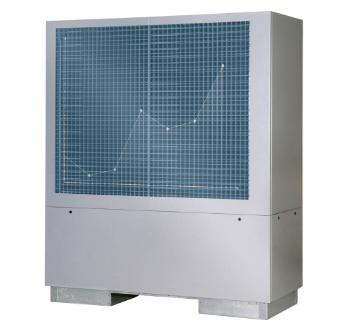
Heat pumps beat boilers in new home tests.
Building Safety Act implementation in Wales
CIAT to host industry panel on 26 June.
New and updated CLC building safety guidance.
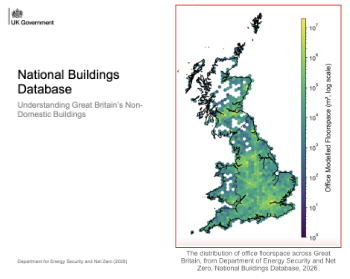
New UK National Buildings Database.
Building Safety Wiki Interviews

Chief executive of the British Woodworking Federation.
Planning condition discharge in England and Wales

A brief explanation from a building compliance expert, with further links.
Overheating guidance and tools for building designers

Guidance for dealing with element of building fabric control that have increasing importance.
Shading for housing, a design guide

From the Good Homes Alliance and British Blind and Shutter Association.
UK Standard Skills Classification (SSC)

A shared framework for describing skills needs.
Social media ban consultation comes to close

CIOB urges UK Government to consider social media’s role in careers guidance in ban debate.
Comments