






Amber warnings raise building overheating concern

Following the Met Office amber extreme heat warning in the summer of 2021, a polymer specialist has warned current sustainable design must mitigate overheating in buildings as heat waves become more prevalent.
Recent research of 520 M&E contractors and designers, 130 of which worked specifically on apartment buildings, in REHAU's report, Designing Healthy Apartments, also raised similar concern. The majority of these respondents felt that sustainability would be the most important design issue over the next 10 years in multi-residential buildings, closely followed by temperature control.
These conditions pose a health hazard for the building occupants living in such temperatures which reached over 30°C in Wales and Southern and Central England during July 2021, resulting in the amber warning for affected areas. As such, Steve Richmond, Head of Marketing and Technical at REHAU Building Solutions, draws attention to the importance of including efficient cooling methods as part of 'healthy designs', in order to future proof buildings.
Steve says, "As pressure increases to make buildings more energy efficient through improved insulation, very few measures are being put in place to offset excessive indoor temperatures during the warmer weather. As we continue to see fluctuations between colder winters and hotter summers, consultants and contractors should consider measures in designing buildings to be able to cope with these contrasting conditions while retaining sustainability credentials.
"Additionally, government targets of reaching net zero emissions by 2050 means cooling methods will need to be efficient and low energy. 'Healthy design' therefore not only needs to be beneficial to the people living inside but environmentally friendly too. Consequently, our guide to healthy apartment design outlines possible solutions that are more efficient than traditional mechanical cooling methods and can help contractors and specifiers meet this sustainability challenge."
Thermally Activated Building Structures (TABS), for instance, regulate the temperature of the building by running hot or cold water through the pipes within the concrete slabs, continually removing heat during hotter months. As such, these avoid the need for mechanical energy intensive cooling systems and regulate heating and cooling efficiently across the year.
As identified by groups such as the Climate Change Committee (CCC), large numbers of heat pumps are needed to reach net zero. On top of delivering efficient, low-carbon space heating and hot water, heat pumps can also provide cooling via underfloor heating pipework. To support heat pumps, underfloor heating and cooling and other means of cooling (such as fan coils and chilled ceilings), specifiers and contractors should consider incorporating smart controls into their projects.
Steve continues, "Energy efficiency will remain a key priority, and end users come to expect solutions to deliver this. Employing technologies such as smart controls to regulate low-carbon temperature systems will help to ensure sustainability and occupant wellbeing requirements are met. Solutions such as REHAU's NEA Smart 2.0 use intelligent algorithms and sensors to regulate temperature and reduce energy consumption while further improving occupant wellbeing by monitoring humidity to improve air quality.
"Hot weather is going to become and increasingly common occurrence across summers each year, so it is more important than ever that our buildings are equipped to avoid overheating and subsequent issues for occupants. With this guide, we aim to provide solutions that will help to alleviate such issues in order to future proof infrastructure by balancing between sustainable solutions with those that promote wellbeing."
This article originally appeared on the CIAT website. It was published on 27 July 2021.
--CIAT
[edit] Related articles on Designing Buildings Wiki
Featured articles and news
Costs and insolvencies mount for SMEs, despite growth
Construction sector under insolvency and wage bill pressure in part linked to National Insurance, says report.
The place for vitrified clay pipes in modern infrastructure
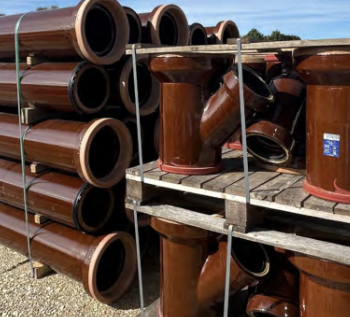
Why vitrified clay pipes are reclaiming their role in built projects.

Research by construction PR consultancy LMC published.
Roles and responsibilities of domestic clients

ACA Safety in Construction guide for domestic clients.
Fire door compliance in UK commercial buildings

Architect and manufacturer gives their low down.
Plumbing and heating for sustainability in new properties
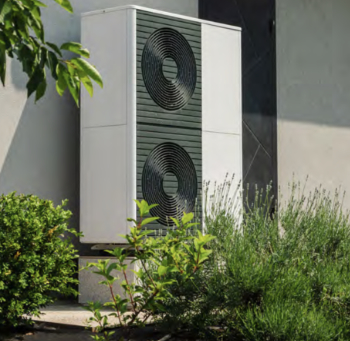
Technical Engineer runs through changes in regulations, innovations in materials, and product systems.
Awareness of the Carbon Border Adjustment Mechanism
What CBAM is and what to do about it.
The new towns and strategic environmental assessments
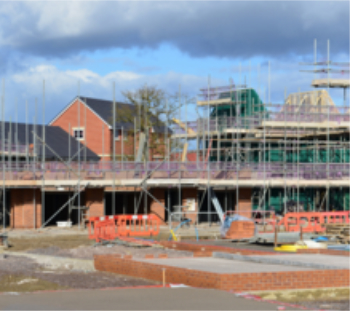
12 locations of the New Towns Taskforce reduced to 7 within the new towns draft programme and open consultation.

Buildings that changed the future of architecture. Book review.
The Sustainability Pathfinder© Handbook
Built environment agency launches free Pathfinder© tool to help businesses progress sustainability strategies.
Government outcome to the late payment consultation, ECA reacts.
IHBC 2025 Gus Astley Student Award winners
Work on the role of hewing in UK historic conservation a win for Jack Parker of Oxford Brookes University.
Future Homes Building Standards and plug-in solar
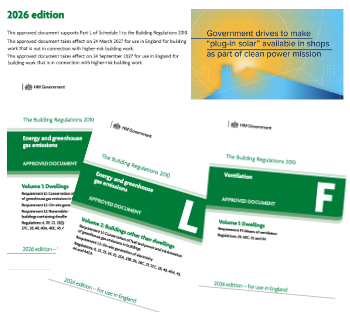
Parts F and L amendments, the availability of solar panels and industry responses.
How later living housing can help solve the housing crisis
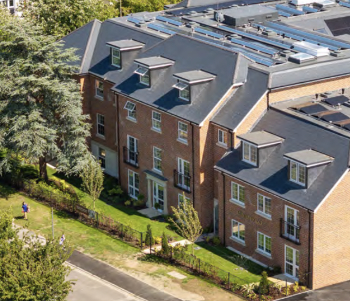
Unlocking homes, unlocking lives.
Preparing safety case reports for HRBs under the BSA
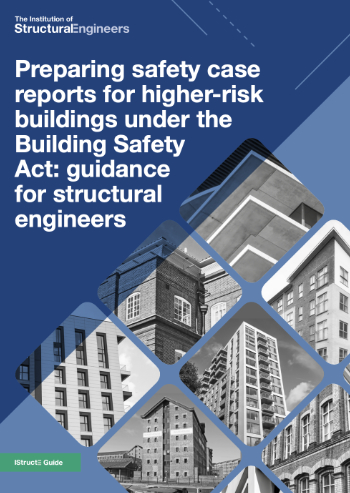
A new practical guide to preparing structural inputs for safety cases and safety case reports published by IStructE.
Male construction workers and prostate cancer

CIOB and Prostate Cancer UK encourage awareness of prostate cancer risks, and what to do about it.