





Air conditioning inspection
[edit] Introduction
The EU Directive on the energy performance of buildings was adopted in 2002. It was intended to improve the energy efficiency of buildings, reduce carbon emissions and reduce the impact of climate change.
The requirements were originally introduced in England and Wales by the Energy Performance of Buildings (Certificates and Inspections) (England and Wales) Regulations 2007. Implementation in England and Wales was completed on 1 October 2008. Energy performance is a devolved matter in Scotland and Northern Ireland.
A recast of the Energy Performance of Buildings Directive was adopted in 2010 and on 9 January 2013, the Energy Performance of Buildings (England and Wales) Regulations 2012 took effect. This consolidated and revoked all previous regulations.
The regulations require that:
- Energy performance certificates (EPC's) are produced for certain dwellings and non dwellings.
- Display energy certificates (DEC's) are produced for large public buildings.
- Air conditioning systems above a certain size are inspected.
[edit] Air conditioning inspections
The Department for Communities and Local Government (CLG) has set out how to apply the regulations requiring air conditioning inspections in, Improving the energy efficiency of our buildings, A guide to air conditioning inspections for buildings, December 2012.
An air conditioning system is defined in the guide as, ‘a combination of all components required to provide a form of air treatment in which the temperature is controlled, or can be lowered, and includes systems which combine such air treatment with the control of ventilation, humidity and air cleanliness’. This includes fixed, self-contained systems, such as split systems and centralised systems. Mechanical ventilation systems that provide no mechanical cooling, but serve spaces that are cooled by other means are included. Any components contained in air conditioning systems that are only intended to provide heating are excluded.
The person who controls the operation of an air conditioning system has statutory obligations and duties of care.
All air conditioning systems with an effective rated output of more than 12kw must be inspected by an energy assessor. This includes systems consisting of individual units which are less than 12kW but whose combined effective rated output is more than 12kW.
Inspections must be carried out by an accredited air conditioning energy assessor. The inspections must be no more than five years apart.
The purpose of inspecting air conditioning systems is to improve efficiency, reduce energy consumption, reduce operating costs and reduce carbon emissions. The energy assessor is also required to confirm that necessary checks have been undertaken to ensure there is no Legionella risk as required by the Health (Legionella) Regulations 2001.
The inspection should examine the refrigeration and air moving equipment, their controls, and documentation that helps to understand the system and how it has been maintained.
An inspection report is prepared to provide the building owner or manager with information about the efficiency of the air conditioning systems, to provide advice on how to improve the energy efficiency of the system, to identify opportunities to save energy and to reduce operating costs. There is no legal requirement to act on the recommendations.
The air conditioning inspection report must be kept in a safe place. The guide suggests that the building log book is the most suitable place to keep records of air conditioning inspections, along with other inspection results such as fluorinated greenhouse gas (F gas) inspections.
Local weights and measures authorities are responsible for enforcing the requirements. The penalty for failing to having an air conditioning inspection report is £300. A further penalty of £200 can be issued for failure to provide a copy of the air conditioning inspection report when requested.
NB The CLG guidance does not address other statutory inspection requirements, such as those which cover health and safety requirements, or inspection under the Fluorinated Greenhouse Gas Regulations.
See Also: Air conditioning inspection procedure.
[edit] Related articles on Designing Buildings Wiki
- Accredited energy assessor.
- Africa tops world AC growth forecasts.
- Air conditioning inspection procedure.
- Air conditioning.
- Air conditioning in non-domestic buildings.
- BREEAM Impact of refrigerants.
- Building log book.
- Display energy certificate.
- Energy performance certificate.
- Energy Performance of Buildings Directive.
- F gases.
- French air-conditioning market due to soar to new levels.
- Greenhouse gases.
- How to Use Your Air Conditioning Energy Assessments to Reduce Energy Costs.
- R22 phase out.
- Refrigerant selection.
Featured articles
Check out some of the best features and news from Designing Buildings as well as key stories from around the web.
A quick introduction to its uses and risks.
Construction Management, 17 June

Government rolls out digital planning tool to all local authorities.

Your views needed - a strategy for the professions, trades and occupations.

Confronting competency, codes, capacity and costs.

The hidden risk in modern construction supply chains.
Construction Management, 10 June

24 months to 14: CITB launches accelerated apprenticeships.
Bridging the gap between clients and contractors

Concerns remain around contractor quality, capability, and delivery.
Construction Management, 10 June.
Heat pumps beat boilers in new home tests.
Building Safety Act implementation in Wales

CIAT to host industry panel on 26 June.

New and updated CLC building safety guidance.
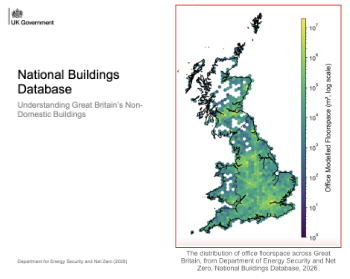
New UK National Buildings Database.