







A brief commentary on the code for construction product information CCPI
| Article extracted from AT Journal Winter 2021 no 140, words by Rob Firman, Technical and Specification Manager, Polyfoam XPS |
Contents |
[edit] Introduction
September 2021 saw publication of the Code for Construction Product Information (CCPI), following a consultation process. The Code has been prepared by the Marketing Integrity Group (MIG), an industry body set up by the Construction Products Association (CPA) in response to Dame Judith Hackitt’s report Building A Safer Future.
The Code is aimed at manufacturers of construction products. It sets out eleven clauses that, when the Code is implemented, will need to be met in order for a manufacturer to be deemed code-compliant. The intention is that, by meeting the eleven clauses, a manufacturer is demonstrating their commitment to providing the industry with product information that meets five tests: clear, accurate, up-to-date, accessible and unambiguous.
[edit] Should design professionals be familiar with the CCPI?
At the time of writing, the CCPI has been published including details of the assessment process. Assessors are being recruited, and manufacturers have been invited to express their interest in signing up. That means manufacturers cannot yet claim to be compliant, and design professionals cannot yet choose whether to work only with manufacturers who have the CCPI ‘badge’. The big question is whether the CCPI will make a difference to how you find and use product information.
The Code is being heavily promoted to manufacturers, with suggestions that organisations risk being ‘left behind’ if they do not adopt it. They are also being told that having the Code badge will help them to stand out. If the aim is universal adoption, then design professionals could eventually be in a situation where there is nothing to distinguish between manufacturers – which is not really any different to the situation now, where nobody has a CCPI-style accreditation. In that case, the determining factor will remain your individual experience of interacting with amanufacturer, and whether you feel confidence in them and their product.
At present, we would anticipate the biggest visible difference being that product information – especially in written form – is likely to be presented in a different way. Exactly how different will depend on each individual manufacturer and their current approach to providing information. Will manufacturers need to be accredited in order to do better?
[edit] How are product manufacturers responding to the CCPI proposals?
As soon as the consultation version of the CCPI was published, some manufacturers – including ourselves – used it to begin reviewing internal processes. That review included examining the flow of information through different departments, in addition to reassessing the content of published materials. In that sense, the CCPI has already proved useful. Multiple factors will dictate whether this translates into a formal assessment against the Code, however.
The MIG promised that any necessary changes would be made to the CCPI in response to the consultation, but the published version came out just weeks after the consultation report. Any changes seemed to be minimal and did not seem to address legitimate concerns that were raised at the consultation stage.
According to the consultation report, design professionals who responded to the consultation seemed to be broadly in favour of the CCPI. However, it was interesting to note the number of responses that centred on manufacturers offering specific types of information – especially around sustainability and environmental impact.
The objective of the CCPI is not to make manufacturers provide all of the information that design professionals and specifiers want or will find useful. It is to give reassurance that the information they do provide meets the five criteria set out by the Code.
The consultation suggested there is a demand for information on sustainability that is not currently being met. Wouldn’t manufacturers be better off investing their time and money in providing transparent information to meet that demand, such as in the form of environmental product declarations (EPDs), over pursuing CCPI accreditation?
[edit] Will the CCPI succeed?
There are plenty of examples where ‘having a badge’ is demonstrably a good thing, and designers and specifiers respond to it. There are also examples of schemes and accreditations that, however well intentioned, simply do not resonate with the intended audience.
While there was undoubtedly support for the CCPI during its consultation, it is not clear whether it was mainly from people and organisations who closely followed its progress because they were aware of the Code and already responding to the idea positively. There were also justified questions and concerns which the consultation response and published version arguably have not answered.
Will the CCPI succeed? At this stage it is too early to tell. The real acid test will be acceptance from product information users – including design professionals. For manufacturers to adopt the CCPI badge over the long- term, there will need to be demand for it. In particular, product information users will need to be willing to act on possible breaches, including engaging with the infrastructure that is set up to support monitoring and enforcement.
Polyfoam XPS provides extruded polystyrenesolutions for ground floor and flat roof build-ups. Visit polyfoamxps.co.uk for technical advice and to subscribe to our monthly newsletter, The Build-Up.
--CIAT
[edit] Related articles on Designing Buildings
- Code for Construction Product Information CCPI
- Considerate Constructors Scheme CCS.
- Construction Products Association CPA.
- Grenfell Tower articles.
- Grenfell Tower fire.
- Hackitt review.
- Hackitt review of the building regulations and fire safety, final report.
- Post-Grenfell product code combats misleading marketing.
- Product manufacturers must regain confidence.
- Supplier.
- Supply chain.
Featured articles and news
Costs and insolvencies mount for SMEs, despite growth

Construction sector under insolvency and wage bill pressure in part linked to National Insurance, says report.
The place for vitrified clay pipes in modern infrastructure
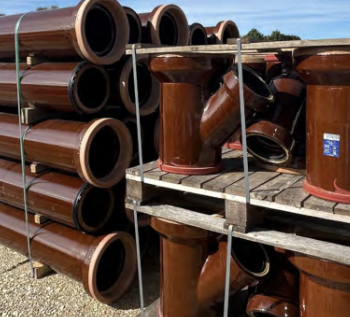
Why vitrified clay pipes are reclaiming their role in built projects.
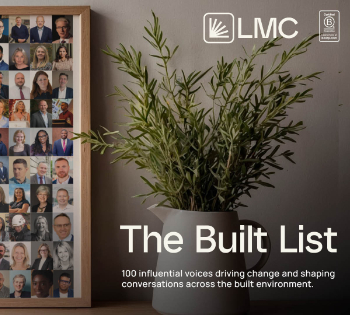
Research by construction PR consultancy LMC published.
Roles and responsibilities of domestic clients

ACA Safety in Construction guide for domestic clients.
Fire door compliance in UK commercial buildings

Architect and manufacturer gives their low down.
Plumbing and heating for sustainability in new properties

Technical Engineer runs through changes in regulations, innovations in materials, and product systems.
Awareness of the Carbon Border Adjustment Mechanism
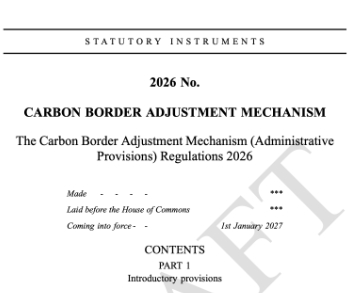
What CBAM is and what to do about it.
The new towns and strategic environmental assessments

12 locations of the New Towns Taskforce reduced to 7 within the new towns draft programme and open consultation.

Buildings that changed the future of architecture. Book review.
The Sustainability Pathfinder© Handbook
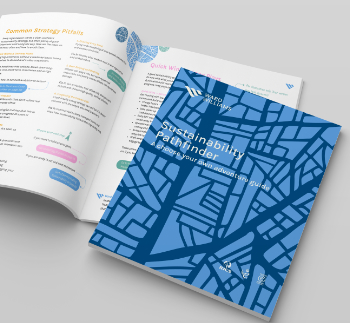
Built environment agency launches free Pathfinder© tool to help businesses progress sustainability strategies.
Government outcome to the late payment consultation, ECA reacts.
IHBC 2025 Gus Astley Student Award winners

Work on the role of hewing in UK historic conservation a win for Jack Parker of Oxford Brookes University.
Future Homes Building Standards and plug-in solar
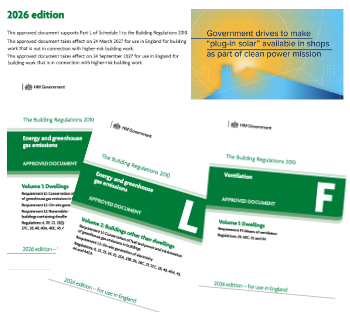
Parts F and L amendments, the availability of solar panels and industry responses.
How later living housing can help solve the housing crisis

Unlocking homes, unlocking lives.
Preparing safety case reports for HRBs under the BSA
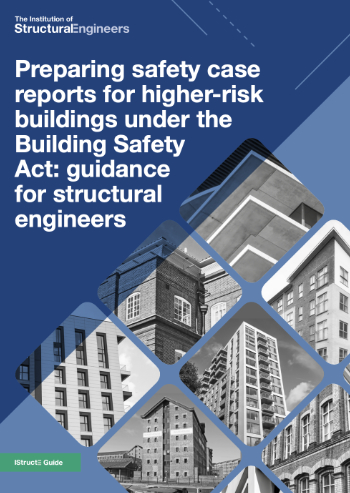
A new practical guide to preparing structural inputs for safety cases and safety case reports published by IStructE.
Male construction workers and prostate cancer

CIOB and Prostate Cancer UK encourage awareness of prostate cancer risks, and what to do about it.