






Defining the office

Contents |
[edit] Introduction
In recent years, we have been witnessing great enthusiasm amongst building owners and operators for providing physical offices that can support employee wellbeing and productivity. Improvement of indoor air quality and access to daylight, provision of spaces for better collaboration and specifically designing layouts to encourage physical movement are some of the wellbeing measures that have been recommended to improve the office space.
[edit] Digital environments
But wellbeing is not the only growing office trend. The way we work is changing due to the availability of advanced technologies, and it has hardly ever been so evident as during the COVID-19 pandemic. Forced by the COVID-19 lockdown, many organisations have shifted large parts of their operations to the digital mode introducing home working for those whose presence on business premises was not essential.
Digital platforms which provide employees with the capability to communicate, access and share documents from wherever they may be based, have most of the time proven their reliability.
[edit] Need for wellbeing
It seems like the transformation of office-based working is in full swing. But remote working can have negative impacts on employees’ wellbeing if their work-life balance is not maintained. Reduced physical movement, for example, can affect employees’ physical health while lack of personal contact and the feel of loneliness can affect employees’ mental health.
Trevor Keeling, associate at BuroHappold and a wellbeing expert says, “Some people will enjoy the lack of commute and additional time with family, while others might feel like they are working all the time. But if remote working is done correctly it can improve wellbeing.”
Maintaining a work-life balance is not the only challenge. Organisations need to ensure effective knowledge sharing and collaboration among their employees. Considering that collaboration goes beyond file sharing, can digital platforms enable employees to effectively communicate and share knowledge and experience?
Joe Jack Williams, a researcher at Feilden Clegg Bradley Studios, explains that “The social element of being [physically] with other people is far more important than is perhaps widely recognised, with informal knowledge sharing often more important than formal knowledge sharing. It's very difficult to capture physical interaction digitally with the same creative energy.”
This element is key to driving employee engagement and keeping staff aligned with organisational goals. In agreement with this, Paul Langford, engineering director at Colt International, says that working from home ‘forever’ could be possible for some workers but the “office dynamic will be lost, and the sense of team spirit will be diminished”.
[edit] Both home based and office based
Therefore, working from home should not mean that employees must work only at home. In fact, splitting time between home and the office is perhaps the most productive solution. The vice chair of the CIBSE FM group, David Stevens, sees it unlikely that the majority of employers will move to permanent home working.
“There is likely to be an increase in employees' personal choice as to where they work to improve work-life balance. This goes hand in hand with a shift towards agile working by employers to increase capacity in offices,” Stevens says.
It is, however, inevitable that, at least in the short term, the demand for physical offices will decrease around the world. Current offices will need to be redesigned or repurposed.
[edit] More physical meeting space
Considering that fewer designated individual physical workstations will be needed in response to the requirement of social distancing, more space could be allocated to collaborative interactions and training instead. Good employees engagement can provide organisations with valuable insights and ideas from their talent pool and give employees the opportunity to express their opinions and feel heard and valued.
Professor Emeritus at University of Reading, Derek Clements-Croome, explains, “[An office] should provide social energy, should be a place for physical meetings and networking that generate ideas. This is more limited online. All those gestures and facial cues are missing online.”
The founder of Element 4 and a wellbeing expert, Georgia Elliott-Smith, goes further and says, “The office should be the heart of the organisation [and] a place that celebrates relationships, development and growth - a cultural and community hub.”
[edit] Will the office disappear?
Both valid points, but, even with bigger space requirement for social hubs and training centres to ensure enough space between workers is observed, some office space can still become redundant.
“Many offices will be turned into residential accommodation," according to Bob Swayne, the principal director at The Hampden Consultancy. To do this effectively, “M&E engineering skills are required for re-designing services within buildings previously used as offices, and architectural and structural skills are needed in re-planning spatial co-ordination within buildings in order to comply with current Building Regulations and energy efficiency drives.” he adds.
Work is now location-agnostic, and it can happen anytime and anywhere if the right technology is at hand. However, physical offices will remain essential to enable meaningful interpersonal relationships among employees to help them and their organisations thrive.
Offices will not disappear, but they will change. Building services engineers, along with other professionals, will play a vital role in effectively transforming and repurposing current office buildings.
This article was written by BSRIA and was previously published under the title 'What comes to your mind when you hear the word “office”?' in May 2020. It was written by Dr Michelle Agha-Hossein, Building Performance Lead, BSRIA Sustainable Construction Group.
--BSRIA
[edit] Related articles on Designing Buildings
- BSRIA articles on Designing Buildings Wiki.
- Change of use class.
- Office.
- Office environment design ideas.
- Open plan office.
- Pandemic migration.
- The Flourish Model to enhance wellbeing.
- Wellbeing and creativity in workplace design - case studies.
- Workplace as a Service WaaS.
- Workplaces of the future.
Featured articles
Check out some of the best features and news from Designing Buildings as well as key stories from around the web.
Rethinking passive fire protection in design

PFP demands the same level of design rigour as structure or services.

38% of Gen Zs feel safe when a fire door is wedged open.
Stunning images from around the world

Shortlist for CIOB’s Art of Building photography competition.

Guidance for conversion of traditional pre-1919 stone buildings.
Industrial heritage in the Ruhr

A marked difference to the fate of industrial landscapes in the UK.
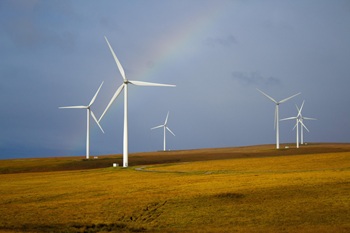
Communities will be able to build their own clean energy.
Why diversity and inclusion matters for SMEs

CIOB’s D&I Charter shows how practical changes can support long-term growth.
Cut electricity bills to power growth

Coalition sends joint letter to the Chancellor.

Gasholders: a history in pictures. Book review.
Recognition, influence and growth
SocEnv identifies three strategic pillars in new strategy to 2045.
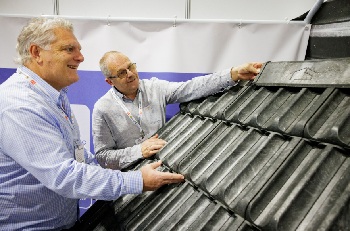
Discover the future of roofing, cladding and insulation.
New guidance for professional practice, cultural change and regulation in social housing.
Comments