





UK Net Zero Carbon Buildings Standard version 1 published

The UK Net Zero Carbon Buildings Standard (UKNZCBS) Version 1 is a free-to-access technical standard that will enable the built environment to robustly prove that built assets are playing their part to decarbonise in line with the UK’s carbon and energy budgets. Finalising what the group set out in the Pilot Version, Version 1 confirms the consistent set of rules the industry needs to create a level playing field around the meaning of net zero carbon.
- The Standard can be downloaded here
- A feedback survey is available here [1]
- Resources, which includes Submission Proforma, Flowchart and Verification Primer can be downloaded here.
UKNZCBS a collaboratively developed framework, created by a broad coalition of professional institutions, industry bodies and built environment stakeholders establishes a unified definition for "Net Zero Carbon Aligned Buildings" in the UK. Underpinned by an evidence-based reporting methodology, it applies to both new and existing buildings, with or without retrofit works and is designed to bring consistency and credibility to net zero carbon claims while accelerating the design, construction and operation of lower-carbon buildings in line with the UK's legally binding carbon budgets and targets.
"Climate science (https://www.ipcc.ch/sr15/) shows that, to prevent the worst impacts of climate change on people and natural ecosystems, the planet’s average temperature rise needs to be limited to 1.5°C above pre-industrial levels. To do this, humanity must reduce worldwide carbon emissions in line with the global ‘carbon budget’ pathway and reach a net zero carbon world by 2050. Reaching worldwide net zero carbon means realising a global balance between the greenhouse gases emitted by humans into the atmosphere and those removed from it. In line with this overarching aim, all sectors in all countries must significantly reduce their emissions and counterbalance any remaining emissions."
The Standard applies to the design, construction and use of buildings in the UK, whilst the principles could be adapted for other regions or sectors, it sets out requirements for Net Zero Carbon Aligned Buildings, defined as buildings that, if implemented collectively across the UK building stock, would keep the built environment sector within its share of national carbon and energy budgets. Offsets may be used to complement but not replace the core requirements, enabling net zero carbon at the asset level under the term "Net Zero Carbon Aligned Building (plus offsets)." To reduce duplication, the Standard recognises and integrates other schemes and standards through collaborative agreements, offers a verified "on track" status at Practical Completion for assurance purposes, and allows landlords and tenants to separately claim conformity where whole-building verification is not possible.
The Standard covers a broad range of requirements including upfront carbon, operational energy use, fossil fuel avoidance, renewables, and refrigerants, with its limits derived from measured performance data and expert insight into future trends and buildability, tested against a model of the entire existing building stock and projected UK build-out rates. The modelling behind these limits served three purposes: to map a deliverable path to net zero carbon for the UK built environment as a whole, to identify the wider systemic changes needed for the real estate sector to align with net zero pathways, and to ensure that any building claiming to be Net Zero Carbon Aligned is performing at a level consistent with the UK's remaining carbon and energy budgets. The resulting limits are described as ambitious yet achievable, setting a high but realistic bar for building performance and construction quality.
This article is based on the article 'The UK Net Zero Carbon Buildings Standard' dated March 2026.
[edit] Related articles on Designing Buildings
- Absolute zero carbon.
- Carbon negative.
- Carbon neutral.
- Net zero carbon building.
- Net zero carbon.
- The UK Net Zero Carbon Buildings Standard: creating a true pathway to the future
- UK Net Zero Carbon Buildings Standard coalition call for evidence
- UK net zero carbon buildings standard launch
- UK Net Zero Carbon Buildings Standard update
- Views sought to develop UK Net Zero Carbon Buildings Standard
- Zero carbon homes.
- Zero carbon non-domestic buildings.
- Zero-carbon energy sources.
- Zero-carbon-ready building
Featured articles
Check out some of the best features and news from Designing Buildings as well as key stories from around the web.

A quick introduction.
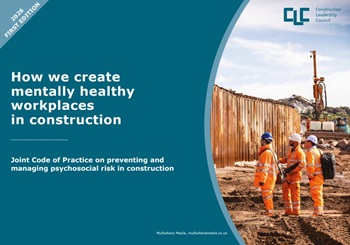
CLC publishes Mental Health Joint Code of Practice.
A quick introduction to its uses and risks.
Construction Management, 17 June

Government rolls out digital planning tool to all local authorities.
Your views needed - a strategy for the professions, trades and occupations.

Confronting competency, codes, capacity and costs.
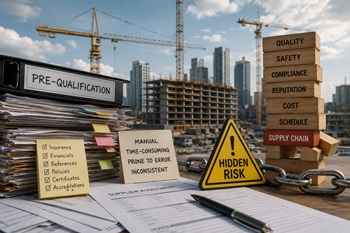
The hidden risk in modern construction supply chains.
Construction Management, 10 June

24 months to 14: CITB launches accelerated apprenticeships.
Bridging the gap between clients and contractors
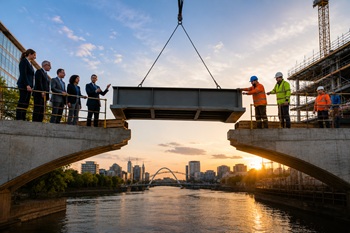
Concerns remain around contractor quality, capability, and delivery.
Construction Management, 10 June.
Heat pumps beat boilers in new home tests.
Building Safety Act implementation in Wales

CIAT to host industry panel on 26 June.