






The role of onsite renewables in tackling climate change
|
BG 1/2008 is available from the BSRIA Bookshop. It will be replaced by BG 34/2021 once it is published. |
Contents |
[edit] Introduction
As this was being written in November 2021, world leaders were meeting in Glasgow to discuss, and hopefully commit to, urgently needed actions to limit global temperature rises. COP 26, as the United Nations Climate Change Conference of Parties is known, was seen as a vital opportunity to “turn tragedy into triumph” and tackle climate change, as David Attenborough pointed in his speech at the opening day of the event.
Actions will need to be global and wide-ranging, including reforestation, viable carbon removal and capture and storage (CCS) technologies, and phasing out the use of coal.
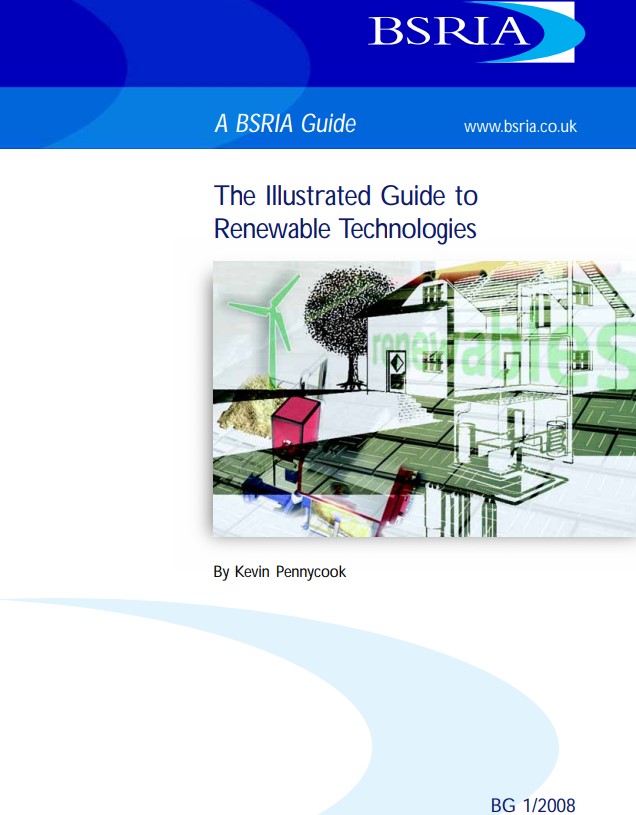
This article focuses on just one piece of the puzzle – the use of onsite renewables in buildings. It’s the subject of an updated BSRIA guide which will be published later in 2021 – BG 34 The Illustrated Guide to Renewable Technologies.
[edit] The Illustrated Guide to Renewable Technologies (BG 34)
The guide is aimed at construction professionals who don’t need to be experts on the topic but need to communicate with those who are. It provides basic explanations and reference information on the key technologies for onsite renewables, two of which are outlined below.
The guide also mentions allied technologies such as energy storage, lesser-used technologies such as building-mounted wind turbines and grid-scale renewables.
[edit] Heat pumps
Heat pumps have been in the news, with the UK government announcing grants of £5000 to replace gas boilers with heat pumps in homes in England and Wales. Furthermore, it is expected that new housing developments won’t be able to connect to the gas grid from 2025.
Heat pumps use a refrigeration process to absorb heat energy from the ground or air outside a building and release this energy, at a higher temperature, directly into the air inside the building or into its heating or hot water system. Heat pumps run on electricity but are much more efficient than direct electric (electric resistance) heating. For example, to achieve the same heat output, a heat pump with a coefficient of performance (CoP) of 4 will use a quarter of the electricity of a direct electric heater.
As the UK’s electricity grid has significantly decarbonised in recent years, the CO2 emissions associated with using heat pumps are now much lower than for an equivalent gas-fired system. However, this is contingent on the heat pump system being correctly designed, installed, commissioned, operated and maintained.
[edit] Photovoltaics
Photovoltaics (PVs), which convert sunlight into electricity, can be used at grid scale in solar farms, and also on site, on roofs or façades of buildings. The cost of PV panels is gradually coming down, and their conversion efficiency increasing, making them cost-effective for new buildings and some retrofit applications.
Most systems are grid-connected, meaning the DC electricity produced by the PV panels is converted to AC using an inverter and fed into the building’s electrical distribution system. It can also be exported when the power generated by the panels exceeds that used in the building.
[edit] Reducing CO2 from buildings
Renewable technologies have an important part to play in reducing CO2 emissions from buildings. This will become ever more so as the drive to more energy efficient buildings (and towards zero carbon buildings) continues.
A consultation which took place in 2021 on changes to Part L of the England Building Regulations proposed reductions in CO2 targets for new buildings, and also a new primary energy metric. Renewables will assist with achieving both of these targets.
Further reductions have been proposed as part of the Future Homes Standard and Future Buildings Standard, to be implemented from 2025. It is likely that onsite renewable energy technologies will be necessary for buildings to comply with these 2025 standards. However, they should not be seen as the default solution. Design solutions must focus firstly on energy efficiency, with renewable technologies only considered once all reasonable energy efficiency measures have been implemented. If the aim is a zero carbon building, it may not be possible to achieve this purely through energy efficiency and onsite renewables. In this case, carbon offsetting may be considered. This hierarchy is illustrated below.

|
BG 34 The Illustrated Guide to Renewable Technologies complements BSRIA’s other illustrated guides:
- BG 31/2017 The Illustrated Guide to Mechanical Building Services.
- BG 32/2014 Illustrated Guide to Electrical Building Services.
- BG 33/2014 Illustrated Guide to Hot and Cold Water Services.
This article originally appeared on the BSRIA website. It was written by David Bleicher, Publications Manager and published in November 2021.
--BSRIA
[edit] Related articles on Designing Buildings
- BSRIA articles on Designing Buildings Wiki.
- Carbon dioxide in construction.
- Heat pump.
- Onsite renewable energy.
- Renewable energy.
- Solar photovoltaics.
- Zero-carbon energy sources.
[edit] External resources
Featured articles and news

CIAT May 2026 briefing.

From medieval scribes to modern word art.

ECA welcomes crackdown on late payment and push for clean energy, whilst CIOB seek fixed cladding removal timeframes.
Cyber Security in the Built Environment

Protecting projects, data, and digital assets: A CIOB Academy TIS.
Managing competence in the built environment

ITFG publishes new industry guide on how to meet the ICC principles.

The UK's campaign to reduce noise pollution: Mythbusting, articles and topic guides.
Setting Expectations on Competence Management

Industry Competence Committee.
New Scottish and Welsh governments
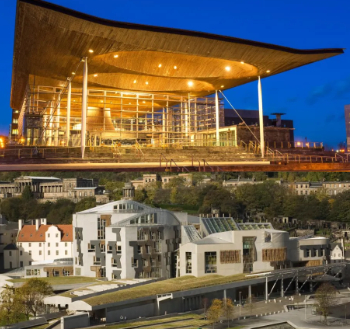
CIOB stresses importance of construction after new parliament elections.
The sad story of Derby Hippodrome

An historic building left to decay.

ECA, JIB and JTL back Fabian Society call to invest in skills for a stronger built environment workforce.

Women's Contributions to the Built Environment.
Calls for the delayed Circular Economy Strategy

Over 50 leading businesses, trade associations and professional bodies, including CIAT, and UKGBC sign open letter.
The future workforce: culture change and skill

Under the spotlight at UK Construction Week London.

A landmark moment for postmodern heritage.