






The Importance of Service Lifts

Contents |
Introduction
Installed in a wide variety of businesses and buildings, service lifts are suitable for almost every environment. Aiding in the facilitation of the transportation of goods, service lifts offer a more flexible solution than other lifts due to not being intended for human use.
Utilising electric traction for movement, service lifts have a reduced weight capacity. Vital for industries with requirements such as low headrooms and reduced pits, these lifts are capable of being installed in only a few days.
Without compromising safety and security, service lifts transport goods between multi-storey buildings in an efficient and timely way.
Some of the types of buildings that benefit from service lifts include the following:
Service lifts allow for space optimisation as they occupy less space than other lifts. Following building regulations and adapting to a business’ needs, service lifts help to improve the level of productivity.
Dumb Waiter Lifts
Also known as food lifts and micro-lifts, dumb waiter lifts are the preferred choice for transporting food between floors. Dating back to approximately 200 BC, dumb waiter lifts were used by the Romans to carry goods. In the 1840s, the mechanical version of the lift was invented by New Yorker inventor George W Cannon.
Previously human-powered, dumb waiter lifts evolved to electric-motorised versions in the 1920s due to the Industrial Revolution. With different building and regulation requirements in the 21st century, the necessity for state-of-the-art dumb waiter lifts has increased.
Trolley Lifts
Unlike dumb waiter lifts, trolley lifts are utilised for situations in which larger and heavier loads need to be transported. Commonly required in commercial buildings, retail, and hotels, trolley lifts can service as many floors as dumb waiter lifts. Although slightly slower, trolley lifts are easily installed and sturdy.
Whether leaf gated, single-hinged or locked variants, doors easily meet the varied requirements for loads and building sizes.
With minimal physical strain, trolley lifts reduce the physical stress of carrying and transporting heavy goods in multi-storey buildings.
Find Out More
Related articles on Designing Buildings Wiki
- Considerations When Installing a Commercial Lift.
- Considerations When Installing a Residential Lift.
- Escalator.
- Firefighting lift.
- Lifting device.
- Lifting platform.
- Lifts and Escalators: A Quality Perspective.
- Lifts and Their Special Operating Modes.
- Lifts for buildings.
- Lifts for office buildings.
- Smart elevators.
--Nathan Massey 14:38, 11 Jul 2017 (BST)
Featured articles
Check out some of the best features and news from Designing Buildings as well as key stories from around the web.

Your views needed - a strategy for the professions, trades and occupations.

Confronting competency, codes, capacity and costs.
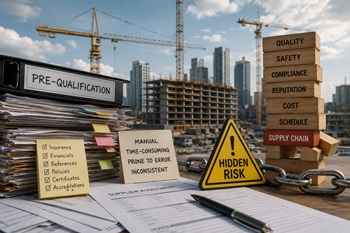
The hidden risk in modern construction supply chains.
Construction Management, 10 June

24 months to 14: CITB launches accelerated apprenticeships.
Bridging the gap between clients and contractors
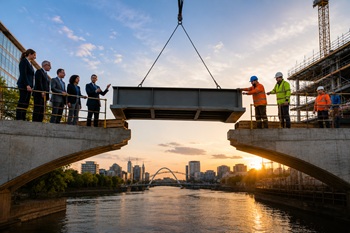
Concerns remain around contractor quality, capability, and delivery.
Construction Management, 10 June.
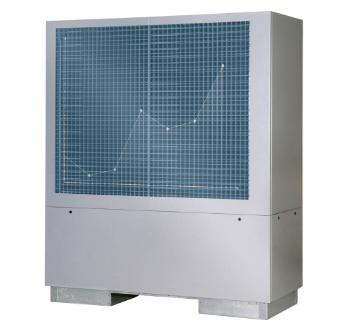
Heat pumps beat boilers in new home tests.
Building Safety Act implementation in Wales

CIAT to host industry panel on 26 June.

New and updated CLC building safety guidance.

New UK National Buildings Database.
Building Safety Wiki Interviews

Chief executive of the British Woodworking Federation.
Planning condition discharge in England and Wales

A brief explanation from a building compliance expert, with further links.