





How to prepare tender documents

|
A tender is a submission made by a prospective supplier in response to an invitation to tender. It makes an offer for the supply of goods or services, including a price and proposals for how the requirements will be satisfied if these have been requested.
An invitation to tender provides prospective suppliers with tender documentation setting out the information they need to prepare their offer. It is vital that tender documents are comprehensive and clear if realistic prices are to be obtained, making it more likely that the project will adhere to the budget once the works begin, and reducing the likelihood of misunderstandings, mistakes and claims.
Tender documents might include:
- A letter of invitation to tender;
- The form of tender (formal acknowledgement that the supplier understands and accepts the terms of conditions of the tender documents);
- Preliminaries (providing a description of the project, allowing the supplier to assess costs which, while they do not form a part of any of the package of works required by the contract, are required by the method and circumstances of the works, such as general plant, site staff and welfare facilities);
- The form of contract that will be used, contract conditions and any amendments. This might include a model enabling amendment if building information modelling (BIM) is being used, to make a BIM protocol part of the contract documentation;
- Employer's information requirements if BIM is being used (defining the information that will be required for the development of the project and for the operation of the completed built asset);
- A tender pricing document (or contract sum analysis on design and build projects). This sets out the way prospective suppliers should breakdown their overall tender price and is effectively an unpriced bill of quantities;
- A drawing schedule;
- Design drawings, and perhaps an existing building information model;
- Specifications, and
- On construction management contracts, tender documentation for trade contracts might include the construction manager's master programme.
Care must be taken to ensure the documents are consistent so as to avoid any opportunity for misinterpretation or ambiguity. Copies of the tender documentation should be kept for records. It can be sensible to send relevant documents direct to sub-contractors named in the tender documents and telling the tendering supplier that this has been done, so they do not have to it themselves.
See also: Common mistakes in construction tenders.
On larger or more complex projects, tender documents should be broken down into a series of packages (even if there will only be one main contract), each with its own design drawings and specifications suitable to be issued by the main contractor to potential sub-contractors. This makes the tender easier to price for the contractor and it makes it easier for the client to compare tenders, for example assessing the ways different suppliers have apportioned costs, which can be useful in subsequent negotiations.
It is important, when this is done, to ensure that the interfaces between packages are properly identified and clearly allocated to one package or another. Having too many packages increases the number of interfaces and so the potential problems.
The suppliers will need to appraise the tender documents themselves before sending them on to any subcontractors for them to price and return. This can take time, so it is recommended that when setting a timescale, to consider how complex the supply chain is likely to be and how important it is that responses are received quickly.
Mid-tender interviews may be arranged to allow clarification of matters that might otherwise lead to an inaccurate tender being submitted; they can also give the client insights into potential problems or opportunities in the project as it is described by the tender documentation. Responses to queries raised during the tender process can lead to clarification or amendment of the tender documentation which may also result in an extension of the tender period. It is better to allow sufficient time during the tender process to investigate opportunities and clarify problems, as the resulting tenders will then be better prepared and will be likely to save time and money later.
There may be further interviews once the tenders have been received and assessed.
Once the preferred suppler has been identified there may be a tender settlement meeting to enter into negotiations. This may result in further adjustment of the tender documents and the submission of a revised tender.
[edit] Related articles on Designing Buildings Wiki
- Common mistakes in construction tenders.
- Due diligence when selecting contractors or subcontractors.
- Invitation to tender.
- Letter of award.
- Pre-tender interviews.
- Selective tendering.
- Tender.
- Tender documents.
- Tender evaluation.
- Tender processes.
- Tender return slip.
- Tender submission.
- Things to avoid when tendering.
- Two stage tender.
Featured articles
Check out some of the best features and news from Designing Buildings as well as key stories from around the web.
New measures to stop people being ripped off

Government to protect families from cowboy builders and aggressive bailiffs.

New Futurebuild showcase brings an innovation-first approach.
National Planning Policy Framework
Understanding the 2026 changes.
ECA's public affairs priorities

Member consultation opens to shape priorities for 2027 to 2030.

Dutyholder responsibilities from 1 July 2026.
Where performance meets practice

The Building Envelope Stage at UKCW Birmingham.

CIAT publishes briefing on planning reforms.
Leaders in Learning for Practice Network

Call for conservation leaders in learning to register interest in new network.
The importance of early engagement

Construction lessons from the Trillium HealthWorks Experience Centre.
Mayors are to be given planning call in powers
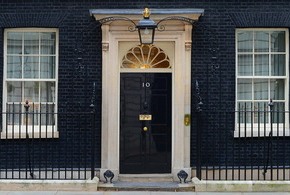
Mayors across England will be able to make the most important planning decisions.
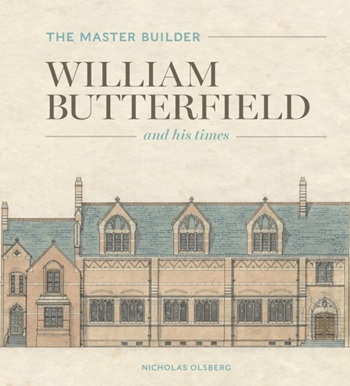
The Master Builder: William Butterfield and his times. Book review.

Why construction can't afford to ignore the skills gap.
Comments
Nicely explained tender document creation process. It will help new business owners to fill tenders properly