





Fabric strategy
The RIBA Passivhaus Overlay, published by the RIBA in 2022, states in relation to the Fabric Strategy This comprises form factor, glazing and shading and structural engineering strategies, and thermal performance requirements, as well as the Airtightness and Thermal Integrity Strategy, thermal bridge assessments and the Construction Programme. With a focus upon construction technology and buildability, develop an integrated approach which supports the airtightness strategy, thermal integrity strategy and thermal bridging mitigation strategy. Well implemented strategies avoid complexity, simplify construction, and reduce costs, avoid risks and the shorten the Construction Programme. To support this process, review plans, cross sections, longitudinal sections etc. and identify all junctions and interfaces. Consider how the building’s form and complexity impact upon the construction sequence and may compromise the airtightness testing regime, the standard of airtightness, the thermal integrity, and the extent of thermal bridging. At each stage and before work starts on site, to help ensure the right materials, plant and operatives are deployed in the right place at the right time, pay attention to the properties, characteristics and suitability of materials, products, components, and sub-assemblies, including their tolerances, impact upon interfaces, their fabrication and manufacturing techniques, their logistics (including the lifting, handling, transport and delivery methodology) and assembly. If possible, also seek to eliminate scaffolding and wet or hot works. Where appropriate, and liaising with the Passivhaus Designer/Consultant, agree which thermal bridges require calculation.”
[edit] Related articles on Designing Buildings
Featured articles
Check out some of the best features and news from Designing Buildings as well as key stories from around the web.
Undervaluing our industrial past

Heritage value changes as taste for building styles changes.
Changing expectations around competence and compliance

New information sheet from CIAT.
Grenfell investigation files passed to CPS

Angela Rayner apologises on behalf of the British state.

Electrical contractors need to understand the practical implications.

The real barrier to getting more value from digital technology.

Your guide to The Construction Reset at UKCW Birmingham.

Accommodating the Victorian and Edwardian working woman. Book review.
Rethinking passive fire protection in design

PFP demands the same level of design rigour as structure or services.

38% of Gen Zs feel safe when a fire door is wedged open.
Stunning images from around the world

Shortlist for CIOB’s Art of Building photography competition.

Guidance for conversion of traditional pre-1919 stone buildings.
Industrial heritage in the Ruhr
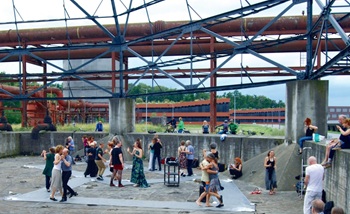
A marked difference to the fate of industrial landscapes in the UK.
Comments
[edit] To make a comment about this article, or to suggest changes, click 'Add a comment' above. Separate your comments from any existing comments by inserting a horizontal line.