






Could the buildings of the future be made with bones and eggshells?

Contents |
[edit] Introduction
As the world grapples with climate change, we urgently need to find ways of reducing our CO emissions. Sectors which rely heavily on fossil fuels, such as energy and aviation, are commonly held to be the worst offenders. But what most people don’t realise is that there’s another culprit, hiding in plain sight; on the streets of our cities, and in the buildings where we live and work.
In 2007 alone, steel and concrete were each responsible for more CO emissions than the entire global aviation industry. Before reaching the construction site, both steel and cement must be processed at very high temperatures – and this takes a lot of energy. So how can we reduce our dependence on these 'dirty' materials, when they play such a crucial role in construction?
One option is to use natural materials, such as wood. Humans have been building with wood for thousands of years, and wooden structures are currently experiencing a minor resurgence – partly because it’s a cheap and sustainable material.
But there are some disadvantages to building with wood; the material can warp in humid conditions, and is susceptible to attack by pests such as termites. And while natural materials, such as wood, are appealing from an environmental perspective, they can be unsatisfying for engineers who might wish to make components in a specific shape or size.
[edit] Copying life
So what if, instead of using natural materials as we find them, we make new materials that are inspired by nature? This idea started to gain traction in the research community in the 1970s and really exploded in the 1990s, with the development of nanotechnology and nanofabrication methods. Today, it forms the basis of a new field of scientific research: namely, 'biomimetics' – literally 'copying life'.
Biological cells are often referred to as 'the building blocks of life', because they are the smallest units of living matter. But to create a multi-cellular organism like you or me, cells must clump together with a support structure to form the biological materials we’re made of, tissues such as bone, cartilage, and muscle. It’s materials like these, which scientists interested in biomimetics have turned to for inspiration.
In order to make biomimetic materials, we need to have a deep understanding of how natural materials work. We know that natural materials are also 'composites': they are made of multiple different base materials, each with different properties. Composite materials are often lighter than single component materials, such as metals, while still having desirable properties such as stiffness, strength and toughness.
[edit] Making biomimetic materials
Materials engineers have spent decades measuring the composition, structure and properties of natural materials such as bone and eggshell, so we now have a good understanding of their characteristics.
For instance, we know that bone is composed of hydrated protein and mineral, in almost equal proportions. The mineral confers stiffness and hardness, while the protein confers toughness and resistance to fracture. Although bones can break, it is relatively rare, and they have the benefit of being self-healing – another feature that engineers are trying to bring to biomimetic materials.
Like bone, eggshell is a composite material, but it is around 95% mineral and only 5% hydrated protein. Yet even that small amount of protein is enough to make eggshell very tough, considering its thinness. The next challenge is to turn this knowledge into something solid.
There are two ways to mimic natural materials. Either you can mimic the composition of the material itself, or you can copy the process by which the material was made. Since natural materials are made by living creatures, there are no high temperatures involved in either of these methods. As such, biomimetic materials – let’s call them 'neo-bone' and 'neo-eggshell' – take much less energy to produce than steel or concrete.
In the laboratory, we have succeeded in making centimetre-scale samples of neo-bone. We do this by preparing different solutions of protein with the components that make bone mineral. A composite neo-bone material is then deposited from these solutions in a biomimetic manner at body temperature. There is no reason that this process – or an improved, faster version of it – couldn’t be scaled up to an industrial level.
Of course, steel and concrete are everywhere, so the way we design and construct buildings is optimised for these materials. To begin using biomimetic materials on a large scale, we’d need to completely rethink our building codes and standards for construction materials. But then, if we want to build future cities in a sustainable way, perhaps a major rethink is exactly what’s needed. The science is still in its infancy, but that doesn’t mean we can’t dream big about the future.
This article is published in collaboration with The Conversation.
It was written by Michelle Oyen, Bioengineering at the University of Cambridge.
This article was also published on the Future of Construction Knowledge Sharing Platform and the WEF Agenda Blog.
--Future of Construction 15:28, 16 Jun 2017 (BST)
[edit] Find out more
[edit] Related articles on Designing Buildings Wiki
Featured articles
Check out some of the best features and news from Designing Buildings as well as key stories from around the web.
Rethinking passive fire protection in design

PFP demands the same level of design rigour as structure or services.

38% of Gen Zs feel safe when a fire door is wedged open.
Stunning images from around the world
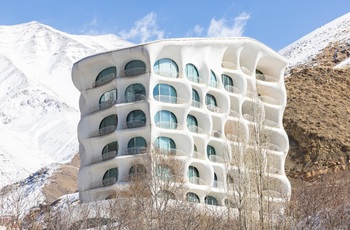
Shortlist for CIOB’s Art of Building photography competition.

Guidance for conversion of traditional pre-1919 stone buildings.
Industrial heritage in the Ruhr
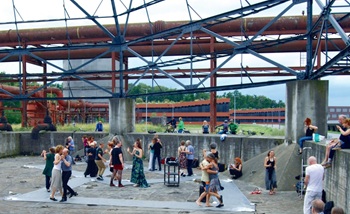
A marked difference to the fate of industrial landscapes in the UK.
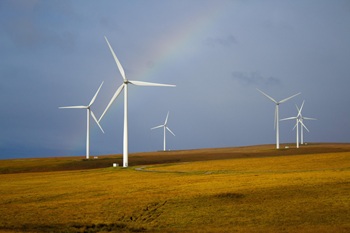
Communities will be able to build their own clean energy.
Why diversity and inclusion matters for SMEs

CIOB’s D&I Charter shows how practical changes can support long-term growth.
Cut electricity bills to power growth

Coalition sends joint letter to the Chancellor.

Gasholders: a history in pictures. Book review.
Recognition, influence and growth
SocEnv identifies three strategic pillars in new strategy to 2045.
Discover the future of roofing, cladding and insulation.

New guidance for professional practice, cultural change and regulation in social housing.
Comments
Hello, The topic cited above is wonderful in concept.the R & D lover must to read