





Stagnation point
The stagnation point is the point at which the flow of liquid is at rest. This condition may be caused by entropy.
The term is primarily associated with the subject of fluid dynamics, but the concept can be applied to the planning of water distribution in buildings.
Stagnation points in pipes can have a negative impact on plumbing systems resulting in water distribution inefficiencies such as:
- The deterioration of the quality of water.
- The degradation of disinfection measures that depend on the water distribution system.
- The possible risk of Legionella contamination in certain conditions (such as those associated with hot water tanks in some environments).
Stagnation points can be temporary. These can be caused by infrequent use or low levels of hot water consumption. Permanent stagnation points may also exist. These are sometimes referred to as dead ends and may be associated with dead legs. The Climate Emergency Design Guide: How new buildings can meet UK climate change targets, published by the London Energy Transformation Initiative (LETI) in January 2020, defines dead leg as: ‘The length of pipe to the outlet in a hot water system. When the outlet is not in use the hot water in this pipe loses its heat so when next used there is a time delay before fully hot water is again available at the outlet. This represents an inefficiency of the heat system.’
Safe water distribution plans should minimise both temporary and permanent stagnation points, although it may be difficult to eliminate them entirely from building plumbing systems.
Increasing water flow can sometimes be helpful in addressing stagnation points. In instances where group mixing or blending valves are used for multiple outlet installations, it may be helpful to place a thermostatic mixing valve as close to the first outlet as possible to help prevent the creation of stagnation points.
[edit] Related articles on Designing Buildings
- A guide to installing thermostatic mixing valves: what, why and how.
- Climate Emergency Design Guide.
- Computational fluid dynamics for buildings.
- Corrosion in heating and cooling systems.
- Deadleg.
- Hot water safety.
- Legionnaires' disease.
- Plumbing.
- Stagnation.
[edit] External resources
- Frontiers in Environmental Science: Water and Wastewater Management, Water Stagnation and Flow Obstruction Reduces the Quality of Potable Water and Increases the Risk of Legionelloses.
- London Energy Transformation Initiative (LETI), Climate Emergency Design Guide: How new buildings can meet UK climate change targets.
Featured articles and news
Building Control Independent Panel final report
A precis of a key report lead by Dame Hackitt with full recomendations and link to the government response.
Guide to ISO 19650 for Architecture Firms (2026)
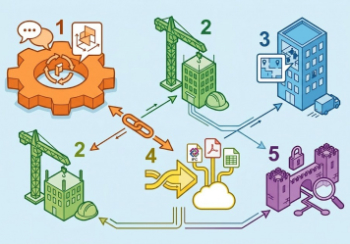
A user gives their low down.

A UK training and membership provider for mould remediation professionals.
Building Safety recap April, 2026
A short and longer run-through of the month, with links to further information and sources.
CIAT May 2026 briefing.
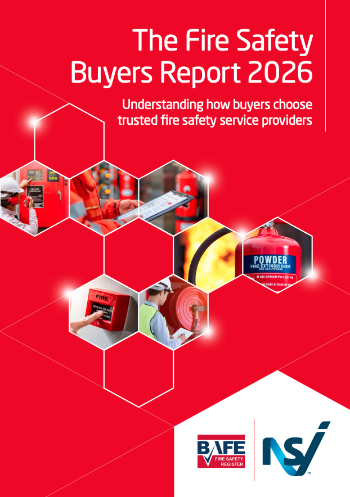
Independent NSI and BAFE study exploring how organisations are changing the way they buy fire safety services.

From medieval scribes to modern word art.

ECA welcomes crackdown on late payment and push for clean energy, whilst CIOB seek fixed cladding removal timeframes.
Cyber Security in the Built Environment
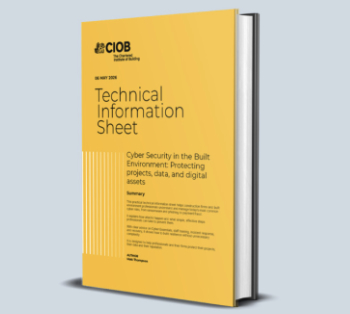
Protecting projects, data, and digital assets: A CIOB Academy TIS.
Managing competence in the built environment
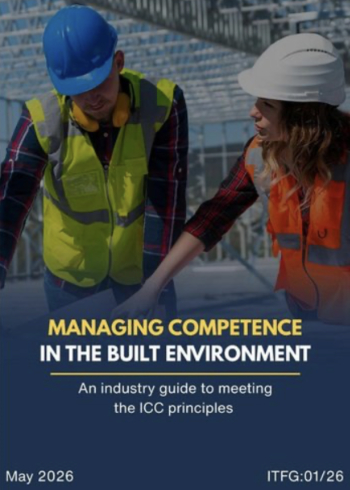
ITFG publishes new industry guide on how to meet the ICC principles.
The UK's campaign to reduce noise pollution: Mythbusting, articles and topic guides.
Setting Expectations on Competence Management
Industry Competence Committee.
New Scottish and Welsh governments

CIOB stresses importance of construction after new parliament elections.
The sad story of Derby Hippodrome
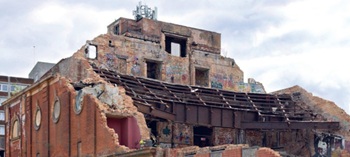
An historic building left to decay.

ECA, JIB and JTL back Fabian Society call to invest in skills for a stronger built environment workforce.