





Speculative construction

The term 'speculative construction' (or speculative development) describes a process in which unused land is purchased or a building project is undertaken with no formal commitment from any end users.
In other words, the end user of the development is unknown, but the developer is nonetheless confident not only that they will be able to find a one, but that the type of development they are undertaking will be suitable. This is in contrast to custom building, when a builder is contracted for a specific development by a client who is able to provide a brief for what they want.
Examples of speculative construction include:
- Building houses to sell.
- Converting a building into apartments to sell.
- Constructing retail space such as a shopping centre, to leases spaces or sell.
- Constructing a business park, or office space to sell or lease.
- 'Tract homes' where a developer builds model homes to promote the construction of further new homes on a site.
Speculative developers typically profit from carefully timing the buying and selling of land. Land for office or housing developments can often be purchased at a cheaper rate during a market depression, and then sold once developed, when the market has recovered. However, there is a very high risk in this, as the costs are very high, the timescales are long, and the consequences of misjudging the market and not finding a buyer are very serious.
It is relatively common for speculative developments to remain empty, or partially empty for a long time after completion, and for developers themselves to go bankrupt.
Considering whether to undertake a project will depend on a range of conditions, including:
- The availability of suitable sites.
- Residual valuation - the process of valuing land with development potential.
- The likelihood of obtaining necessary approvals (such as planning permission).
- The type, size and complexity of the development.
- The amount of capital that has to be invested.
- Financing arrangements.
- The time period involved.
- The market conditions at the time and in the future.
- The potential return on investment.
- Comparison with other potential projects.
It is rare that large-scale speculative developments such as offices will be undertaken by anyone other than the largest developers, as the amount of investment and duration can be prohibitive. However, building companies speculating on small-scale industrial developments are more common.
It is also common with owner-occupied housing, where there is a relatively short build time, limited capital is tied up in building work-in-progress, and there may be greater willingness from commercial banks to extend credit on the security of land holdings.
The notoriety of speculative development rose in particular in the 1980s when the deregulation of the financial sector, and a growth in international financing lead to a speculative property boom, with a number of very significant commercial developments undertaken in the City of London, Canary Wharf, Leeds and Manchester.
More recently, speculative developers have come under fire for holding sites that have yet to be constructed. This so-called 'landbanking' has drawn political and public criticism, especially in relation to the housing shortage, with a belief that developers regulate the supply of land in order to artificially inflate prices.
'Landbanks' can provide speculative developers a certain degree of market power, as they are not compelled to buy land at specific times or locations in order to build and can instead run down their existing portfolio until market conditions become more favourable. In cities such as London in particular, the rapid increase in the value of land can make land banking a lucrative investment.
However, developers have repeatedly rebutted the accusation of landbanking, claiming that many undeveloped sites are actually owned by owner-occupiers, historic land owners, the government and investment funds. See Landbanking for more information.
See also: Speculatice architecture.
[edit] Related articles on Designing Buildings Wiki
- Built to suit.
- Business case.
- Buyer-funded development.
- Construction project funding.
- Custom build.
- Developer.
- Development appraisal.
- Development manager.
- Existing use value.
- Hope value.
- Investment property.
- Land value.
- Landbanking.
- Off-plan property.
- Overbuild.
- PFI.
- Project-based funding.
- Property development finance.
- Real estate investment trust.
- Residual valuation of land.
- Speculatice architecture.
- Types of building.
- Types of development.
Featured articles
Check out some of the best features and news from Designing Buildings as well as key stories from around the web.
The role of the client and decision making

CIOB response to built environment professions call for evidence.
Construction's sustainability reporting revolution
Tracking upfront embodied carbon with digital tools.
ECA welcomes procurement reforms

Public spending must back British jobs and skills.
Campaigning for Edinburgh: the Cockburn Association 1875-2049

The role of the civic voice in protecting character. Book review.

CIOB photography competition is open for entries.
ECA Edmundson apprentice of the year award

Finalists announced.
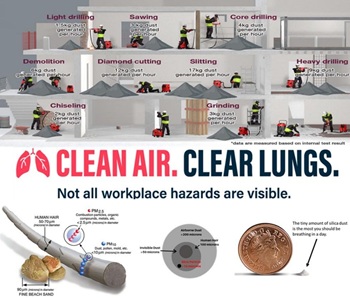
Major new study exposes serious knowledge gaps.

Generating energy from internal light as well as sunshine.

ECA welcomes plans to strengthen subcontractor quality control.

Combining mid-career qualifications with experience broadens career opportunities.

Why being a mentor can help your career.

Channel 4 broadcaster to host 125th anniversary ceremony.