





Soil moisture content, construction and landscaping

Contents |
[edit] Soil and surface soil moisture
Soil Moisture Content (SMC) describes the amount of water in a soil sample. It is calculated by taking the mass of water in the sample and dividing this by the mass of solids, expressed as a percentage. Soil moisture is sometimes called soil water, it represents the water in land surfaces (excluding rivers, lakes, or groundwater) and is the total amount of water, including the water vapour, in an unsaturated soil that resides in the pores of the soil.
The moisture content of a soil will often vary with depth. Surface Soil Moisture (SSM) refers to the water content within only the upper 5 cm of soil.
[edit] Soil moisture and construction
The moisture content of soil is important in the construction of buildings because it relates to the stability of the ground on which the buildings are built. Too dry or too wet can impact the stability of built structures. The term Optimum Moisture Content (OMC) is used to express the balance of moisture that allows good soil compaction without causing crumbling or unwanted movement.
Where there are substantial amounts of moisture within a soil, the water molecules provide added support, strength and grip by the formation of air-water interfaces. Heavily compacted soils usually have less moisture content, less pore volume, and higher density which can be problematic for construction but suitable for road construction.
Expansive soils are soils that contain clay minerals capable of absorbing water. When they absorb water, they increase in volume by up to ten percent, (hence the name) and can shrink by the same amount as they dry. These changes in volume can exert enough force to cause damage to buildings and other structures.
Most properties in the greater London area are built on London Clay which is a shrinkable soil type, making it historically a hotspot for subsidence. Following the record temperatures during the summer of 2018, insurers reported that subsidence claims rose by 25%, whilst the announcement of drought along with the record temperatures of 2022 means insurers are expecting a further increase in claims.
[edit] Soil moisture and landscape
In terms of landscape and planting around buildings (as well as agriculture), moisture content is vital, with the upper 200 cm of soil being considered the most useful for plant roots, as are nutrients from additives such as compost.
However certain conditions can cause a phenomenon known as water repellence, which is where water does not soak into soil easily or soaks unevenly to different areas. This can impact landscape as well as agriculture in a number of ways:
- Delaying seeding times.
- Patchy plant or crop growth.
- Soil wind erosion.
- Uneven leaching and nutrient spread.
- Surface water runoff and erosion.
Ground cover with this characteristic is also referred to as hydrophobic soil (literally water fearing), with the opposite being hydrophilic soil.
It is often caused naturally by organic compounds from living or decomposing plants or microorganisms and natural waxes produced by soil microbes, fungi, certain waxy leaves and peat as well as fire or coarsely textured soils.
Moisture content is crucial. For example compost becomes very hydrophobic when dry. Likewise dry soils, particularly with low clay content and sandy top-soils such as pale deep sands, sandy duplex and gravel soils are hydrophobic.
Generally the drier a soil becomes, the more hydrophobic it can be. This means long hot periods where soil becomes very dry require gradual rain over longer periods to overcome soil water repellence. Heavy rainfall will not soak into dry soils but will cause an increase in surface water run-off and surface soil erosion.
In general soil water repellence can be assessed by measuring the rates at which water droplets soak or penetrate into the ground.
- Where a droplet penetrates in less than 5 seconds there is no water repellence issue
- Where a droplet penetrates in 5-60 seconds there is a slight water repellence issue
- Where a droplet penetrates in 1-10 minutes there is a water repellence issue
- Where a droplet penetrates in more than 10 minutes there is a severe water repellence issue
However a number of factors can make assessment more complex. Drying of the top 10mm of soil can volatalise waxes that cause repellence making water on the surface appear to soak in, however if the top 5-10mm is scraped away and water placed on the soil underneath the next layer can often be highly repellent. Soil moisture is not always consistent across an area and remnant root systems or biopores may act as pathways for water to enter rather than soak in.
Whilst in general soil water repellence or hydrophic soils are less common in temperate or humid climates, prolonged periods of dry weather can change the moisture content in soils increasing the likelihood of becoming hydrophobic.
[edit] Repair of soils
There are a number of stepped approaches that can be taken to reduce water repellence:
- Wetting agents - these are surfactants or a substances that lower the surface tension of a liquid, allowing it to spread or be absorbed more easily, such as Sodium Lauryl Sulfate, Sodium Laureth Sulfate, Humic Acid, Fulvic Acid, Agar Agar or Seaweed Gelatin.
- Aeration - this helps to break the waxy coating that can form after hot weather and prolonged periods of drought, stopping water penetration.
- Amendment - there may be a lack of living organic matter in the soil as a result of dry weather, so digging in extra-fine compost, wood chips, or fine organic matter will assist in soil ammendment.
- Hydration - this is a key element in returning soil moisture content back to a level that decreases repellency.
[edit] External links
- https://www.agric.wa.gov.au/water-repellence/soil-water-repellence-diagnosing-problem
- https://www.shire-uk.com/hotter-summers-lead-to-a-rise-in-subsidence-claims/
- https://www.telegraph.co.uk/money/consumer-affairs/hot-weather-putting-homes-risk-subsidence/
- https://www.itv.com/news/meridian/2022-08-11/what-happens-when-it-rains-after-a-heatwave
[edit] Related articles on Designing Buildings
Featured articles
Check out some of the best features and news from Designing Buildings as well as key stories from around the web.

Your views needed - a strategy for the professions, trades and occupations.

Confronting competency, codes, capacity and costs.

The hidden risk in modern construction supply chains.
Construction Management, 10 June

24 months to 14: CITB launches accelerated apprenticeships.
Bridging the gap between clients and contractors

Concerns remain around contractor quality, capability, and delivery.
Construction Management, 10 June.
Heat pumps beat boilers in new home tests.
Building Safety Act implementation in Wales

CIAT to host industry panel on 26 June.

New and updated CLC building safety guidance.
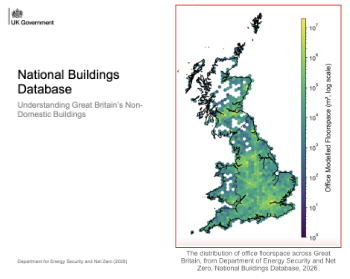
New UK National Buildings Database.
Building Safety Wiki Interviews

Chief executive of the British Woodworking Federation.
Planning condition discharge in England and Wales

A brief explanation from a building compliance expert, with further links.