






Social mobility and construction: Building routes to opportunity
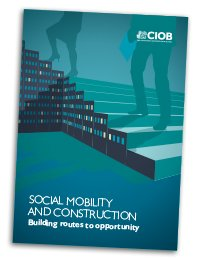
On 19 December 2016, the Chartered Institute of Building (CIOB) published a report highlighting the critical role construction plays in reversing declining levels of economic and social mobility in the UK.
Social Mobility and Construction: Building Routes to Opportunity suggests the construction sector is one of the few sectors that still employs a large number of traditional-skilled trades, roles that often lead onto more managerial positions. According to the report: ‘Construction in the UK now accounts for a third of all employment in this occupation group and a greater proportion of new job opportunities.’
The report calls on the government to help champion the UK as a world leader in construction excellence.
The survey of 1,094 working adults was undertaken by ComRes in August 2016 to gather views on aspects relating to social and economic mobility. Construction was ranked third, behind professional and scientific, and banking, as the industries that would do most to help poorer people improve their economic status.
However, the survey found that construction was seen as less effective at promoting social status; reflecting perhaps the poor image of the industry that persists with the public-at-large.
The report makes a list of recommendations for business, industry, professional bodies and government:
Construction businesses:
- Focus on better human resource management.
- Introduce and/or expand mentoring schemes.
- Boost investment in training.
- Develop talent from the trades as potential managers and professionals.
- Engage with the community and local education establishments.
Industry:
- Rally around social mobility as a collective theme.
- Promote better human resource management and support the effort of businesses.
- Promote and develop the UK as an international hub of construction excellence.
- Support diversity and schemes that widen access to management and the professions.
- Emphasise and spread understanding of the built environment’s impact on social mobility.
Professional bodies and institutions:
- Drive the aspirations of 'Professions for Good' for promoting social mobility and diversity.
- Support wider access to the professions and support those from less-privileged backgrounds.
- Promote and develop the UK as an international hub of construction excellence.
- Emphasise and spread understanding of the built environment’s impact on social mobility.
- Provide greater routes for degree-level learning among those working within construction.
Government:
- Produce a plan to boost the UK as an international hub of construction excellence, as a core part of the Industrial Strategy.
- Provide greater funding to support the travel costs of apprentices.
- Support wider access to the professions and support those from less-privileged backgrounds.
- Place greater weight in project appraisal on the impact the built environment has on social mobility.
Paul Nash, President of the CIOB said:
“Social mobility is fast becoming one of the defining issues of our time. I joined the construction industry at 18 as a management trainee with a construction company; I went on to gain a post-graduate qualification through advice from my professional body. I now sit here as President of the CIOB. I never thought I’d be in the position I am today but stories such as mine show the quality of opportunity that exists in construction.”
--CIOB
[edit] Find out more
[edit] Related articles on Designing Buildings Wiki
- A Blueprint for Change report.
- Access and inclusion in the built environment: policy and guidance.
- Articles by CIOB on Designing Buildings Wiki.
- Changing lifestyles in the built environment.
- Collaboration for Change, The Edge Commission Report on the Future of Professionalism.
- Equal opportunities policy.
- Human resource management in construction.
Featured articles and news
Costs and insolvencies mount for SMEs, despite growth

Construction sector under insolvency and wage bill pressure in part linked to National Insurance, says report.
The place for vitrified clay pipes in modern infrastructure
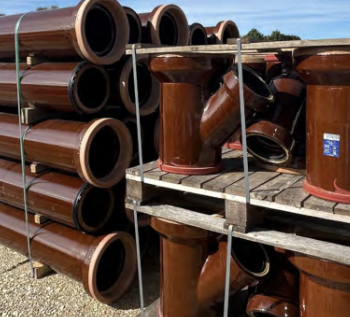
Why vitrified clay pipes are reclaiming their role in built projects.
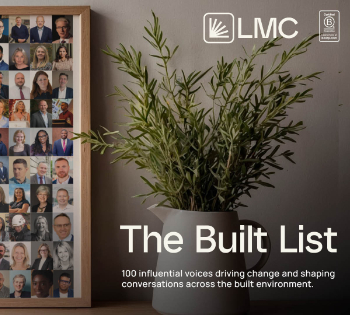
Research by construction PR consultancy LMC published.
Roles and responsibilities of domestic clients

ACA Safety in Construction guide for domestic clients.
Fire door compliance in UK commercial buildings

Architect and manufacturer gives their low down.
Plumbing and heating for sustainability in new properties

Technical Engineer runs through changes in regulations, innovations in materials, and product systems.
Awareness of the Carbon Border Adjustment Mechanism
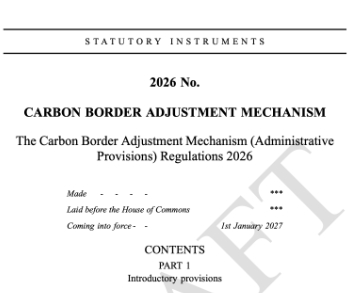
What CBAM is and what to do about it.
The new towns and strategic environmental assessments
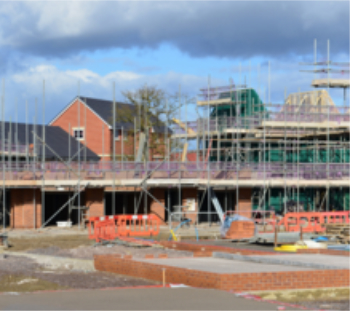
12 locations of the New Towns Taskforce reduced to 7 within the new towns draft programme and open consultation.
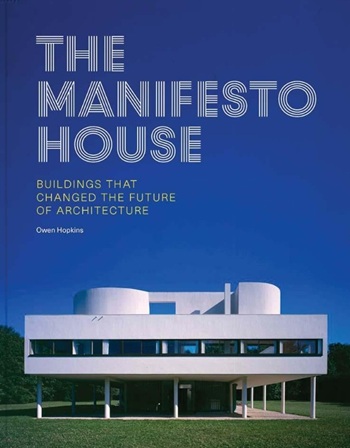
Buildings that changed the future of architecture. Book review.
The Sustainability Pathfinder© Handbook
Built environment agency launches free Pathfinder© tool to help businesses progress sustainability strategies.

Government outcome to the late payment consultation, ECA reacts.
IHBC 2025 Gus Astley Student Award winners

Work on the role of hewing in UK historic conservation a win for Jack Parker of Oxford Brookes University.
Future Homes Building Standards and plug-in solar
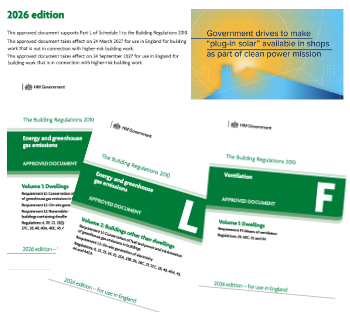
Parts F and L amendments, the availability of solar panels and industry responses.
How later living housing can help solve the housing crisis
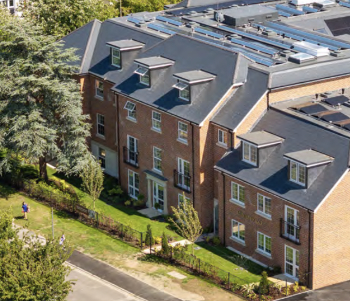
Unlocking homes, unlocking lives.
Preparing safety case reports for HRBs under the BSA
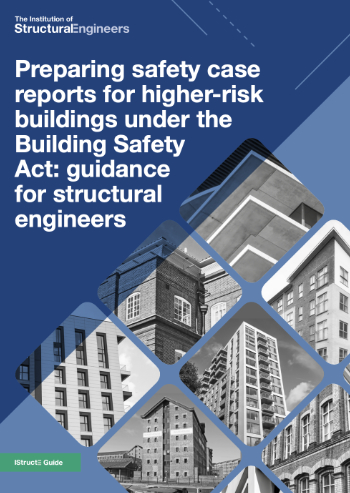
A new practical guide to preparing structural inputs for safety cases and safety case reports published by IStructE.
Male construction workers and prostate cancer

CIOB and Prostate Cancer UK encourage awareness of prostate cancer risks, and what to do about it.