





Employment relations
Contents |
[edit] Introduction
There are four main stages to employment relations:
- Pre-contractual.
- Formation of relationship - contract agreement
- Employment period.
- Termination of relationship.
[edit] Legislation and guidance
- Employment Rights Act 1996
- Employment Act 2008
- Equality Act 2010.
- Health and safety regulations.
[edit] Nature of relationship
[edit] Employee
- 'Contract of employment' directly with employer
- Rights under Employment Rights Act 1996 apply.
- Long term relationship of mutual trust and respect.
- Holiday pay.
- Regular agreed pay.
- Sick leave pay.
- Access to pension scheme.
- Time-off to help dependants (emergency only, e.g. death of dependant, child care) without pay.
[edit] Temporary employee
Similar to an employee, but:
- Fixed-term contract with an end date.
- Can apply for full-time status after four consecutive renewals of the same contract.
- Objective justification for employer to decline.
[edit] Part-time employee
- Working week/hours defined.
- Entitled to the same benefits as employee.
- Employer legally required to consider request for part time working - they are not obliged to agree but must have sound business reasons for not doing so.
[edit] Agency staff
- Tripartite relation with agency, employer and staff.
- Contract between agency and employer.
- Benefits are dealt with by agency.
- Can be terminated on short notice.
Agency Workers Regulations 2010:
- Principal of equal treatment
- Right to the same basic working and employment conditions as if engaged directly by hirer.
Onshore employment intermediaries act 2014:
- Treated as employee for tax purposes. This prevents the end-user avoiding paying national insurance and tax.
[edit] Consultants
[edit] Dismissal
Fair reasons for dismissal S98 (ERA 1996) include:
- Breach of disciplinary codes.
- Redundancy.
- Capability.
Procedures for fair dismissal are outlined in the Employment Act 2008.
[edit] Related articles on Designing Buildings
Featured articles
Check out some of the best features and news from Designing Buildings as well as key stories from around the web.

The heritage of nuclear and conventional power stations.
New measures to stop people being ripped off

Government to protect families from cowboy builders and aggressive bailiffs.

New Futurebuild showcase brings an innovation-first approach.
National Planning Policy Framework
Understanding the 2026 changes.
ECA's public affairs priorities

Member consultation opens to shape priorities for 2027 to 2030.

Dutyholder responsibilities from 1 July 2026.
Where performance meets practice

The Building Envelope Stage at UKCW Birmingham.

CIAT publishes briefing on planning reforms.
Leaders in Learning for Practice Network

Call for conservation leaders in learning to register interest in new network.
The importance of early engagement

Construction lessons from the Trillium HealthWorks Experience Centre.
Mayors are to be given planning call in powers

Mayors across England will be able to make the most important planning decisions.
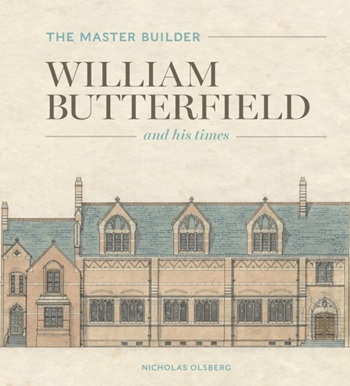
The Master Builder: William Butterfield and his times. Book review.