





Pre-completion sound testing
The building regulations establish standards that have to be achieved in the construction of buildings. Part E of the building regulations (resistance to the passage of sound) deals with requirements for sound insulation in buildings, including both new dwellings and the conversion of buildings to form dwellings.
Regulations 41 and 20 require that contractors undertake sound insulation testing for:
- Purpose-built dwelling houses and flats.
- Dwelling houses and flats formed by a change of use.
- Purpose-built rooms for residential purposes.
- Rooms for residential purposes formed by a change of use.
The 'approved documents' provide guidance for how the building regulations can be satisfied in common building situations. Section 1 of Approved document E (pre-completion testing) provides guidance on an appropriate programme of sound insulation testing for a sample of properties to verify that they comply with the building regulations.
Tests are undertaken when building work is complete (other than decoration), but without soft coverings such as carpets on the floors. Tests results are indicative of the performance of other similar properties of the same type and construction. They should be carried out on the first of each type completed, and then at least one set of tests for every further ten properties of each type, as prescribed by the building control body. A set of tests could be a total of two, four or six individual sound tests depending on the scenario.
Depending on the construction type, tests may include a number of airborne tests and impact tests. The approved procedures for testing are set out in Annex B of the approved document.
If tests are failed, remedial work should be carried out, other similar properties tested or remediated, and the rate of testing increased.
The robust details certification scheme provides an alternative to pre-completion sound testing. Users choose details from a handbook, register their plots on the scheme website prior to commencement on site, and notify building control. They must then construct the details in accordance with the handbook specification. For more infomration see: Robust details certification scheme.
[edit] Related articles on Designing Buildings Wiki
- Airborne sound.
- Approved Document E.
- BREEAM Acoustic performance.
- Building acoustics.
- Decibel.
- Noise nuisance.
- Part E compliance.
- Reverberation.
- Robust details certification scheme.
- Room acoustics.
- Sound absorption.
- Sound absorption coefficient.
- Sound frequency.
- Sound insulation in buildings.
- Sound insulation in dwellings: Part 1: An introduction (GG 83-1).
- Sound insulation in dwellings Part 2: New-build (GG 83-2)
- Sound insulation in dwellings: Part 3: Material change of use (conversions) (GG 83-3).
- Sound v noise.
- Structure-borne sound.
Featured articles
Check out some of the best features and news from Designing Buildings as well as key stories from around the web.

A quick introduction.
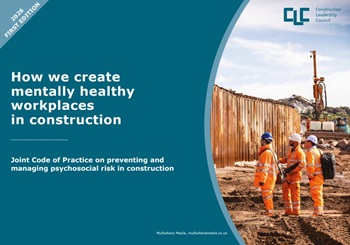
CLC publishes Mental Health Joint Code of Practice.
A quick introduction to its uses and risks.
Construction Management, 17 June

Government rolls out digital planning tool to all local authorities.

Your views needed - a strategy for the professions, trades and occupations.

Confronting competency, codes, capacity and costs.

The hidden risk in modern construction supply chains.
Construction Management, 10 June

24 months to 14: CITB launches accelerated apprenticeships.
Bridging the gap between clients and contractors

Concerns remain around contractor quality, capability, and delivery.
Construction Management, 10 June.
Heat pumps beat boilers in new home tests.
Building Safety Act implementation in Wales

CIAT to host industry panel on 26 June.