





Norman Foster

Sir Norman Foster is a British architect famous for prolific and innovative high-tech designs. He is one of the world’s most celebrated architects, having received the 1983 Royal Gold Medal for Architecture and the 1999 Pritzker Prize. His firm Foster + Partners is one of the most high profile in the world, regularly winning commissions for prestigious global projects.
Foster was born in Manchester, England, in 1935. Having left school at 16, he worked in engineering as part of the Royal Air Force before studying architecture at the University of Manchester. His aptitude for drafting won him a scholarship to Yale’s School of Architecture, where he received a Master’s in 1962.
While at Yale, Foster became friends with Richard Rogers and, together with Su Rogers, Wendy Cheesman and Georgina Wolton, they formed the architectural practice Team 4.

Photo Credit: 'Hong Kong and Shanghai Bank Headquarters' by Foster + Partners
In 1967, Foster left Team 4 to establish Foster Associates, the precursor to what would become Foster + Partners. He also began a long period of collaboration with iconic architect Buckminster Fuller, which continued until Fuller’s death in 1983.
Foster’s big break came with his design for the Willis Faber & Dumas headquarters in Ipswich. The low-rise office building included several innovative features, such as; escalators, contoured facades, nature-oriented interiors, and open-plan offices.
One of the first major public buildings designed by Foster was the Sainsbury Centre for Visual Arts in Norwich, completed in 1978.
During the late-1970s and early-1980s, Foster and his team worked on the HSBC Main Building in Hong Kong (see image above), which would become one of his most recognisable projects. In 1990, Foster’s design for the Terminal Building at London Stansted Airport was awarded the European Union Prize for Contemporary Architecture/Mies van der Rohe Award. In the late-90s, Foster won a design competition for the Reichstag building in Berlin, which included an iconic glass-domed observation platform.

Foster completed perhaps his most famous building in 2003 - St. Mary the Axe, more popularly known as The Gherkin, which won the RIBA Stirling Prize.

Around the same time, Foster contributed to New York’s iconic skyline with the Hearst Tower, a 44-storey skyscraper with an Art Deco foundation topped by a triangulated façade.
In 2000, the Millennium Bridge over London’s River Thames was completed, although it would be closed for a further two years to correct an unexpected motion for which it was dubbed the ‘wobbly bridge’.
In 2004, Foster collaborated with the engineer Michael Virlogeux to create the Millau Viaduct, the tallest bridge in the world. His central input was to present a modified version of Virlogeux’s original design which had been dismissed by local authorities as unfeasible.

Other notable projects include:
- Torre de Collserola, Barcelona (1991).
- Commerzbank Tower, Frankfurt (1997).
- Hong Kong International Airport (1998).
- Imperial War Museum, Duxford (1998) - winner of RIBA Stirling Prize.
- Redevelopment of the Great Court, British Museum, London (1999).

- City Hall, London (2000).

- Sage Gateshead (2004).

- Wembley Stadium (2007).

- Bloomberg HQ, London (2018) - winner of RIBA Stirling Prize.

[edit] Related articles on Designing Buildings Wiki
Featured articles
Check out some of the best features and news from Designing Buildings as well as key stories from around the web.
New and updated CLC building safety guidance.
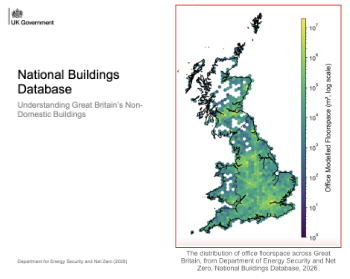
New UK National Buildings Database.
Building Safety Wiki Interviews

Chief executive of the British Woodworking Federation.
Planning condition discharge in England and Wales

A brief explanation from a building compliance expert, with further links.
Overheating guidance and tools for building designers

Guidance for dealing with element of building fabric control that have increasing importance.
Shading for housing, a design guide

From the Good Homes Alliance and British Blind and Shutter Association.
UK Standard Skills Classification (SSC)

A shared framework for describing skills needs.
Social media ban consultation comes to close

CIOB urges UK Government to consider social media’s role in careers guidance in ban debate.
The latest of eight Skills England apprenticeship units

The addition of battery manufacturing welcomed by ECA with a warning about the risks of fast-tracked apprenticeship units.
Building Control Independent Panel final report
A precis of a key report led by Dame Hackitt with full recommendations and link to the government response.
Building Safety recap April, 2026
A short and longer run-through of the month, with links to further information and sources.