





Interpreting cup-test results for faced insulation products
Contents |
[edit] Introduction
Faced insulation products contain an insulating material and one or more surface layers. The properties of a loose facing material, a laminated board and an installed wall or roof build-up are not interchangeable. This distinction is particularly important when reading water-vapour transmission data from a test report.
A report may provide useful information without answering the wider design question. The first task is to identify precisely what was tested and which property the result describes.
[edit] What the cup method establishes
ISO 12572:2016 specifies cup-based measurements of water-vapour transmission properties of building materials and products under defined, isothermal conditions. Its scope includes insulation materials and products with facings or integral skins. Amendment 1 was published in 2024. The existence of a test method does not, by itself, set a universal acceptance limit for every construction application. [1, 2]
A cup-test result needs to be read with its reported quantity, unit, environmental conditions and specimen configuration. Water-vapour permeance of a tested product and water-vapour permeability of a material are related but not identical descriptions. A specification should use the actual reported property rather than treating every value labelled "vapour transmission" as directly comparable.
[edit] Identify the tested object
Consider three possible specimen descriptions: a stand-alone facer sheet; a finished insulation board with a bonded facer; and a core material without its facing. Although each could be investigated for moisture transport, they are different test objects. A result obtained from one should not be silently attributed to another.
For a faced product, the record should make clear whether the measurement covers the whole composite construction or only a separated layer. The stated face orientation, relevant thickness or layer structure, specimen preparation and test conditions may also affect the interpretation. The applicable test report—not a product name or photograph—should establish what was actually measured.
[edit] Do not substitute an airflow result
Air permeability and water-vapour transmission describe different physical processes. ISO 9237:1995 addresses air permeability of fabrics, including many technical textiles and nonwovens. ISO 12572 concerns vapour transport under its own test conditions. A lower measured airflow through a sample does not automatically establish low vapour permeance, and a vapour result does not demonstrate that the installed construction is airtight. [1, 3]
Neither measurement on its own establishes liquid-water resistance, condensation safety, drying performance or fire classification for the completed building element. Those questions require appropriately scoped evidence and, where relevant, a system-level assessment.
[edit] A report-reading sequence
For a technical comparison, a practical order is: (1) identify the report and tested specimen; (2) record the method, edition and any stated amendments; (3) copy the reported property and unit exactly; (4) retain relevant temperature, humidity and specimen conditions; and (5) check that the proposed use matches the reported object and scope.
If two reports differ in method, specimen construction or test conditions, a numerical comparison alone may be misleading. The appropriate next step is to obtain clarification from the report owner or responsible technical reviewer, not to infer that one facer is suitable for every board line or insulation application.
[edit] Use and limitations
Cup-test evidence can support a defined material or product review when the specimen identity and scope align with the question. It does not replace the assessment of the complete board and installed construction. Practical guidance on separating air-permeability and vapour questions is available in the affiliated supplier-authored resource [4]; that guidance is not an independent test standard or a declaration of any specific product performance.
--Grechofacer 08:14, 23 Oct 2026 (BST)
[edit] References
[1] ISO. ISO 12572:2016, Hygrothermal performance of building materials and products — Determination of water vapour transmission properties — Cup method.
https://committee.iso.org/standard/64988.html?browse=ics
[2] ISO. ISO 12572:2016/Amd 1:2024, Amendment 1.
https://committee.iso.org/cms/live/live/en/sites/isoorg/contents/data/standard/08/78/87869.html
[3] ISO. ISO 9237:1995, Textiles — Determination of the permeability of fabrics to air.
https://www.iso.org/standard/16869.html
[4] GRECHO. Air Permeability vs Water Vapour Transmission in Insulation Facers (2026). Affiliated practical reading guide; not a test standard.
https://grechofacer.com/insulation-facer-air-permeability-vs-water-vapour-transmission/
[edit] Contributor disclosure
The contributor is affiliated with GRECHO, publisher of reference [4]. This article was drafted with generative-AI assistance. The named contributor is responsible for the final published text.
Featured articles
Check out some of the best features and news from Designing Buildings as well as key stories from around the web.
Code of Practice for Electrical Energy Storage Systems.

ECA calls on members to comment on draft 4th edition.
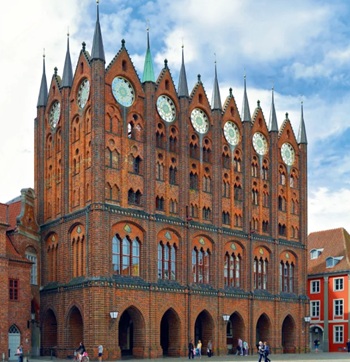
Bringing together expertise and creating cultural benefits.

CIOB celebrates positive Ofsted report.

The Building Safety Regulator announces a call for evidence.

Government approach could undermine delivery and regeneration.
World's first mass timber data centre.

The overlooked environmental aspect of data centre development.
Introduction to radon awareness

New technical information sheet published by CIOB.

Updated supplier guide can help electrical contractors engage with NHP.

CIAT confirm the winners of the 2026 architectural technology awards.
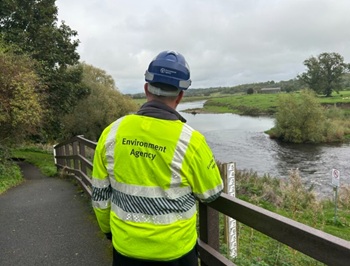
Government launches a one stop shop for flood preparedness.

Sir Edwin Lutyens: Britain's greatest architect? Book review.
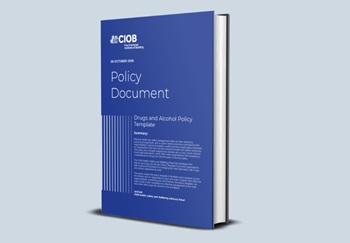
CIOB publishes free template to help assess and manage risks.