





Hemp lime construction: A guide to building with hemp lime composites
The Building Research Establishment (BRE) is an independent, research-based consultancy, testing and training organisation, operating in the built environment and associated industries.
On 12 September 2008, BRE published Hemp lime construction: A guide to building with hemp lime composites (EP 85). It was written by Rachel Bevan, principal architect at Rachel Bevan Architects and Tom Woolley, professor of architecture at the Centre for Alternative Technology and chairman of the UK Hemp Lime Construction Products Association. It is the output of a Department for Environment, Food & Rural Affairs (DEFRA) funded study commissioned by the National Non-Food Crops Centre.
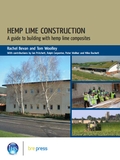
Hemp lime is a composite material used for walls, insulation of roofs and floors and as part of timber-framed buildings. It is most commonly a mix of renewably-sourced hemp shiv, a specially-formulated lime binder and water.
Whilst there is a growing awareness of the need to reduce the energy use of buildings in operation, there is still a tendency to construct them from materials that have a high embodied energy, or are in some way damaging to the environment. Hemp lime construction offers a real alternative.
It has good thermal and acoustic performance, and offers a zero-carbon solution for sustainable construction, able to capture and store carbon dioxide in the fabric of buildings. It is light weight, reducing the load on foundations, and so requiring less concrete. Hemp masonry is also breathable, able to absorb and emit moisture, allowing the construction of healthier buildings.
According to BRE’s Hemp Lime, An introduction to low-impact building materials by Andy Sutton, Daniel Black, and Pete Walker:
| It is particularly suited to projects where the design calls for a rendered or rain-screened external finish, good insulation and minimal thermal bridges. It is most commonly used in conjunction with timber frames, but can act as a non-structural walling element for a variety of construction types, including lining masonry walls. |
Hemp lime construction offers 120 pages of comprehensive guidance on the use of hemp lime for housing and low-rise buildings, providing practical information on materials, design and construction. It includes case studies and design details, and explains how the use of hemp-based material can capture and store carbon dioxide in the fabric of buildings.
Its contents are:
- Foreword.
- Introduction.
- What is hemp construction?
- Case examples of hemp lime buildings.
- Growing hemp for building.
- Building construction techniques.
- Mixes and materials.
- Durability, moisture, ventilation, indoor air quality and thermal performance.
- Structures, fire and acoustics.
- Life cycle and carbon sequestration.
- Natural products for use in conjunction with hemp lime.
- The advantages of hemp and lime.
- References and notes.
- Appendices.
- Useful contacts.
- Index.
[edit] Related articles on Designing Buildings Wiki
Featured articles
Check out some of the best features and news from Designing Buildings as well as key stories from around the web.

CIOB celebrates positive Ofsted report.

The Building Safety Regulator announces a call for evidence.

Government approach could undermine delivery and regeneration.
World's first mass timber data centre.

The overlooked environmental aspect of data centre development.
Introduction to radon awareness

New technical information sheet published by CIOB.

Updated supplier guide can help electrical contractors engage with NHP.

CIAT confirm the winners of the 2026 architectural technology awards.

Government launches a one stop shop for flood preparedness.

Sir Edwin Lutyens: Britain's greatest architect? Book review.

CIOB publishes free template to help assess and manage risks.
ECA's reflections on Party Conference season

Burnham wants to be confident of winning before asking for a fresh mandate.
New Chief Construction and Scientific Adviser

Sergio Cavalaro, Professor of Infrastructure Systems at Loughborough University.