





Heat stress
Temperatures in the workplace are governed by the Workplace (Health, Safety and Welfare) Regulations 1992, which oblige employers to provide a reasonable temperature in the workplace.
The Approved Code of Practice (Workplace health, safety and welfare. Workplace (Health, Safety and Welfare) Regulations 1992. Approved Code of Practice ) suggests a minimum temperature of 16 °C, or 13°C if work involves severe physical effort. However, these are only guidelines, and the complexity of temperatures means there is no maximum guideline temperature.
The Health and Safety Executive (HSE) did previously define thermal comfort in the workplace, as '…roughly between 13°C and 30°C, with acceptable temperatures for more strenuous work activities concentrated towards the bottom end of the range, and more sedentary activities towards the higher end.'
However, thermal comfort, particularly at higher temperatures cannot sensibly be reduced to a single measure. It is dependent on a range of environmental factors in addition to air temperature, such as; air velocity, radiant temperature, relative humidity and the uniformity of conditions. It also depends on personal factors such as; clothing, metabolic heat, state of health, aclimatisation, expectations, and even access to food and drink. See thermal comfort for more information.
Heat stress is a form of overheating that the occupants of a building may experience when the measures their body uses to regulate internal temperature begin to fail. This can occur for example in buildings where an industrial process is being carried out, such as; smelting, brick-firing, cooking and so on.
Heat stress is a personal condition; some occupants may experience heat stress whilst others may not. Where humidity is high, or occupants are wearing protective clothing that cannot be adjusted or removed, the body may be unable to lose heat through the evaporation of sweat and so individuals may begin to experience elevated deep-body temperature, excessive sweating and increased heart rate.
This in turn can lead to:
- Dehydration.
- Headache, difficulty concentrating and confusion.
- Muscle cramp.
- Heat rash.
- Fatigue.
- Giddiness and fainting.
- Nausea.
- Convulsions.
Ultimately, if it is allowed to persist, heat stress can cause death.
The Workplace Regulations, the Management of Health and Safety at Work Regulations 1999 require that employers assess the risks to the health and safety of their workers, and take action where necessary and reasonably practicable. Measures taken to reduce the risk of heat stress might include:
- Changes to the environment or to processes to reduce activity or exposure to heat.
- Reducing the length of exposure and allowing acclimatisation.
- Giving access to water.
- Using specialist personal protective equipment.
- Training.
- Assessing and monitoring health.
The Health and Safety Executive suggest that wet bulb globe temperature can be used as a measure of likely heat stress. It includes components of natural wet-bulb temperature (tnw), globe temperature (tg) and air temperature (ta). See wet bulb globe temperature for more information.
NB In 2006, the Trades Union Congress (TUC) stated that it believed a maximum temperature of 30ºC should be set, or 27ºC for those doing strenuous work. In July 2019, the Labour party proposed the same maximum workplace temperature of 30ºC, or 27ºC for those doing strenuous work. They tasked a proposed Royal Commission on Health and Safety at Work with bringing forward proposals.
[edit] Related articles on Designing Buildings Wiki
- BREEAM Thermal comfort.
- Cold stress.
- Construction work in hot weather.
- Dry bulb temperature.
- Globe temperature.
- Maximum and minimum workplace temperatures.
- Occupational health.
- Overheating.
- Personal protective equipment.
- Preventing overheating.
- Relative humidity.
- Temperature.
- Tempering heating.
- Thermal comfort.
- Types of heating system.
- Wet bulb globe temperature.
- Wet bulb temperature.
Featured articles
Check out some of the best features and news from Designing Buildings as well as key stories from around the web.
Bridging the gap between clients and contractors

Concerns remain around contractor quality, capability, and delivery.
Construction Management, 10 June.
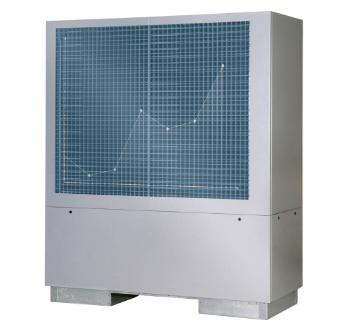
Heat pumps beat boilers in new home tests.
Building Safety Act implementation in Wales

CIAT to host industry panel on 26 June.

New and updated CLC building safety guidance.
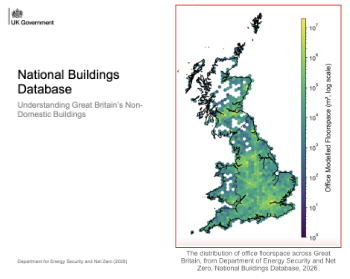
New UK National Buildings Database.
Building Safety Wiki Interviews

Chief executive of the British Woodworking Federation.
Planning condition discharge in England and Wales

A brief explanation from a building compliance expert, with further links.
Overheating guidance and tools for building designers

Guidance for dealing with element of building fabric control that have increasing importance.
Shading for housing, a design guide

From the Good Homes Alliance and British Blind and Shutter Association.
UK Standard Skills Classification (SSC)

A shared framework for describing skills needs.
Social media ban consultation comes to close

CIOB urges UK Government to consider social media’s role in careers guidance in ban debate.