





Freedom of Information Act 2000
Contents |
[edit] Introduction
The Freedom of Information Act 2000 (FOIA) is a UK Act of Parliament that creates a public ‘right of access’ to information held by public authorities. There are two ways in which this is provided:
- Public authorities are obliged to publish certain relevant information.
- Members of the public are entitled to request information from public authorities.
The act was a manifesto pledge made by Labour in 1997 and subsequently introduced as a White Paper by Dr. David Clark. The full provisions of the act came into force on 1 January 2005.
FOIA covers any recorded information held by a public authority in England, Wales and Northern Ireland, and by UK-wide public authorities based in Scotland (the Freedom of Information (Scotland) Act was introduced in 2002). Public authorities include government departments, the NHS, local authorities, state schools and police forces. Organisations that receive public money, such as charities, are not necessarily covered by the act, and in some circumstances private sector organisations that perform public functions may be covered, such as construction contractors.
[edit] The principles of the act
The main principle behind FOIA as stated by the original White Paper was to create a more open government based on mutual trust. It enshrines the right of people to know about the activities of public authorities unless there is a justifiable reason for them not to. The governing principles are as follows:
- Everybody has a right to access official information. Information should be kept private only when there is a good reason.
- An applicant is not required to provide a reason for requesting the information. Refusal to provide information must, however, be justified with a reason.
- All requests for information must be treated equally, as must all requesters of information.
- The information disclosed should be the same regardless of who has requested the information.
Information covered includes all recorded information held by a public authority. This is not limited to official documents, but also covers drafts, emails, notes, datasets, telephone recordings, CCTV recordings, letters received from members of the public, and so on.
A request is normally valid if it relates to information which already exists and does not have to be specially compiled for the purpose of meeting the request.
Under section 41 of the FOIA, a public authority does not have to disclose confidential information if both of the following two conditions are satisfied:
- It received the information from someone else.
- Complying with the request would be a breach of confidence that is actionable.
Section 43 also provides exemptions on matters of trade secrets, and when complying with the request would prejudice or be likely to prejudice someone’s commercial interest.
[edit] FOIA and construction
Parties to construction contracts are increasingly using FOIA to obtain information which might assist them in disputes over time or money. Despite the fact that a construction contractor is not a public body they can be regarded, as well as the subcontractors, as holding information on behalf of the public body. A public body may claim validly that they do not possess certain information and could issue a standard refusal notice to that effect, although this must comply with the FOIA requirements for non-disclosure.
The public body does have a duty to advise and assist in circumstances where it does not have the required information and so may pass the request on to the party that has the information, such as the contractor or subcontractor.
If a commercial third party is acting ‘on behalf of’ the public body then it can be regarded as a public authority itself. This means that the FOIA request can be made directly to them.
[edit] Related articles on Designing Buildings Wiki
- Local authority.
- Local planning authority.
- Public authority.
- Public project: PFI tender.
- Public project: tender.
- Statutory obligations.
[edit] External references
Featured articles and news
The future workforce: culture change and skill

Under the spotlight at UK Construction Week London.
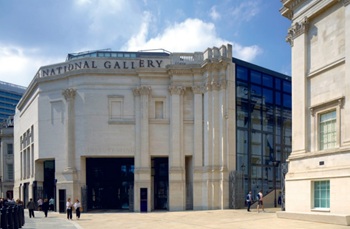
A landmark moment for postmodern heritage.
A safe energy transition – ECA launches a new Charter

Practical policy actions to speed up low carbon adoption while maintaining installation safety and competency.
Frank Duffy: Researcher and Practitioner
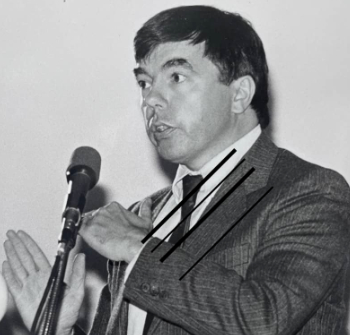
Reflections on achievements and relevance to the wider research and practice communities.
The 2026 Compliance Landscape: Fire doors

Why 'Business as Usual' is a Liability.
Cutting construction carbon footprint by caring for soil

Is construction neglecting one of the planet’s most powerful carbon stores and one of our greatest natural climate allies.
ARCHITECTURE: How's it progressing?
Archiblogger posing questions of a historical and contextual nature.
The roofscape of Hampstead Garden Suburb

Residents, architects and roofers need to understand detailing.
Homes, landlords. tenants and the new housing standards

What will it all mean?
The Architectural Technology podcast: Where it's AT

Catch-up on the latest episodes.
Edmundson Apprentice of the Year award 2026

Entries now open for this Electrical Contractors' Association award.

Traditional blue-grey slate from one of the oldest and largest UK slate quarries down in Cornwall.

There are plenty of sources with the potential to be redeveloped.
Change of use legislation breaths new life into buildings

A run down on Class MA of the General Permitted Development Order.
Solar generation in the historic environment

Success requires understanding each site in detail.