





Folded Formed Structures
Contents |
[edit] Introduction
A folded structure is simply a structure that comprises one or more 'folded' forms. Folded structures can achieve greater spans and rigidity and can have lower net weight than some more conventional forms of structure. The strength and stiffness of folded construction derives from the configuration, thickness and dimensions of the elements that form it. Folded structures emerged as a counterbalance to heavy frame structures, with considerably greater net weights and lower cost-effectiveness over certain spans.
The strength of flat panels depends on the thickness and quality of their material components. Folded structures differ in material, geometric form, the base on which they rest, the load-path system, method of forming stiffness, function and position in the building.
[edit] Categories of folded structure
Based on geometric shape, folded structures can be divided into:
- Folded-plate surfaces.
- Folded-plate frames.
- Spatial folded-plate structures.
The system of load transformation in folded structures depends on shape and the load direction. There are three basic types of load transmission systems:
- Linear folded-plate structure systems.
- Radial folded-plate structure systems.
- Spatial folded-plate structure systems.
[edit] On-site vs. prefabricated folded structures
Usually, on-site built folded construction is used for large structures where it would not be feasible for the elements to be transported to and installed at the site, whereas prefabricated elements are typically produced in a smaller, more manageable size, manufactured in a factory, then transported, and installed at the site.
[edit] Uses of folded structures
Folded structures find application in architectural and engineering structures.
In engineering, folded structures can be used for bridge construction and retaining walls. Also, individual elements can be designed according to the principles of folded structures; this helps to achieve greater stiffness at low cost and with easier constructability.
Floors and roofs constructed as folded forms can span longer lengths compared to common solid floor construction. And they can be constructed using common materials such as reinforced concrete, steel sheet and wood. Trofdek folded mezzanine ceiling construction is a folded timber structure of trapezoidal elements (veneer plywood) and horizontal solid timber parts.
Folded structures find application in the design and construction of bridge structures due to their stability and deformation characteristics, particularly where the span is very large and high loads are transferred to the supports. Folded bridge decks are formed with either 'V' or trapezoidal shapes.
Folded walls offer a solid construction that can carry high vertical and horizontal impact loads. The geometry of folded walls provides economical construction and efficiency in material usage for large buildings.
[edit] Conclusion
The challenges in design and construction of complex buildings and structures may be met by the use of folded structures due to their stability, high load-carrying capacity and aesthetic characteristics. Folded structures can also provide spaces that are adaptive and responsive to user needs.
[edit] Related articles on Designing Buildings
Featured articles and news
Building Control Independent Panel final report
A precis of a key report lead by Dame Hackitt with full recomendations and link to the government response.
Guide to ISO 19650 for Architecture Firms (2026)
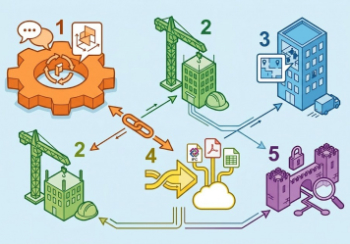
A user gives their low down.

A UK training and membership provider for mould remediation professionals.
Building Safety recap April, 2026

A short and longer run-through of the month, with links to further information and sources.

CIAT May 2026 briefing.

Independent NSI and BAFE study exploring how organisations are changing the way they buy fire safety services.

From medieval scribes to modern word art.

ECA welcomes crackdown on late payment and push for clean energy, whilst CIOB seek fixed cladding removal timeframes.
Cyber Security in the Built Environment

Protecting projects, data, and digital assets: A CIOB Academy TIS.
Managing competence in the built environment
ITFG publishes new industry guide on how to meet the ICC principles.

The UK's campaign to reduce noise pollution: Mythbusting, articles and topic guides.
Setting Expectations on Competence Management
Industry Competence Committee.
New Scottish and Welsh governments
CIOB stresses importance of construction after new parliament elections.
The sad story of Derby Hippodrome
An historic building left to decay.

ECA, JIB and JTL back Fabian Society call to invest in skills for a stronger built environment workforce.