




Geometric form

|

|
Geometric forms are forms that can be constructed using geometry, such as squares, rectangles, circles, cones, cubes, and so on. Geometric forms are commonly found in architecture, structural and civil engineering.
This is as opposed to 'organic' forms which are generally complex, irregular or asymmetrical, and cannot easily be constructed using geometry. naturally-occurring forms are often considered to be 'organic'.

|

|
Two-dimensional geometric forms are often defined by a chain of points or vertices are connected by lines. These are referred to as polygons (triangles, squares, pentagons, hexagons, and so on). They can also be bounded by curves (circles, ellipses, and so on).
Three-dimensional geometric forms are often defined by two-dimensional faces enclosed by lines that connect a set of vertices. These are referred to as polyhedrons (cubes, pyramids, cones, and so on). They can also be bounded by curved surfaces (ellipsoids, spheres, and so on).

|

|
| Synclastic | Anticlastic |
[edit] Related articles on Designing Buildings
Featured articles
Check out some of the best features and news from Designing Buildings as well as key stories from around the web.
Gov.uk - Hot-rolled steel plate

New anti-dumping measure imposed on South Korea.
ECA responds to the Milburn Report

Youth employment to be linked to workforce demand.
The construction industry urgently needs to attract new talent

CIOB responds to Neets report.
Grenfell Tower community update
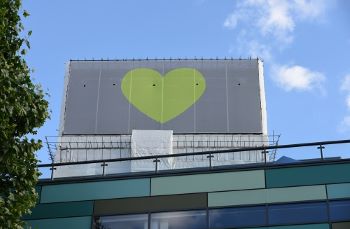
Memorial columns to be retained as careful dismantling continues.
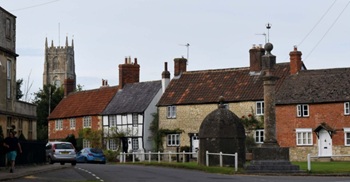
When buildings reflected the local resources available.

CIOB reports 57% are using artificial intelligence technologies.
More of England’s ‘hidden heroes’ will be celebrated.

CIAT calls for retrofit to be a priority.
Version 6 is now available, along with guidance for ECA members.

Post-War Homes: mid-century British architecture. Book review.

CIAT reflects on the party conferences.

CIOB announce the winners of the Art of Building photography competition.