






Main author
Michael BrooksBrutalist London Map - review
.png)
[edit] 'Brutalist London Map'
Published by Blue Crow Media, November 2015
Brutalism as an architectural style has undergone something of a reappraisal over recent years. Trellick Tower, the Barbican and the Park Hill Estate in Sheffield have all been celebrated as leading examples of a post-war aesthetic that sought functionality over form, bold geometries that reflected the Le Corbusier-inspired futurism of new urban design.
Castigated and demonised over the decades by the press, such estates became synonymous with social deprivation and criminality, not to mention being used as the backdrop for any cinematic dystopia from ‘A Clockwork Orange’ to ‘Harry Brown’, brutalism has struggled to shrug off its negative connotations.
While many of the sites included on Blue Crow Media’s new London map have been given listed status, recent years have seen the demolition of iconic sites such as the Heygate Estate and Gateshead’s ‘Get Carter car park’, often in the face of strong public opposition, indicating that the verdict is still out on whether brutalism can be openly appreciated, if only from a sense of nostalgia.
The first of a new series of architectural guides by the independent publisher of maps and digital apps Blue Crow Media, ‘Brutalist London Map’ is well designed and presented, and has space to include a concise introduction from Henrietta Billings of the Twentieth Century Society.
Leaving aside the usual suspects such as the National Theatre and Balfron Tower, the map serves as a welcome reminder of striking buildings that have perhaps been forgotten, from the Welbeck Street Multi-Storey Car Park to Brixton Recreation Centre, as well as those that, were they not so prominent, might well deserve to be forgotten, such as the Hyde Park Barracks building.
The re-evaluation of, and renewed interest in, brutalism as a feature of Britain’s modern architectural history is surely welcome, and ‘Brutalist London Map’ is a must-have for anyone with even a passing interest in the variety of style and ideas in the built environment.
See the review of other Blue Crow Media architecture maps here.
You can buy a copy of the map here.
[edit] Find out more
[edit] Related articles on Designing Buildings Wiki
- Architectural styles.
- British post-war mass housing.
- Brutalism.
- Charles Waldheim - Landscape as Urbanism: A General Theory.
- Danish Architecture Center.
- 'England's Post-War Listed Buildings'.
- Erno Goldfinger.
- Habitat 67.
- James Crawford - Fallen Glory.
- Last Futures: Nature, Technology and the End of Architecture.
- London by Design - review.
- Owen Hatherley interview.
- Owen Hatherley - Landscapes of Communism.
- Sink estate regeneration plans.
- Space, Hope and Brutalism.
- Trellick Tower.
- Welbeck Street car park.
Featured articles and news
New Scottish and Welsh governments
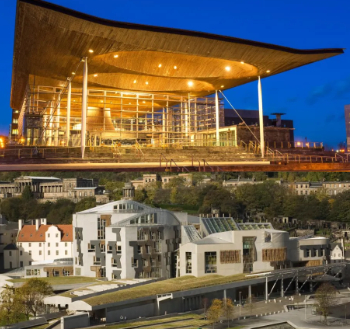
CIOB stresses importance of construction after new parliament elections.
The sad story of Derby Hippodrome
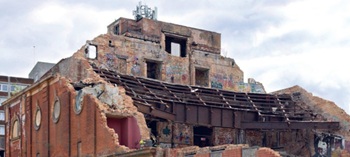
An historic building left to decay.

ECA, JIB and JTL back Fabian Society call to invest in skills for a stronger built environment workforce.

Women's Contributions to the Built Environment.
Calls for the delayed Circular Economy Strategy

Over 50 leading businesses, trade associations and professional bodies, including CIAT, and UKGBC sign open letter.
The future workforce: culture change and skill

Under the spotlight at UK Construction Week London.
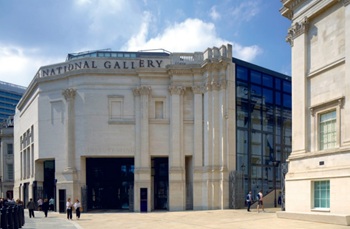
A landmark moment for postmodern heritage.
A safe energy transition – ECA launches a new Charter

Practical policy actions to speed up low carbon adoption while maintaining installation safety and competency.
Frank Duffy: Researcher and Practitioner

Reflections on achievements and relevance to the wider research and practice communities.
The 2026 Compliance Landscape: Fire doors

Why 'Business as Usual' is a Liability.
Cutting construction carbon footprint by caring for soil

Is construction neglecting one of the planet’s most powerful carbon stores and one of our greatest natural climate allies.
ARCHITECTURE: How's it progressing?

Archiblogger posing questions of a historical and contextual nature.
The roofscape of Hampstead Garden Suburb
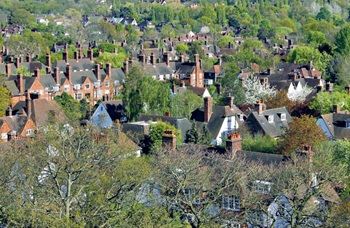
Residents, architects and roofers need to understand detailing.
Homes, landlords. tenants and the new housing standards

What will it all mean?